



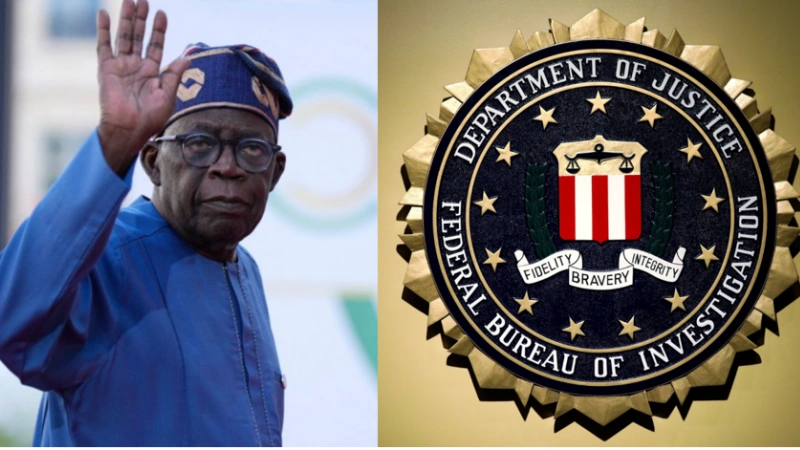

The release of long-awaited Tinubu FBI records on Thursday has added fresh political weight to President Bola Tinubu’s re-election bid, coming just two days after Nigeria’s electoral body opened the official campaign window for the 2027 polls.
At the centre of the dispute are Tinubu FBI records and related DEA files that a federal judge has ordered US agencies to process and disclose under the Freedom of Information Act (FOIA). The case does not involve new criminal charges against Tinubu. Instead, it concerns the release of historical law-enforcement records linked to a decades-old investigation that has remained politically contentious in Nigeria for years.
Judge Beryl Howell of the US District Court for the District of Columbia rejected a request from Tinubu’s legal team and the US Department of Justice for a ten-day extension, granting only four additional days and setting 21 August as the new deadline. The judge noted that the matter had already been before the court for more than three years.
The controversy surrounding the Tinubu FBI records traces back to a 1993 civil forfeiture action filed by the US Department of Justice in Chicago. Prosecutors alleged that funds held in bank accounts linked to Tinubu were proceeds of a heroin trafficking network operating from Nigeria. Tinubu later forfeited $460,000 under a settlement. He was never criminally charged, and his legal team has consistently maintained that the proceeding was civil in nature and not a criminal prosecution.
The current legal battle is a FOIA lawsuit brought by American transparency campaigner Aaron Greenspan. Between 2022 and 2023, Greenspan filed a series of requests seeking records from the FBI, DEA, IRS, State Department and federal prosecutors relating to Tinubu and other individuals connected to the original investigation.
For years, the FBI and DEA relied on what are known as Glomar responses, refusing to confirm or deny whether responsive records existed. In April 2025, Judge Howell ruled that the agencies could no longer rely on those blanket responses and ordered them to search for and process non-exempt records. The court held that the FBI and DEA had failed to justify continuing secrecy around the existence of the records.
The ruling did not determine that Tinubu committed a drug-trafficking offence. Rather, it addressed whether the agencies had complied with their obligations under FOIA and whether responsive records should be processed for disclosure.
Tinubu’s legal team formally joined the case this week, seeking additional time before any further disclosures relating to the Tinubu FBI records are made public. Judge Howell largely denied that request, allowing only a limited extension.
A Washington-based lobbying firm retained by opposition figure Atiku Abubakar, Von Batten-Montague-York, has actively promoted the case and pushed for broader disclosure. The firm says it has shared documents relating to the matter with members of Congress and officials in the Trump administration. Tinubu’s supporters reject suggestions that the records prove wrongdoing and argue that political opponents are attempting to revive a decades-old controversy.
What the Tinubu FBI records will actually contain remains unclear. Court filings suggest the material could include investigative correspondence, agency memoranda and other records connected to the original inquiry. The documents are not expected to contain new charges or a new criminal case, since none has been filed in the more than three decades since the original proceedings.
The timing is politically sensitive. INEC formally opened the campaign period for the 2027 presidential and National Assembly elections on 19 August, with Tinubu seeking a second term against a field that includes Atiku Abubakar, Peter Obi and other contenders. Governorship and state assembly campaigns begin on 9 September, while the presidential and National Assembly elections are scheduled for 16 January 2027.
Any disclosure involving the Tinubu FBI records will land squarely inside that campaign period, giving political rivals fresh material regardless of whether the documents contain significant new revelations. Analysts note that the political impact may depend less on what the records show and more on the fact that the issue is once again attracting public attention during an election cycle.
Whether the latest court deadline changes anything materially for Tinubu’s presidency will depend on what the FBI and DEA ultimately release and how heavily any records are redacted. For now, Nigerians and international observers are waiting to see whether the long-running battle over the Tinubu FBI records produces meaningful new information or simply reopens an old political debate at the start of another presidential campaign.


