



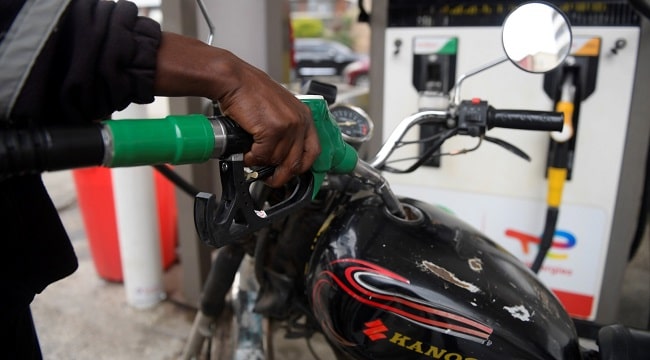

A petrol price ceiling of ₦1,350 per litre sounds like welcome relief for Nigerian motorists. But there is a catch: the government is not promising to sell petrol at that price at filling stations. Instead, suppliers may have to absorb some of the cost increases, while NNPC Retail temporarily gives up its profit margin to offer a discount.
Announced by Finance Minister Taiwo Oyedele on 8 October, the proposed Nigeria petrol price ceiling is part of the Federal Government’s response to rising fuel costs. The aim is to limit sudden price increases without restoring the petrol subsidy abolished in May 2023.
Under the proposal, the ex-gantry or landing cost of petrol would be capped at ₦1,350 per litre. These are supply-stage costs, not the final pump price, which also reflects transportation, distribution and retail expenses.
The government says refiners and importers would absorb the difference when their costs exceed the ceiling, then recover their losses when market conditions improve. The ceiling would be reviewed monthly, with the figures published for transparency.
Consider a supplier whose relevant cost rises to ₦1,500 per litre while the ceiling remains at ₦1,350. Under the proposed mechanism, the supplier would initially absorb the ₦150 difference. This is an illustration, not a confirmed market price or an established contractual arrangement.
For motorists, the arrangement could soften sudden increases. For suppliers, it means financing the shortfall while waiting to recover the money. If prices remain high, that could put pressure on their working capital. The success of the proposal will depend on how recovery is calculated, how long suppliers must wait and whether they agree to participate.
The immediate relief comes from a separate measure. NNPC Retail is temporarily foregoing its retail profit margin to sell petrol at cost, with public transport operators given priority. The initiative began on 1 October and was extended through 31 October.
The government says the discount is being funded by NNPC Retail’s reduced margin, not through a direct payment from the Federal Government or the Federation Account. That distinguishes it from the former petrol subsidy, although the state-owned company’s foregone earnings still have an economic cost.
Motorists buying from participating NNPC stations stand to benefit directly. Transport operators could also save on fuel, potentially easing pressure on fares. But passengers will benefit only if operators pass on the savings rather than retain them.
Households that do not buy petrol directly may see little immediate relief. They depend on lower transport fares and distribution costs to feel the effect through food prices and other essentials. Even when fuel costs stabilise, businesses do not always reverse price increases already passed on to consumers.
The government is attempting to cushion the effects of market-priced petrol without returning to a blanket subsidy. Since President Bola Tinubu announced the subsidy’s removal in May 2023, consumers have become more exposed to changes in international oil prices and the exchange rate.
The new approach could spread price increases over time rather than eliminate them. But if costs remain elevated, suppliers could accumulate shortfalls that become increasingly difficult to finance. The government has yet to establish publicly all the contractual details needed to assess how that risk would be managed.
There is another important limitation. A ceiling on supply costs does not automatically guarantee a corresponding ceiling at filling stations. Distribution expenses and retail margins still matter, and the extent of the benefit will depend on how the arrangement is implemented.
The Nigeria petrol price ceiling could offer meaningful protection if suppliers participate, shortfalls are recovered under workable terms and savings reach consumers. Monthly publication of the ceiling would help, but Nigerians also need transparency about participating suppliers, accumulated shortfalls and the amounts eventually recovered.
Ultimately, motorists will judge the policy by what they pay at the pump. Transport users will look at fares, while households will feel the difference, if any, in the cost of food and other essentials.
The government has promised to make fuel-price increases less punishing without reviving the old subsidy. Whether that promise delivers real relief will depend not on the announcement, but on what Nigerians actually save.


