Herizo Andriamanantena, one of the young activists who helped drive Madagascar’s 2025 uprising, spent two weeks in a Malagasy prison cell this April, accused of plotting a coup he insists he never planned.
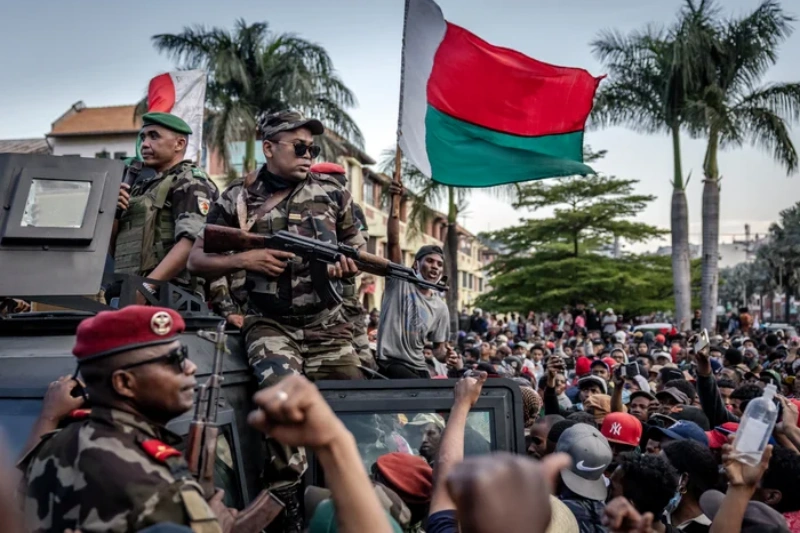
A year earlier, he had been dancing in the streets of Antananarivo. Soldiers had just switched sides, abandoning the government the Madagascar’s Gen Z activists were trying to bring down. It felt, he says, like victory.
Twelve months on, Madagascar’s Gen Z activists are marking that victory with a mixture of pride and dread. The government they forced into existence now treats some of them as enemies of the state.
It started with water and power cuts. On 25 September 2025, young Malagasies gathered in the capital to protest chronic shortages that had left households without electricity for hours at a time. The demonstrations spread quickly, pulling in civil servants, unions and opposition figures fed up with President Andry Rajoelina.
By 11 October, the elite CAPSAT military unit had switched sides. Colonel Michael Randrianirina urged Rajoelina to step down. Within two days, Rajoelina had fled the island, later saying in a video address that he had left to protect his life. Parliament impeached him on 14 October, and Randrianirina was sworn in as interim leader on 17 October. At least 22 people had died in the unrest, many in a government crackdown that Madagascar’s Gen Z activists say only hardened their resolve.
“It was really both joy and relief,” Andriamanantena, a 30-year-old agricultural engineer, recalled to the news agency AFP of the moment soldiers joined the protest movement. But the feeling did not last.
Randrianirina arrived promising reform. He set up an anti-corruption unit, put cabinet ministers through polygraph tests and pledged elections by the end of next year. For a while, it worked. Even sceptics gave the colonel the benefit of the doubt.
That goodwill has since curdled. Andriamanantena told AFP that after the initial euphoria, there were only “little changes here and there” under the new administration, a verdict he now sharpens into a single word: betrayal.
The turning point came in April, when his group organised a march demanding a firm election date. Two days later, authorities arrested Andriamanantena along with three fellow activists, Miora Rakotomalala, Dina Randrianarisoa and Nomena Ratsihorimanana. All four were accused of undermining state security and criminal conspiracy. Their lawyer, Aliarivelo Maromanana, said there was no evidence to support the charges.
Authorities have defended the arrests as part of efforts to protect national stability during the transition, though activists and their lawyer argue no evidence has been publicly produced to support allegations of a coup plot.
“We were accused of endangering state security, of being in contact with people who were planning another coup,”
Andriamanantena said of the arrests that shook Madagascar’s Gen Z activists just as they were becoming hopeful about the transition.
He is not alone in feeling misled. Speaking to CBC Radio’s As It Happens in April, another activist involved in the original protests put it more bluntly, describing the new administration as a “new face, same dictatorship”. The remark captured a growing sentiment among Madagascar’s Gen Z activists that swapping one strongman for a colonel has changed less than they had hoped.
The contrast is stark. In October 2025, this was a leaderless, largely digital movement, coordinated through a Facebook page that swelled to roughly 200,000 followers before it was hacked and deleted just as the military switched allegiance. A year later, some of its most visible figures are defendants in state security cases, and the page that once united them exists only in memory.
Not everyone in the movement shares the same verdict. Political analyst Ketakandriana Rafitoson, who also sits on the board of Transparency International Madagascar, has noted that Madagascar’s Gen Z activists were never a single, organised bloc. Some factions have since backed Randrianirina, encouraged by his promise of elections and his early anti-graft gestures. Others view those same gestures as theatre, pointing to military officers now running the national water and electricity utility, the sovereign wealth fund and the mining regulator, posts once held by civilians.
That tension was visible again this week, as officials in Antananarivo prepared commemorations for the first anniversary of the protests, including the unveiling of a monument and a march to May 13 Square, the site of the original demonstrations and, before that, the 1972 uprising that toppled Madagascar’s first post-independence leader. One organiser, Elliot Randriamandrato, was openly wary of the plans. If the anniversary was simply being used by those now in power, he said, marking it would be pointless.
For Andriamanantena, freed after two weeks but still facing charges, the anniversary carries a harder edge than nostalgia. He helped end one government’s grip on power, only to watch its replacement reach for some of the same tools.
Whether Madagascar’s Gen Z activists get the election they marched for, or another cycle of promises deferred, may depend on whether the colonel who rode their movement to power still feels he needs them.