




About 100 people walked out of detention in Burkina Faso on Sunday 4 October. Their imam did not.
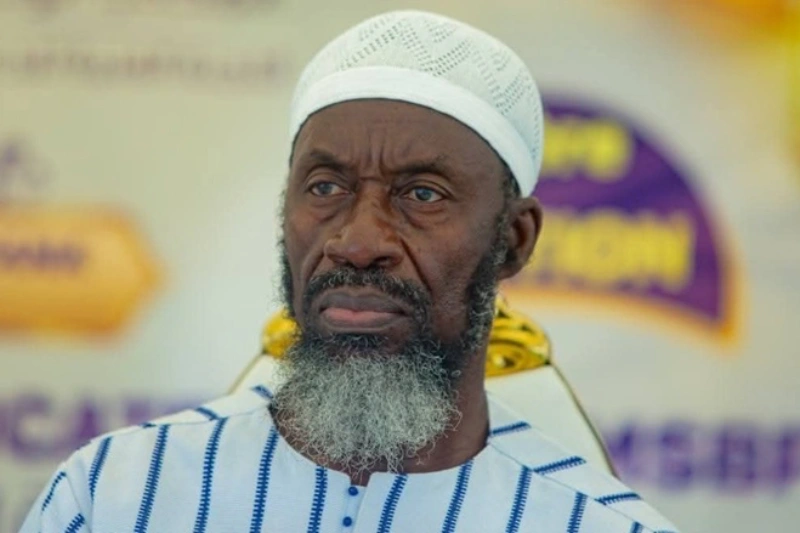
They are supporters of Imam Kindo, one of the country’s best known Sunni scholars. The imam himself is still in custody.
The Sunni Movement of Burkina Faso told AFP the detainees were freed on Sunday and welcomed home by fellow Muslims. “It is a relief to see them free,” a movement official said. Then came the catch. Their thoughts, he added, were with Dr Kindo.
Four months earlier, on 26 May, security forces picked up Imam Kindo in Ouagadougou on the eve of Eid. Two days before that, he had criticised a draft law on religious freedoms. Authorities have not publicly stated the reason for his arrest.
Hundreds took to the streets to demand the release of Imam Kindo. On 28 May, the governor of the Kadiogo region ordered the movement’s main mosque shut, citing a risk of public disorder. Several protesters were detained too.
About 100 of them were taken to a military camp. Officials called it civic and citizen training. AFP later reported images of the group in uniform doing physical drills.
So what was this, really? Education or punishment?
The Media Foundation for West Africa has asked the authorities to state the legal grounds for holding Imam Kindo and to free anyone held only for protesting peacefully. That request has not been publicly answered.
Context matters here. Parliament adopted the Religious Freedoms Law unanimously on 20 June. The government says it protects the secular state. It brings prison terms and fines for what it calls religious abuses, such as the forced begging of children and breaches of financial rules by religious bodies.
Few would argue with those aims. The row is about who gets to police the pulpit.
In July, Captain Ibrahim Traore told scholars that “the battle has begun” against what he called radical Islam. He described the protests after the arrest as the work of a small minority of extremists, according to Al Jazeera.
The government’s fear is not imaginary.
Since 2016, Islamist armed groups have waged an insurgency in Burkina Faso. Human Rights Watch says more than 2 million people have been displaced. It also says the al-Qaeda affiliate JNIM is present across most of the country and has besieged dozens of towns and villages.
Human Rights Watch says JNIM has gained support in some communities by providing religious education, dispute resolution and basic security where state services are weak or absent. Analysts say such dynamics have complicated efforts to separate legitimate religious activity from concerns about extremist influence.
That explains the tone from the top. Traore says he will back scholars who preach a peaceful Islam. He says imams who use sermons for extremist ideas will be suspended. He also accuses foreign powers of exploiting religion to destabilise the country.
His plan to recall students from Islamic schools abroad follows the same logic. The figure he gave, more than 800,000 students, is his own claim.
But a security case needs a target. So far, the authorities have not said how Imam Kindo fits into it.
Yet he was long seen as a supporter of the military-led government. His backers point to years of public work for social cohesion and against terrorism. As far as reports show, no formal charge has been made public.
The Timbuktu Institute, a Dakar-based think tank, reads the standoff as the end of an unspoken deal between the government and influential Muslim scholars. Their backing helped Traore after he took power. Turning on them, the institute argues, risks costing him a source of legitimacy without solving the security crisis.
About 60 percent of Burkinabe are Muslim. A state at war with jihadists cannot afford to lose the religious mainstream.
The release of Imam Kindo’s supporters suggests some room for talks. Reports point to mediation with Islamic organisations, though officials have not confirmed it.
Still, the gap is plain. Followers are home. Imam Kindo is not.
For now, the case of Imam Kindo remains the test of what Traore means by extremism. A hundred families got their people back this weekend. One imam is still waiting for his.


