



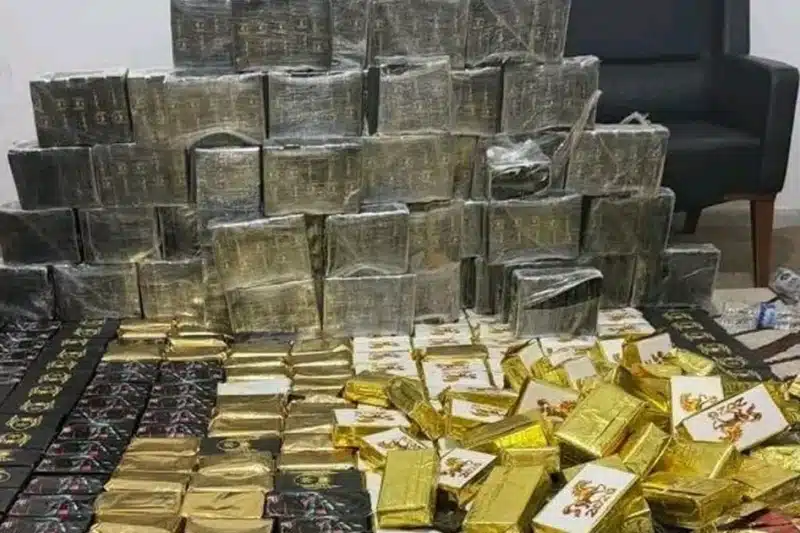

The packets were gold and black, stamped with a horse and the year 2026. Libyan officers found them in a house in farmland outside Tobruk.
On Saturday, 10 October, the anti-drugs agency in eastern Libya seized about 400kg of hashish, valued at six million dinars, or roughly $934,000, and arrested several suspects. The hashish seizure in Libya may be modest in scale, but the reported route and intended destination raise questions about the domestic market.
Ahmed al-Mismari, the agency’s information and documentation officer, told Reuters that preliminary investigations indicated the shipment had been smuggled across the border with Egypt. He said it was intended for sale within Libya.
That account adds a domestic dimension to a country better known as a drug transit route. Libya has become a major regional trafficking hub since the 2011 uprising that toppled Muammar Gaddafi, with criminal networks exploiting years of instability and conflict.
Tobruk has featured in earlier drug seizures. A January 2026 report by the United Nations Office on Drugs and Crime (UNODC) records the interception of 1.2 tonnes of hashish on a road from Sabha to Tobruk in August 2021. In February 2023, authorities found 380kg in a private house, stored alongside cigarettes and firearms. Another 300kg was seized in January 2024.
The latest operation follows that pattern of hashish being stored in private premises, although this time the location was a house in an agricultural area outside the city. It also offers a point of comparison with seizures elsewhere in the region.
The same UNODC report records 191 tonnes of cannabis resin seized by Egyptian authorities in 2023. At 400kg, the Tobruk haul amounts to roughly 0.2 per cent of that figure. The comparison illustrates the difference in scale, although it does not establish how the two countries’ trafficking routes or markets are connected.
Important details about the hashish seizure in Libya remain unconfirmed. Reuters reported that the number of detainees had not been established, although they were Libyan and Egyptian nationals. The authorities have not publicly explained how the estimated value of six million dinars was calculated. The claim that the shipment came from Egypt also remains based on preliminary investigations.
A second operation on the same Saturday highlighted the scale of the country’s wider drug problem. In the south-east, a brigade of the Libyan National Army seized more than 1.3 million narcotic pills after a firefight with smugglers in Kufra. Three soldiers were injured, according to the army. The Tobruk operation involved hashish found in a house; the Kufra raid ended in an armed confrontation.
Whether individual seizures indicate a wider rise in trafficking is harder to establish. UNODC cautions that an increase in recorded seizures does not necessarily mean trafficking has increased. It may also reflect stronger enforcement. The agency warns that Libya’s national seizure figures are incomplete and likely underestimate the true scale of the trade.
Drug use inside Libya presents a separate concern. UNODC has reported growing drug use among young people, alongside easier access to substances and falling prices. Its report also places youth unemployment at around 50 per cent, a measure of the economic pressures facing the country, though not proof of a direct link between unemployment and drug use.
The latest hashish seizure in Libya has removed a substantial quantity of drugs from circulation and led to arrests. But the available information does not yet establish who organised the shipment, how it crossed the border or whether the horse-marked packages can be linked to a wider trafficking network.


