



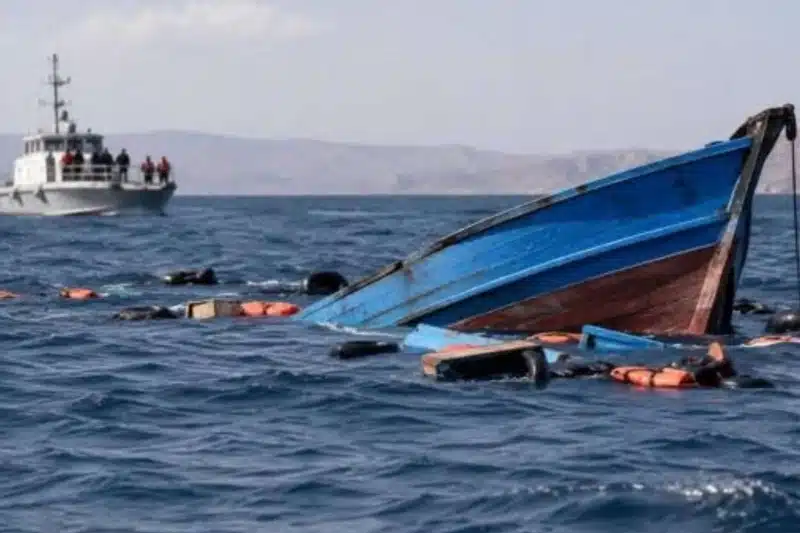

The boat had barely left the shore when it went under.
Migrants boarded on the evening of 8 October, and the vessel sank soon afterwards, close to the coast near Guhere, north of Obock. Alexandre Coissac, the chief of mission for the International Organization for Migration (IOM) in Djibouti, told the Associated Press that overcrowding was the main reason.
By Sunday, the Djibouti shipwreck had killed at least 139 people. Another 84 were missing. The IOM says 305 people were on board, and it has warned that the toll could still rise.
Those figures replace earlier ones. Initial reports on the Djibouti shipwreck put the dead at 109 and the missing at 116, and some gave a passenger total near 350.
At least 82 people survived the sinking, all of them Ethiopian nationals. At least 64 are receiving assistance at the IOM’s migrant response centre in Obock.
Coissac visited the area on Saturday. He said the survivors were in shock and that talking to them was difficult. Some already knew relatives had died. Others were given phones to tell their families they were alive.
The dead have had no such goodbye. Coissac said local authorities were overwhelmed as bodies kept washing ashore at once, and that many were buried “with no names, in a common grave, like in a war situation”.
Each of them had parents, he added, and some families may never learn what happened.
The Djibouti shipwreck toll of 139 covers only bodies buried by Djiboutian authorities. Migrants have buried others themselves, and those will not be counted until officials verify them. So 139 is a minimum, not a final figure.
The IOM’s breakdown of the first 109 bodies recovered shows 52 men, 42 women and 15 children, among them nine girls and six boys.
This was not the first Djibouti shipwreck this year. On 24 March, a boat carrying 320 people sank off the coast north of Obock, leaving nine dead and 45 missing. Tanja Pacifico, who headed the IOM mission in Djibouti at the time, warned that it “may sadly mark the first of many incidents this year”.
She was right. The IOM recorded 922 deaths and disappearances on the Eastern Route in 2025, up from 558 in 2024 and the highest since tracking began in 2014. Attempts to cross rose by 18 per cent in 2025.
Why do people still risk it after a Djibouti shipwreck like this? IOM figures show that roughly 95 per cent of migrants on the route cite economic reasons. They are chasing work in the Gulf.
The Djibouti shipwreck also happened against an odd backdrop. The boat was heading for Yemen, where fighting between the internationally recognised government and Houthi rebels has escalated. The Associated Press reports that at least 2,000 Yemenis have received aid in Djibouti in recent weeks.
The same strait connects people fleeing conflict with migrants travelling towards Yemen in search of work in the Gulf. For those making the crossing, the dangers are compounded by instability on both sides of the water.
At its narrowest, the Bab al-Mandeb is about 20 kilometres wide. This boat never got anywhere near that far.
The pressure behind the Djibouti shipwreck is not easing. The IOM has recorded more than 20,000 movements from Ethiopia into Djibouti since 10 September. IOM spokesman Kennedy Omondi Okoth said this week that many of those attempting the journey end up stuck in Djibouti.
IOM Director-General Amy Pope said no one gets into a boat like that unless they believe there is no other safe way. She asked governments and donors to back safe, legal pathways before the next boat goes down.
For now, the search goes on. Some survivors have already told their families they are alive. In Ethiopia, other families are still waiting for a call that may never come.


