



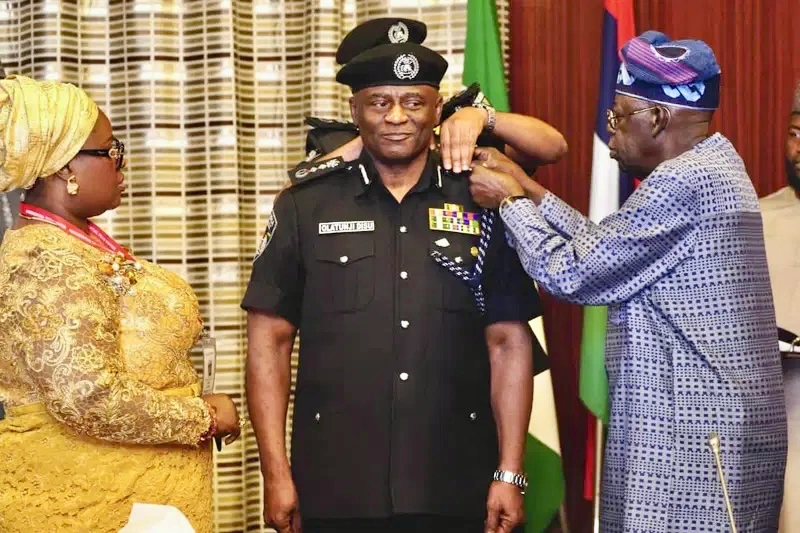

With just 60 days until his scheduled retirement, the clock is already ticking as Tunji Disu assumes office as Acting Inspector-General of Police
ABUJA, 26 February 2026 – In an official ceremony at the Presidential Villa, President Bola Ahmed Tinubu formally confirmed Tunji Disu as Acting Inspector General of Police.
The ceremony took place on Wednesday, 25 February, following the resignation of Kayode Egbetokun, bringing to an end a tenure that had drawn both praise and scrutiny.
The appointment signals the beginning of what many within policing circles describe as a transition moment for the Nigeria Police Force.
The Handover: A Shift in Tone and Expectation
The formal handover was completed at Louis Edet House, the Force Headquarters in Abuja, late on Tuesday afternoon.
Egbetokun’s departure was officially attributed to pressing family considerations. His continued tenure had drawn sustained public discussion after amendments to the Police Act in 2024 allowed him to remain in service beyond the statutory retirement age of 60. Although the amendments were enacted through due legislative process, they prompted political debate, with some observers contending that they marked a departure from established service practice.
Against that background, Disu’s appointment reflects institutional continuity while indicating a potential adjustment in leadership approach within the Force.
During the decoration ceremony, President Tinubu underscored that the appointment was based on familiarity with Disu’s operational record.
“I know your record. I saw the dedication you exhibited while you were in Lagos when I was governor. Lead firmly but fairly. Ensure the safety of lives and property remains our highest priority.”
The President’s remarks suggest an expectation of disciplined leadership anchored in operational results rather than political rhetoric.
Who is Acting IGP Tunji Disu?
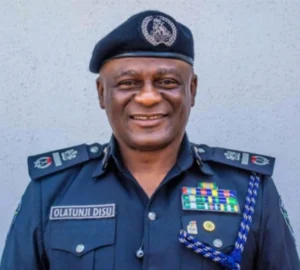 Within policing circles, Disu is often described as a field officer who rose through operational command rather than administrative patronage.
Urban Policing and Reform Reputation
He gained national visibility as Commander of the Lagos Rapid Response Squad. Under his leadership, the unit underwent a public-facing reorientation aimed at improving citizen engagement and rapid response credibility. The initiative contributed to rebuilding public confidence in certain urban areas at a time when police community relations were under strain.
Intelligence and Tactical Experience
Disu later led the Intelligence Response Team and subsequently served as Commissioner of Police in Rivers State and the Federal Capital Territory. Both assignments required oversight of complex security environments characterised by organised crime, heightened political activity and sensitive investigations.
Professional colleagues have described him as methodical and evidence-focused, with a tendency to prioritise structured operational briefings over frequent public commentary.
The 60-Day Question
A notable constitutional and administrative detail surrounds his appointment.
Disu is scheduled to reach the statutory retirement age of 60 on 13 April 2026. That places his current tenure within a narrow window of roughly 60 days unless further legal or administrative action is taken.
The development raises governance considerations. Whether the presidency will pursue legislative adjustments similar to the 2024 amendments, or treat the appointment as an interim stabilisation measure pending a longer-term decision, remains unclear.
At present, no official clarification has been issued on whether the appointment is intended to be transitional or subject to renewal.
Disu’s Initial Priorities
In his first address as Acting Inspector General, Disu set out a reform-oriented agenda structured around three core priorities.
1. Professionalism and Modernisation
He committed to strengthening intelligence-led policing and expanding the use of forensic investigation techniques. The emphasis suggests a gradual move from largely reactive responses towards more systematic evidence gathering, data analysis and preventive strategy.
2. Internal Accountability
He outlined a zero-tolerance position on corruption and misconduct within the ranks. Governance specialists note that internal discipline reforms often present deeper institutional challenges than frontline crime reduction, meaning this commitment is likely to face close scrutiny in the months ahead.
3. Community Partnership
Disu emphasised that the police exist to serve citizens, not intimidate them. His remarks framed public trust as an operational necessity rather than a public relations exercise.
What This Means for Nigeria’s Security Landscape
As Tunji Disu assumes office, Nigeria’s policing leadership enters a period of heightened expectation. The Force faces layered security challenges ranging from banditry and kidnapping to cybercrime and urban violent crime.
The coming weeks will help determine whether the “Disu era” becomes a short transitional chapter or marks the beginning of a more sustained recalibration of Nigeria’s policing architecture.
For now, the symbolism is clear. Leadership has changed. Expectations have risen.
Whether reform momentum can be institutionalised within existing legal and structural constraints remains the defining question.


