



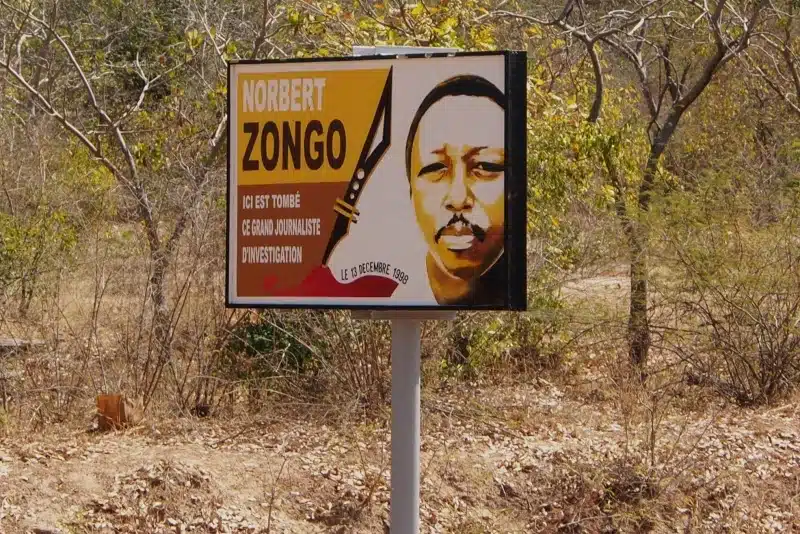

The Norbert Zongo case has reached a decisive stage. Burkina Faso’s Court of Appeal in Ouagadougou confirmed on 30 July 2026 that François Compaoré will stand trial over the 1998 killing of the investigative journalist, according to a statement from the Attorney General’s office released on 13 August 2026. The ruling orders Compaoré and two other men to face judgement.
Compaoré, the younger brother of former president Blaise Compaoré, is accused of inciting the assassination. Wanga Christophe Combasséré faces a murder charge alongside aggravated destruction of property. Banagoulo Yaro is charged with complicity in the killing. All three were named in a judicial order first issued in March 2025 in the Norbert Zongo case, a decision their lawyers had appealed weeks later.
The Norbert Zongo case still has one hurdle before a trial date can be set. A lawyer representing Yaro filed a further appeal to the Court of Cassation on 31 July 2026, a day after the appeal chamber’s ruling. Burkina Faso’s prosecutor, Désiré Pinguédewènde Sawadogo, says the case remains on track for what he called a diligent resolution, though no date has been fixed.
Zongo’s killing shocked Burkina Faso. He was the founder of the weekly newspaper L’Indépendant, known for reporting on corruption inside Blaise Compaoré’s government. On 13 December 1998, his bullet-riddled and burnt body was found alongside three companions in a Toyota Land Cruiser near Sapouy, roughly 100 kilometres from Ouagadougou.
At the time of his death, Zongo was investigating a separate killing that would become central to the investigation into his murder. David Ouédraogo, a driver employed by François Compaoré, died in January 1998 at a clinic inside the presidential compound. Reporters Without Borders has said Ouédraogo was tortured by presidential guards after being accused of stealing money from Compaoré’s household.
Zongo published a series of articles pressing for accountability over Ouédraogo’s death. Colleagues and family members later said he received repeated warnings to abandon the story. His decision to continue reporting is widely seen as the motive behind the killings at Sapouy, according to an independent commission of enquiry that examined the Norbert Zongo case in 1999.
Getting Compaoré into a Burkinabe courtroom has taken decades, and the Norbert Zongo case has outlasted several changes of government along the way. He left Burkina Faso after his brother was toppled in a popular uprising in October 2014. French police arrested him at Roissy airport in October 2017 under an international warrant issued by Ouagadougou. A French extradition decree followed in 2020.
That decree did not survive a legal challenge. The European Court of Human Rights ruled in September 2023 that sending Compaoré back to Burkina Faso would breach protections against inhuman treatment. France’s government abrogated the extradition decree that December, and Compaoré’s judicial supervision in Paris was lifted soon after.
Compaoré has lived in Abidjan since 2024, after travelling to Ivory Coast to visit his brother, who has resided there since his fall from power. Ivorian authorities have shown no sign of handing him over, and diplomatic ties between Abidjan and Ouagadougou remain strained. Burkinabe prosecutors have asked for his testimony, but for now he remains outside their reach.
The Norbert Zongo case is not the only unresolved killing tied to Burkina Faso’s political history. Clément Oumarou Ouédraogo, a former minister, was killed in 1991 when a grenade exploded in his car, a case that was closed without firm conclusions. Revolutionary leader Thomas Sankara was gunned down in 1987 in a coup that brought Blaise Compaoré to power, a case that only reached trial in 2022, when a military tribunal convicted several defendants in absentia.
Campaigners marking the 27th anniversary of Zongo’s death in December 2025 said the pursuit of justice should continue regardless of Compaoré’s location. Chrysogone Zougmoré, who leads a coalition of civil society groups, said the file should be judged with or without him.
For now, the Norbert Zongo case sits with the Court of Cassation, which must rule on the legality of the appeal chamber’s decision before judges in Ouagadougou can set a trial date.


