




Burkina Faso’s push for energy independence is reshaping how the world sees a country once known mostly for drought, hunger and coups.
For years, headlines from Ouagadougou tracked jihadist attacks, food shortages and political upheaval. That picture is shifting. The military government of Captain Ibrahim Traoré has placed energy independence at the centre of a wider sovereignty agenda. The numbers behind it are starting to add up.
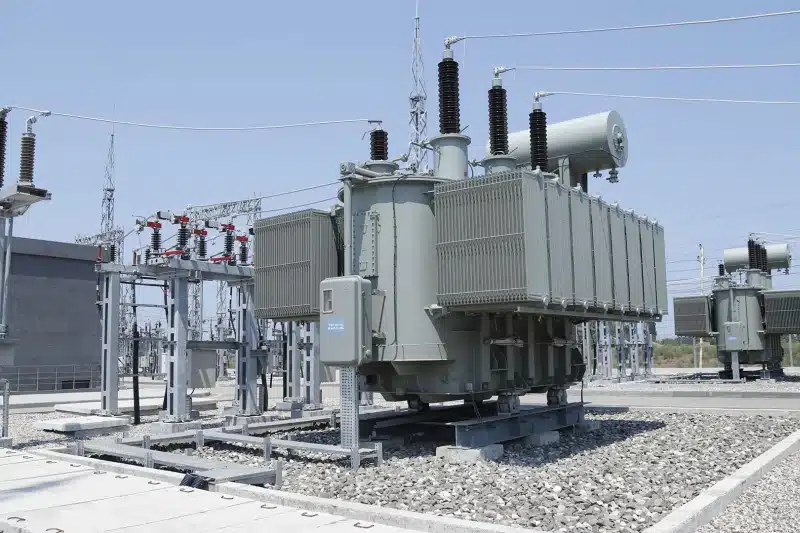
On 21 July 2026, Prime Minister Rimtalba Jean Emmanuel Ouédraogo inaugurated a 50 megawatt emergency thermal plant at Pabré, near Ouagadougou. It was built in just 90 days. The project used a public-private partnership with Egyptian firm AL Ahram Taqa and cost 18 billion CFA francs, according to Capmad, which covers West African energy markets. The plant reinforces national utility SONABEL’s generation fleet as part of the wider energy independence effort.
The same day, hours before the Pabré ceremony, Minister of Energy, Mines and Quarries Yacouba Zabré Gouba laid the foundation stone for a second plant. It sits at Ouaga South East, in the commune of Saaba. The project is valued at 133 billion CFA francs and will add a further 120 megawatts once complete.
The two plants sit inside a bigger plan. Burkina Faso’s National Energy Compact 2026 to 2030 sets a clear target, Capmad reports. It aims to cut the country’s power dependence ratio from 55 percent in 2024 to zero by the end of the decade. Thermal capacity is meant to climb from 415 megawatts in 2024 to 2,018 megawatts by 2030. Solar capacity should more than triple, from 228 to 887 megawatts. It is an ambitious energy independence timeline for a government with limited access to the Western financing that once underpinned regional power projects.
The scale of the challenge is real. Official statistics for the second half of 2025 show national electricity production at 724.55 gigawatt hours, up 10.35 percent on the previous year. Thermal sources supplied nearly 70 percent of that total. Yet Burkina Faso still imported 808.15 gigawatt hours in the same period. That is more than half of all energy available in the country, mostly from Ghana and Ivory Coast. Closing that gap is the real test of the energy independence drive.
Electricity access remains a serious constraint too. Only around a fifth of Burkina Faso’s roughly 24 million people have reliable power, according to African Leadership Magazine, which tracks infrastructure financing across the continent. Beyond the thermal build out, an 18 megawatt solar plant is under development in Dédougou. It is backed by the African Development Bank’s Sustainable Energy Fund for Africa. The plant pairs emergency generation with cleaner capacity as the country works towards full energy independence.
Energy is not the only front. Gold, Burkina Faso’s dominant export, has become the second pillar of the wider sovereignty push that runs alongside the energy independence campaign. The sums involved dwarf even the power investments. Traoré’s administration says the country has earned close to 18 billion US dollars in gold revenue since he took power in the September 2022 coup. Officials say that money now funds health, education and security spending, according to Uchumi360, an African markets publication.
The state has moved from rhetoric to ownership. Boungou and Wahgnion, both previously run by Endeavour Mining, were transferred to state control by June 2025. The vehicle is the Société de Participation Minière du Burkina, known as SOPAMIB. A new, fully state owned mine opened at Yako on 9 July 2026. The government now holds direct control of three mines and majority local ownership in three more.
Traoré’s government also says it cleared 4.7 billion dollars of external debt in early 2025. Officials tie that claim directly to gold earnings.
A domestic gold refinery, Raffinor, is meant to complete the picture. Ground was broken in November 2023 in partnership with the Malian firm Marena Gold. The facility is designed to process 150 tonnes a year at 99.99 percent purity. It remained under construction this year, with completion expected before the end of 2026. Once running, it would let Burkina Faso refine its own gold rather than export it raw. That captures a stage of the value chain that has never previously operated inside the country.
None of this erases Burkina Faso’s security and humanitarian difficulties. Jihadist violence continues in parts of the country. Independent scrutiny of state spending also remains thin under military rule. But the twin push for energy independence and gold sector control marks a genuine shift in how the country is discussed. The narrative is moving away from crisis alone and towards infrastructure, revenue and industrial ambition.
Whether Burkina Faso can turn announced megawatts and refinery blueprints into full energy independence and diversified exports by 2030 is still an open question. For a country that rarely featured in economic headlines a few years ago, that question alone marks a striking change.


