




Mamadou Tahirou is eighteen. Sickle cell disease has left him looking closer to twelve.
Bone pain, severe anaemia and exhausting headaches send him back to hospital again and again. The illness has cost him months of school.
His story sits behind a quiet breakthrough in Senegal. A Dakar-based pharmaceutical firm, Teranga Pharma, has begun manufacturing an Africa-made sickle cell treatment. It is the first of its kind produced anywhere on the continent.
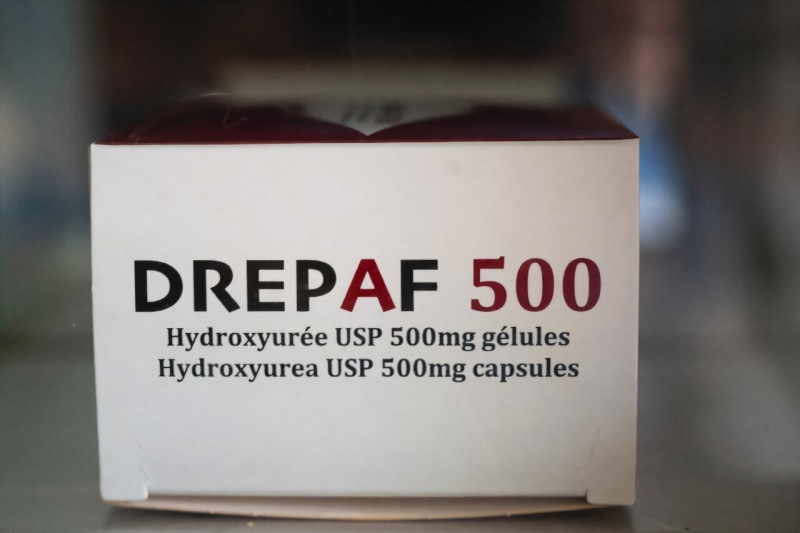
Agence France-Presse visited Teranga Pharma’s laboratory in Mbao near Dakar. It reports that the drug, called Drepaf, is a generic version of hydroxyurea, the gold-standard therapy for sickle cell disease.
Africans had never had proper access to the active ingredient before now, said Teranga Pharma’s chief executive, Mouhamadou Sow. Doctors, he explained, were often left treating the disease’s symptoms rather than its root cause in the red blood cells.
Drepaf launched in November 2025. It comes in 500 milligram doses for adults and 100 milligram doses for children. The company says its goal is to cut sickle cell crises threefold among patients who take it.
For families like Tahirou’s, an Africa-made sickle cell treatment could not come soon enough. His mother, Rabiatou Diallo, says medication and hospital visits have drained the household for years. Her son can barely walk on some days, she says.
Sickle cell disease is an inherited blood disorder, and Africa carries most of its global burden. The World Health Organisation, according to researchers at Epicentre and Médecins Sans Frontières, estimates that 240,000 children are born with the condition across Africa every year.
Many die before their fifth birthday because of late diagnosis and poor access to treatment. That gap is exactly what the new Africa-made sickle cell treatment aims to close.
Hydroxyurea has featured on the World Health Organisation’s essential medicines list since 2013. Yet it remains scarce and expensive across sub-Saharan Africa. Most supplies are imported from Europe and the Americas, and that pushes costs beyond what many families can bear.
Magueye Ndiaye, president of the Senegalese Association for the Fight Against Sickle Cell Disease, says the new drug already stands out on packaging alone. Patients once needed two boxes of twenty tablets a month, he said. A single box of sixty Drepaf tablets now covers the same period, at no extra cost.
One mother, Lala Dieng, has watched her seventeen-year-old son live with the disease for six years. She says she has noticed a real change since he switched from imported Hydrea to the Senegalese-made alternative.
Teranga Pharma is not stopping at Senegal’s borders. The company is working with an Indian technical partner to scale up production of its Africa-made sickle cell treatment. It has begun supplying Burkina Faso, Guinea and Ivory Coast. Requests have also come in from the Democratic Republic of Congo, Gabon and Cameroon.
By 2030, the firm hopes its Africa-made sickle cell treatment will reach patients right across sub-Saharan Africa. Officials describe the push as part of a wider drive toward pharmaceutical sovereignty for the continent.
For now, the drug remains a Senegalese success story with regional ambitions. Whether it can scale fast enough to meet demand from millions of patients is still an open question. But for families such as Tahirou’s, a locally produced Africa-made sickle cell treatment after year


