




The DRC Ebola outbreak has become the fastest spreading in recorded history. UN Emergency Relief Coordinator Tom Fletcher issued the warning this week. The death toll in the Democratic Republic of the Congo has now passed 2,180. More than 4,600 cases have been confirmed since the outbreak began.
Fletcher chaired an emergency meeting of the Inter-Agency Standing Committee. He said the epidemic was now killing one person every 30 minutes. His language was blunt. Ebola, he said, was “winning” against the international response.
Ituri Province remains the epicentre of the DRC Ebola outbreak. It accounts for more than 3,400 of the roughly 4,660 cases recorded so far. Six of the country’s 26 provinces have now reported infections. These include North Kivu, South Kivu, Haut-Uélé, Tshopo and Bas-Uélé.
The first Ebola death in Bas-Uélé was confirmed in Buta earlier this month. Uganda has also recorded 20 cases linked to the same outbreak. Isolated cases were evacuated to France and Germany for treatment.
The current case fatality rate is close to 47 per cent. That reflects the severity of the Bundibugyo strain. It also reflects how hard it is to reach patients in conflict affected areas. Unlike the more familiar Zaire strain, Bundibugyo has no approved vaccine. Health workers are relying on supportive care and experimental therapies instead.
According to Fletcher, the outbreak is doubling roughly every 20 days. That pace has alarmed epidemiologists who have tracked the disease since May. Ongoing conflict between the Congolese military and the Rwanda backed M23 movement has complicated the response. Communities across the eastern provinces have been displaced. Access to treatment centres has been disrupted as a result.
Funding shortfalls have also slowed the fight against the DRC Ebola outbreak. Global humanitarian budgets are stretched thin by crises elsewhere on the continent. To bolster the response, the UN has released tens of millions of dollars from its Central Emergency Response Fund. This builds on earlier allocations made shortly after the outbreak was declared.
The World Health Organization has classified the Ebola crisis in the Democratic Republic of the Congo as a public health emergency of international concern. That is the highest level of alert under international health regulations. The World Food Programme has begun extending hot meal support to treatment centres. This covers Ituri and neighbouring provinces. Officials hope it will help sustain patients and frontline workers as case numbers rise.
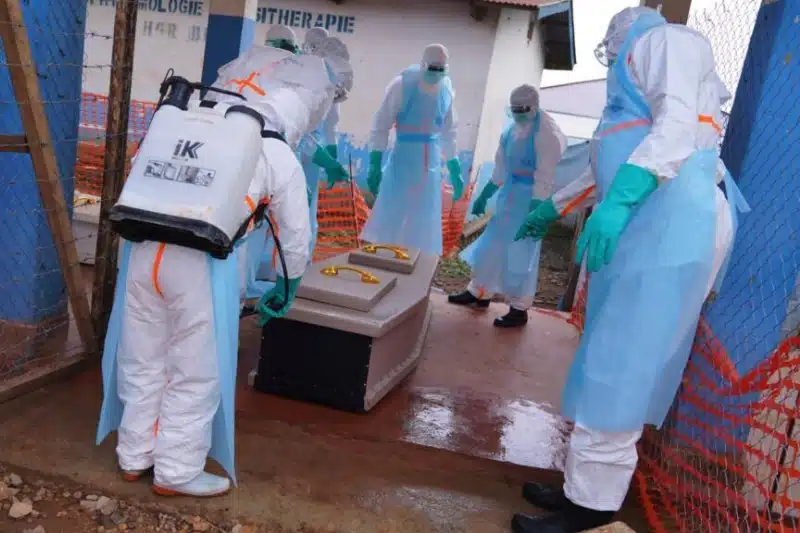
Health officials in Kinshasa have acknowledged the true scale of the DRC Ebola outbreak may be higher than reported. Weak surveillance systems are partly to blame. Mistrust of authorities in rural communities has also slowed detection. Community deaths remain a particular concern. These occur when victims die outside formal treatment facilities, often linked to unsafe burial practices that spread the virus further.
The epidemic is edging closer to becoming the second deadliest Ebola outbreak on record. Only the 2014 to 2016 West African outbreak was larger. That epidemic killed more than 11,000 people across Guinea, Liberia and Sierra Leone. For a region already contending with conflict and displacement, the current crisis has added further pressure on already strained health systems.
Fletcher called for speed, scale and solidarity from the international community. He argued that further delay would be measured in lives lost. Whether that appeal translates into faster funding and deployment remains to be seen. It may determine how much worse the DRC Ebola outbreak becomes before it is brought under control.


