



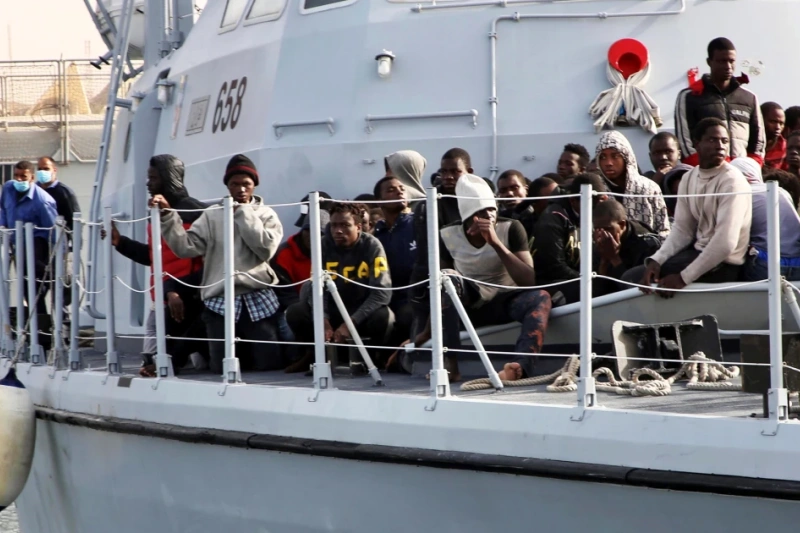

Libya migrant returns reached a fresh milestone this week, even as the country’s rival military factions took a tangible step toward joint command in the central city of Sirte.
The International Organization for Migration said 512 migrants left Libya on three flights, under its Voluntary Humanitarian Return scheme. IOM, in a statement posted on its official channels, confirmed that 161 people were flown to Chad, while 351 others returned to Burkina Faso, The Gambia and Mali.
The flights were supported by the European Union. IOM said the programme behind these Libya migrant returns, which has operated since 2015, allows people to go home safely and with dignity, at a time when the country remains one of the busiest transit routes to Europe.
These Libya migrant returns are not isolated. IOM’s own figures show it has helped well over 100,000 people leave Libya voluntarily since the scheme began, drawing migrants from 49 countries of origin across Africa and Asia, including Nigeria, Mali, Niger and The Gambia.
Detention conditions inside Libya have long driven demand for the scheme behind Libya migrant returns. IOM Libya’s leadership has previously said protection risks remain high and regular pathways out of the country are limited, making voluntary return one of the few safe options available to stranded migrants.
Away from the file driving Libya migrant returns, the country’s Government of National Unity announced on Tuesday that forces from the country’s east and west had begun setting up a unified air operations command in Sirte. The defence ministry under the Tripoli based, UN recognised government said the move was being coordinated with military leadership in the east.
A new Air Force Center of Excellence is also being established at the Air Academy in Misrata, open to personnel from both regions, according to the ministry. Work is under way as well on a national joint operations room drawing on forces from eastern and western Libya.
The air command initiative builds on a run of unification steps this year. Eastern forces Chief of Staff Khaled Haftar and his western counterpart Salah al-Din al-Namroush met face to face in Sirte earlier in July, alongside members of the Joint Military Commission, the Joint Security and Military Committee and the UN Support Mission in Libya, to discuss reuniting the country’s divided armed forces.
That meeting produced an agreement to hold a joint field exercise in southern Libya, targeting smuggling and irregular migration routes near the borders with Chad and Niger, a sign that migration control and military reunification are increasingly treated as linked priorities by Tripoli and its eastern counterparts.
Libya has been split since 2011 between the internationally recognised government in Tripoli and a rival administration in the east, aligned with Field Marshal Khalifa Haftar. The Joint Military Commission, known as the 5+5, was set up under a 2020 Geneva ceasefire to consolidate that truce and pave the way for a single national army.
For now, the twin developments point in the same direction. Libya migrant returns continue at pace under IOM’s watch, while the country’s fractured military establishment inches, however cautiously, toward a shared command structure in Sirte, the city both sides have called the one that unites the nation.


