



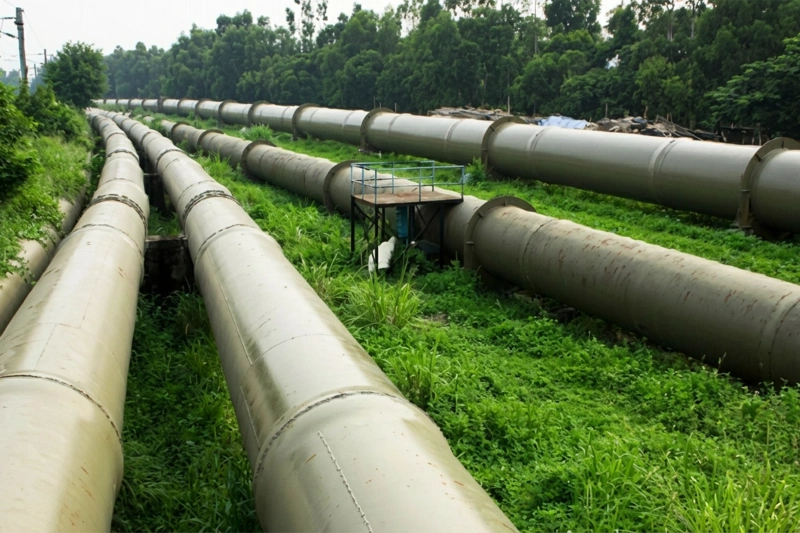

The central issue is whether Nigeria’s gas development is delivering equitable economic benefits to the regions that host its resources. For the South-East, the concern is not merely where gas is extracted or transported, but whether the region’s industries can access affordable energy to expand production, create jobs and compete.
A national gas strategy that pursues ambitious production and export targets must also address the infrastructure gaps holding back industrial growth in the South-East.
In an article published by P.M. Express, Prince Ben Ahanonu accuses the Federal Government of excluding the South-East from Nigeria’s gas development plans despite the region’s gas resources. He also questions the role of Igbo political leaders and suggests that the region risks losing out while its natural wealth is transported elsewhere.
The concerns deserve attention. But Nigeria’s gas policy must be examined through project documents, investment decisions and evidence of what has been built, approved or rejected. The conclusions drawn from those facts must be distinguished from allegations that remain unproven.
The real injustice in Nigeria’s gas politics is that a region endowed with valuable natural resources can remain disconnected from the infrastructure needed to turn that wealth into jobs, industries and prosperity for its people. The South-East should not have to watch gas extracted from its soil enter national transmission networks while its manufacturers struggle with expensive and unreliable energy. If national gas planning can connect industrial centres in other parts of the country, the South-East deserves the same commitment.
The Federal Government must explain why a comprehensive regional gas pipeline connecting Aba, Owerri, Enugu, Onitsha and Nnewi has not become a reality, and what it intends to do to correct the imbalance. This is not a demand for special treatment. It is a demand for equitable development, economic justice and a fair return on the South-East’s contribution to Nigeria’s energy wealth.
The first question is straightforward: which approved gas plan excluded the South-East, and what do the relevant project documents say?
Nigeria’s gas infrastructure has developed through different projects with different routes and objectives. The NNPC Gas Master Plan 2026, unveiled on 30 January 2026, should be examined alongside earlier plans to establish what was proposed for the South-East, what was approved and what remains outstanding.
The consequences of this infrastructure gap extend far beyond politics. Aba, Owerri, Enugu, Onitsha and Nnewi are important industrial and commercial centres whose manufacturers need reliable, affordable energy to expand production, create jobs and compete with businesses elsewhere in the country.
While major gas infrastructure projects advance in other parts of Nigeria, the South-East must not be left waiting for the connections needed to unlock its industrial potential. The Federal Government should explain what is holding back a regional network, what steps are being taken to deliver it and when businesses can expect tangible progress.
The authorities must publish the plans considered, the decisions taken and the steps required to close the gap. The South-East should not be expected to accept endless explanations while its industries struggle to access an energy resource that could help transform the regional economy. Equitable access to infrastructure is a national development obligation, not a favour to be granted at the discretion of political leaders.
Nigeria’s gas development in Imo State exposes the central question in this controversy: who benefits when gas infrastructure is built in the region? The ANOH Gas Processing Plant and its associated pipeline were commissioned in May 2024, with NNPC stating that ANOH and the expanded AHL plant would together supply approximately 500 million standard cubic feet of gas daily to the domestic market.
Yet processing and transmitting gas is not the same as connecting manufacturers in Aba, Owerri, Enugu, Onitsha and Nnewi to affordable supply. The Federal Government must explain how existing investments will translate into wider industrial access across the South-East.
But there is an important qualification: processing gas in Imo State is not the same as delivering affordable gas to manufacturers in Aba, Nnewi, Onitsha and Enugu. The existence of ANOH does not settle the question of regional access. Equally, transporting gas into the national network does not, by itself, prove that the South-East is being deliberately short-changed.
The real test is whether the infrastructure required to connect the region’s industrial centres has been properly assessed, funded and prioritised.
The South-East’s gas potential deserves serious attention in Nigeria’s national energy planning. The estimate of 30 trillion cubic feet attributed to the Anambra Basin, if substantiated by authoritative geological assessments, would underline the scale of the opportunity facing the region. The Nigerian Upstream Petroleum Regulatory Commission puts the total of Nigeria’s gas reserves at 215.19 trillion cubic feet as at 1 January 2026.
Yet the central issue is not simply how much gas lies beneath the South-East, but whether the region has the pipelines and industrial connections needed to turn its energy resources into jobs, investment and economic growth. The Federal Government should make the relevant geological assessments and infrastructure plans public, while ensuring that the South-East is not left behind in the expansion of Nigeria’s gas economy.
Nigeria’s gas export ambitions raise another important question: how will the country balance international markets with domestic industrial needs? The proposed Nigeria-Morocco African Atlantic Gas Pipeline may create regional economic opportunities, but its development should be accompanied by clear commitments to domestic gas supply.
Nigeria must pursue export opportunities without neglecting the energy needs of its own manufacturers. That is a legitimate policy demand, and it should be backed by transparent domestic supply commitments rather than assumptions about where all the gas will come from.
South-East political leaders must now demonstrate what they have done to secure the infrastructure their region needs. Governors, senators and members of the House of Representatives should disclose the proposals they have submitted, the commitments they have secured and the obstacles they have encountered.
The South-East Development Commission should coordinate a regional gas infrastructure plan with clear costs, financing arrangements and delivery targets. Where leaders have failed to press the region’s case, they should be held accountable. Where proposals have stalled at the federal level, the responsible authorities must explain why.
Enugu State Governor Peter Mbah has publicly advocated a regional gas pipeline, while the Abia State Government reported discussions in September 2026 concerning the South-East Gas Distribution Programme. These developments do not prove that the region’s needs have been met, but they complicate any suggestion that there has been no engagement at all.
The question is whether these efforts will produce a properly financed project with a clear route, timetable and delivery plan. Regional leaders should be held accountable for results, not condemned without examining their records.
Ultimately, the South-East does not need to prove a conspiracy to make its case for gas infrastructure. Its manufacturers need reliable energy. Its industrial centres need viable connections to available supply. Its governments need a coordinated plan that turns regional resources into jobs, investment and economic growth.
The Federal Government should explain the provisions of its gas master plan for the South-East. NNPC and gas operators should clarify which connections are feasible and what would be required to deliver them. The South-East Development Commission should work with the five state governments to develop a costed regional pipeline proposal, complete with industrial demand estimates, funding arrangements and implementation deadlines.
If the region has been disadvantaged by specific decisions, those decisions should be exposed and corrected. If its political leaders have failed to pursue viable projects, they should answer to their constituents.
But allegations of deliberate exclusion and political complicity must be established, not merely asserted.
The South-East deserves pipelines that connect its industries to affordable energy, transparent decisions and accountable leadership. It deserves a serious development strategy, not a debate in which every infrastructure gap becomes evidence of a conspiracy.
Ultimately, Nigeria’s gas resources should support both national economic growth and regional industrial development. The South-East deserves reliable infrastructure, transparent planning and accountable leadership. If specific decisions have disadvantaged the region, those decisions should be exposed and corrected through evidence-based scrutiny.


