



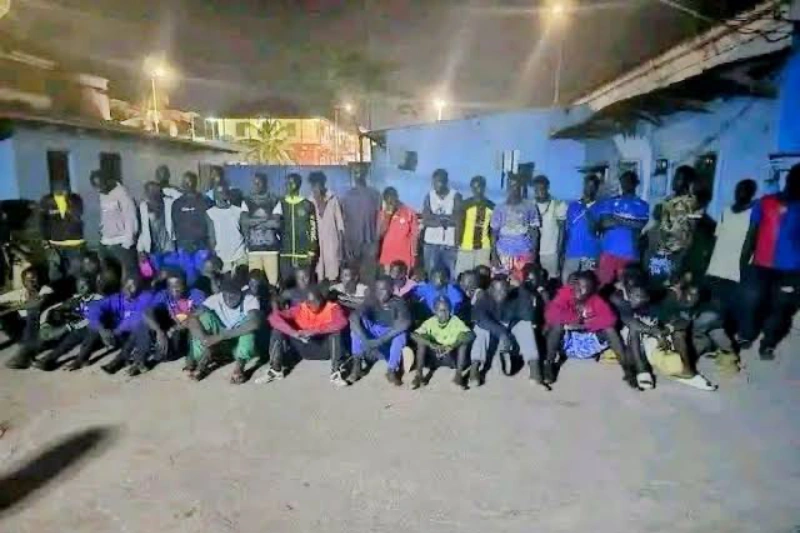

Fanta Makalou, a 32-year-old mother of three from Mali, was promised a job in France. Instead she spent three months held against her will in a house in Bissau.
“I’ve been here for three months now,” she told AFP after police freed her this week.
Her story opens a window on human trafficking in Guinea-Bissau, and it is not the one most people expect.
On Wednesday, 21 October, Guinea-Bissau’s judicial police raided two houses in the north of the capital, freeing 71 people and arresting four suspects, according to reports by AFP and Lusa. The alleged ringleader remains at large. A separate report by RFI correspondent Filomeno Sambú put the number of suspects detained at 15. The discrepancy could not be independently resolved.
Police codenamed the operation ASTRA and say it followed weeks of investigation. Interpol intelligence reportedly helped. The suspected network crosses borders, and so must the policing.
The people freed came from Mali, Guinea and Sierra Leone. Investigators say the wider network also reached Burkina Faso, Togo and Senegal.
The pitch was simple. Recruits were promised help to emigrate and find work in Canada, Europe and the United States. Once in Bissau, police say, they were held, threatened and abused.
Judicial police officer Antonio Gomes told AFP that victims were then pushed into pyramid schemes and made to recruit fresh targets on social media. To look real, the organisers allegedly handed out fake contact details for offices in Canada, the United States and Portugal.
Money was the hook. Makalou says the network demanded 1.5 million CFA francs, about $2,570, and wanted 500,000 of it before she even left Mali. Issa, a 23-year-old from Conakry, says he paid a smuggler 10 million Guinean francs. He was then told to bring in someone else. He refused, and says he was threatened with death if he talked.
This is not the first raid. In May 2025, the same police force rescued more than 100 people, mostly from Côte d’Ivoire and Mali, and arrested seven foreigners. That network used social media videos of cargo ships bound for Europe, police said, and victims waited months in crowded houses for a boat that never left.
In March 2026, the Interior Ministry announced 22 arrests and seized a canoe meant for Spain. Spokesman Agostinho Djatá said children travelling with their mothers would have served as “shields”.
Put the three cases side by side and a pattern appears. The first two sold a place on a boat. The latest sold a job. For anyone tracking human trafficking in Guinea-Bissau, that shift matters.
It also cuts against the old picture. The US State Department says forced begging by boys sent to Senegal is the most common form of human trafficking in Guinea-Bissau. Adults lured by visa promises show another side of human trafficking in Guinea-Bissau, with a different kind of trap.
Washington’s 2026 report on human trafficking in Guinea-Bissau kept the country on Tier 2 and counted 353 identified victims, up from 178. It also found that the government set aside no money for victim services. NGOs provide nearly all the shelter and care, which leaves aid groups carrying much of the cost of human trafficking in Guinea-Bissau.
That gap matters this week. Police spokesman Braima Cissé said the 71 will be handed to their embassies. Those whose countries have no mission in Bissau would have to manage for themselves.
The same report said judicial police often rely on NGO tips or border stops rather than planning their own operations. A weeks-long investigation backed by Interpol looks like different policing. It arrives while a military-led transition, in place since the coup of 26 November 2025, runs the country.
So the test is not the raid. Rescue makes the easy headline. Stopping human trafficking in Guinea-Bissau from refilling those houses is the harder job, and it needs money, cross-border cooperation and courts that convict.
Seventy-one people have their freedom back. The person who sold them the dream still has theirs.


