



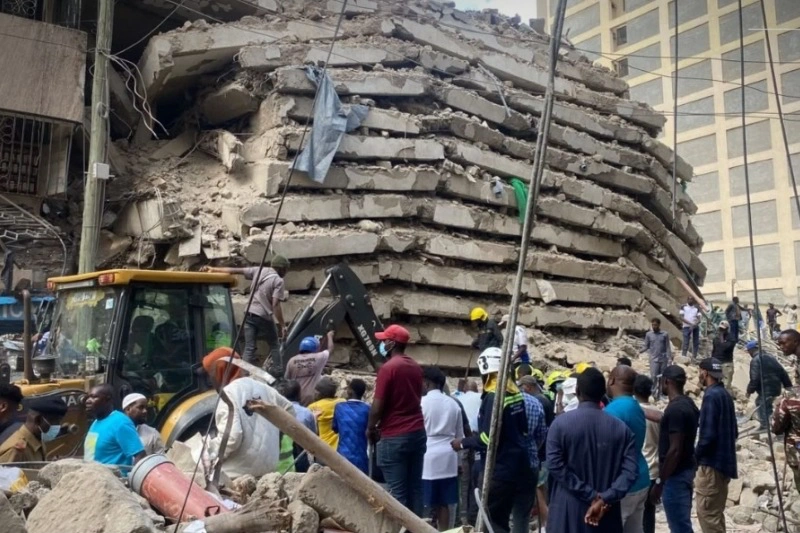

Shops were trading on the ground floor. Construction was still going on above them. Then, at about 1.40pm on Friday, the building came down.
The Eastleigh building collapse has sent rescuers digging through rubble on Yusuf Haji Avenue, next to Day to Day Supermarket on 9th Street in Nairobi. No official figure has been given for how many people are trapped.
Reuters footage showed a crowd at the scene and an excavator shifting debris. Governor Johnson Sakaja’s office said the ground floor was occupied and that there were reports people may be trapped.
The Kenya Red Cross said its Nairobi team had been sent to support the search alongside other agencies. Nairobi police commander Issa Mohamed told the Nation: “Emergency crews are on site as efforts continue to search for survivors.”
Mohamed said police fired tear gas at onlookers at the Eastleigh building collapse. The aim was to clear a path for rescuers and stop looting at nearby shops. The Kenya Red Cross asked the public to “keep clear of the area to allow emergency teams to work safely”.
Even the basic facts about the building collapse are still in dispute. Start with the height. Reuters described a 12-storey building. Mohamed’s early estimate was about 10 floors. Other reports have said 13, 14 and 18.
That number matters. It sets the scale of the search, and it sets the scale of the questions that follow.
The timing makes the Eastleigh building collapse harder to watch. It happened on a Friday afternoon, on a busy commercial street, in a neighbourhood where many people attend weekly congregational prayers.
Compare that with last Friday night. A building that once housed Club Avenida on Moi Avenue came down during a demolition, and four people were hurt. Geoffrey Mosiria said the late hour had spared the street, warning that lives could have been lost.
There was no such cover of darkness in Eastleigh.
The Eastleigh building collapse also lands in a city that has been here before. On 2 January, Manzil Towers fell in South C and two people died. In June, the Director of Public Prosecutions approved charges against dozens of officials, developers and professionals over that collapse.
The charges range from manslaughter to making false documents. Prosecutors have alleged that some approvals used for the project were forged. The accused have denied the manslaughter charges.
So the questions in Eastleigh are familiar. Who owned the site? Who designed it? Who inspected it? Who signed it off?
At the time of writing, the county government and the National Construction Authority had not said whether the project held the required approvals. Nor had anyone said what caused it to fail.
Rescuers at the Eastleigh building collapse are searching for people. Investigators will search for paper. In South C, that paper trail ended up in court.


