Seventeen days. That is how long crude oil and gas had been erupting from a well in eastern Niger when the Ministry of Petroleum issued its statement on 12 October.
The Niger oil well blowout began on 25 September at Goumeri W-8, in the Agadem oil block. In a statement carried by the Agence Nigérienne de Presse, the ministry said the situation was still not fully under control.
Crude oil and gas were thrown more than ten metres into the air. The ministry said two employees affected on the first day were taken to hospital and treated. No deaths have been recorded.
A blowout is an uncontrolled release of oil or gas from a well. The ministry calls this one an eruption.
The well at the centre of Niger oil well blowout is run by CNPC Niger Petroleum, the local arm of China’s state-owned CNPC. AFP put the site about 1,700 kilometres from Niamey, in the country’s desert north-east.
Agadem is Niger’s main oil basin, and the country has produced crude there since 2011, AFP noted.
Goumeri W-8 shares a platform with two other wells, W-3 and W-4. That platform is badly damaged, the ministry says, and the integrity of both neighbours is compromised.
So the job is bigger than stopping one well.
On site, crews are building dikes, trenches and basins to hold the spilled crude. The crude is then collected and sent to the Goumeri treatment station. The ministry adds that gas levels are monitored constantly, access is restricted and strict fire precautions apply.
The land around the field is the other worry. AFP reported that GREN, the Groupe de réflexion et d’action sur les industries extractives au Niger, had warned before the ministry spoke. It flagged risks to livestock, pasture, soil and water resources.
In a desert zone, AFP noted, water and grazing directly shape what local people can do.
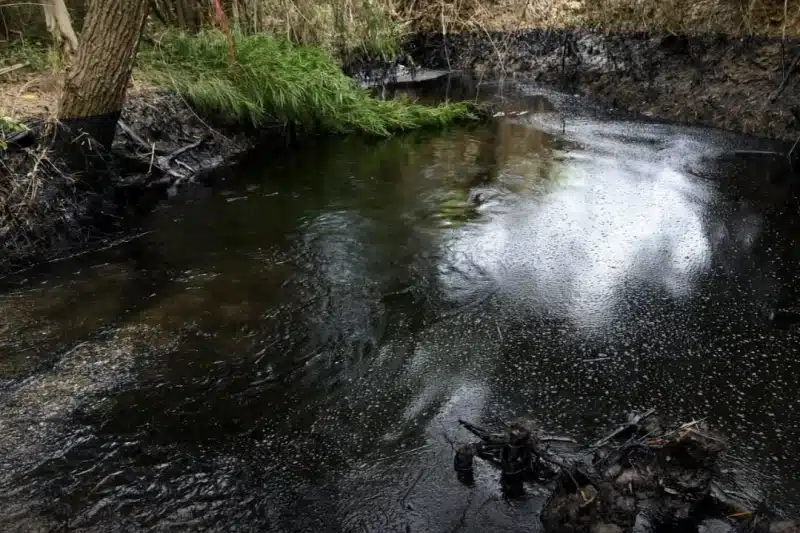
Images shown on state television, AFP reported, show crude spread across several hundred metres. The ministry says the Niger oil well blowout remains confined to the platform of the three wells.
The extent of the spill remains unclear. The ministry has disclosed neither the volume of crude released nor the total area affected, AFP reported.
The ministry’s own description, “environmental incident of exceptional severity”, is rare language in Niger’s oil sector, AFP noted, where authorities had reported no comparable case before.
The cause of the Niger oil well blowout is not yet established. Early findings, the ministry says, rule out a criminal or terrorist act.
An independent investigation has been opened with Algerian expertise. The ministry has also taken precautionary and control measures with regard to the operator, without saying what they are.
The ministry promises that “all responsibilities will be established and assumed”, and that all damage will be taken care of under existing regulations.
The response to the Niger oil well blowout has widened since. Journal du Niger reported that Petroleum Minister Hamadou Tinni met his staff and Algerian experts in an emergency session on 13 October.
The next day, it said, he travelled to Agadem with Environment Minister Colonel Abdoulaye Maizama and specialists from Sonatrach, Algeria’s national oil company. Journal du Niger noted that the government has given no date for the end of the eruption.
At the time of publication, we could not find a public statement from CNPC Niger Petroleum on the Niger oil well blowout.
Stopping the eruption will be only the first step. Assessing the damage to the soil, water and grazing land around Agadem, and determining what it means for nearby communities, could take far longer.
Quotations from the ministry are translated from French. This report will be updated as new details are confirmed.