



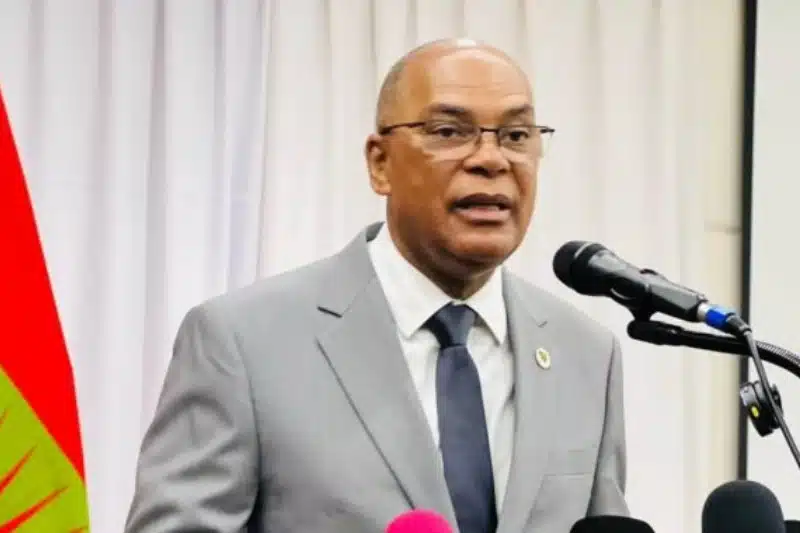

Angola’s constitution is back in the political spotlight as João Lourenço enters the final year of his presidency. Four days after delivering his last state of the nation address, the president faced a pointed question from the opposition: what did his silence about the end of his presidency mean?
UNITA leader Adalberto Costa Júnior raised it on Monday at a training seminar for his party’s MPs. Then he went after the rulebook itself.
Angola’s constitution, he said, is “not democratic” and breeds instability. The Portuguese news agency Lusa carried his remarks.
His first target was the ballot. Under Angola’s constitution, the general election determines both the composition of parliament and the presidency. The first candidate on the list of the party or coalition that wins the parliamentary election becomes president. Costa Júnior argues that this system ties the presidency to parliamentary politics rather than giving voters a separate presidential ballot. He also accuses the ruling MPLA of fearing a direct presidential election.
His second target was the clock. Lourenço is in the final year of his second presidential term. Angola’s constitution limits the presidency to two five-year terms, ruling out a third consecutive term under the existing rules.
Costa Júnior says there is no way past that limit without rewriting the text. UNITA, he added, will take no part in a revision that stretches mandates.
Costa Júnior stopped short of claiming that Lourenço intended to seek another term. Instead, he said many people had spent the weekend questioning the significance of the president’s silence about his departure. For UNITA, he added, the political cycle was over.
The president has rejected the idea before. In a February 2025 interview with Jeune Afrique, he denied any MPLA plan to change the text for a third term. If that were the aim, he argued, the party could have done it in his first term.
The numbers help explain Lourenço’s confidence. After the 2017 election, the MPLA held 150 of the National Assembly’s 220 seats, giving it the two-thirds majority needed for constitutional amendments.
The 2022 election changed that balance. The official results gave the MPLA 124 seats and UNITA 90, while the PRS, FNLA and PHA won two seats each. In the 220-seat National Assembly, a two-thirds majority requires 147 votes.
Even if all six MPs from the smaller parties backed an amendment, the MPLA would still need another 17 votes. These figures reflect the 2022 election results; the current parliamentary composition and the voting requirements for any proposed amendment should be confirmed.
That makes UNITA’s position critical. Its 90 seats give it the numbers to block an amendment if the other parties cannot supply the votes the MPLA needs.
Costa Júnior’s declaration therefore matters beyond the rhetoric. If the smaller parties cannot supply the missing votes, any constitutional revision would require support from UNITA.
Lourenço, for his part, sold continuity. His address said inflation fell from 27.5 per cent in 2024 to 10.8 per cent by June 2026. He also said the task of developing Angola “does not end with each political and electoral cycle”.
He was talking about national development, not his own job. Still, the line sits oddly beside Costa Júnior’s verdict that a cycle is ending. The UNITA leader called the president’s portrait of the country fictional and pointed to rising hunger.
Both men now wait on the MPLA. Observador reports the party is still hunting for a successor, with its congress due in December. Voters go to the polls in August 2027.
Under Angola’s constitution, whoever tops the winning list takes the presidency. That makes the party’s internal pick the real first round.
Angola’s constitution may well need changing. The argument is over who rewrites it, and who it ends up serving.


