



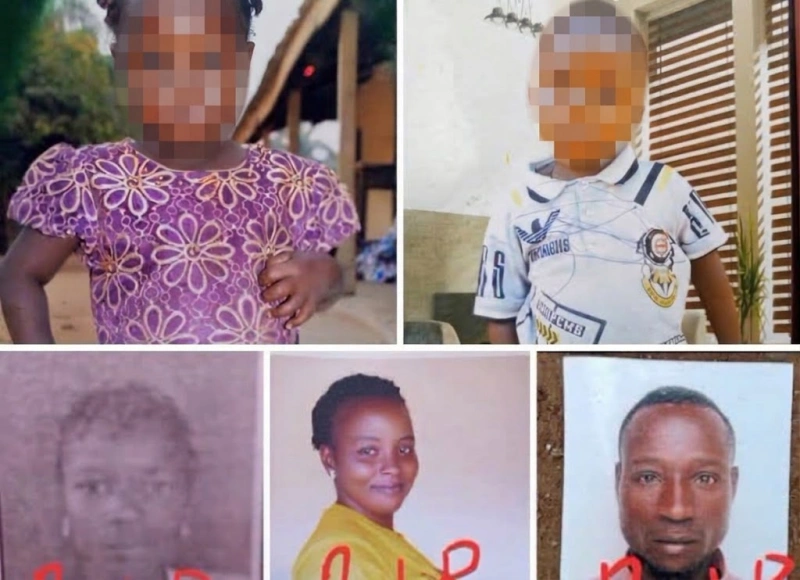

The kidnappers demanded N300 million and 23 motorcycles. By the time the ransom demand reportedly fell to N9 million and four motorcycles, eight of the captives were reported dead.
The Kaduna kidnap victims were taken from Awon, a village in Kachia Local Government Area, on 20 April. There were 11 of them. One later escaped.
Journalist Reuben Buhari reported the deaths on Thursday. A former media aide to the late Kaduna governor Patrick Yakowa, Buhari wrote that
“eight of the victims have now passed, leaving only two people alive”.
Those reported dead among the Kaduna kidnap victims, range from a newborn to a 34-year-old father. Buhari’s list includes Joy Samuel, her baby and her two daughters, aged 14 and three. It also names Yusuf Bawa and his five-year-old son. The identities of two others have not appeared in published reports.
Some of the deaths had been reported earlier. Amnesty International said on 7 September that Samuel died on 28 August after giving birth in conditions the organisation described as deplorable. It also reported that Bawa and his son had died from severe illness and hunger.
The deaths were reported over several months, not in a single week. They followed the kidnappers’ rejection of the village’s offer of several million naira.
Christian Solidarity Worldwide (CSW), a religious freedom organisation, said in July that the captors had demanded N300 million and 23 motorcycles. According to the group, the kidnappers also threatened to withhold food until the ransom was paid.
CSW’s founder and president, Mervyn Thomas, warned that abductees from Awon and the nearby village of Ariko were
“slowly dying due to the inhumane conditions in which they are being held”.
CSW said the Awon captives were moved to the same forest camp as the Ariko worshippers abducted at Easter. The captives slept in the open, and children in the camp fell ill.
The Ariko attack took place on Easter Sunday, 5 April, when gunmen attacked churches in the area. The army said troops had freed 31 hostages that day. Community leaders disputed the account, saying nobody had been freed, while the police later put the number rescued at seven.
At the time of writing, neither the Kaduna State Police Command nor the state government had issued a statement on the reported deaths. Leadership newspaper also failed to obtain police confirmation of the first reported death among the Awon captives in early July.
The reported final death toll has not been independently verified. Buhari said one of his sources was a woman who had recently escaped from captivity. He also said a bandit leader he identified as Yellow One Million had told her that he had “unalived” the victims.
Buhari’s post does not explain what the alleged statement meant. Amnesty International’s earlier account attributed the deaths of Bawa and his son to severe illness and hunger.
The reported sequence raises troubling questions. According to accounts of Buhari’s post, the kidnappers reduced their demand to N9 million and four motorcycles after acknowledging that the surviving captives were in extremely poor condition. The cash demand was about 97 per cent lower than the original N300 million. The reduction came as the captives’ condition deteriorated.
Amnesty International described the Ariko attack that resulted in the Kaduna kidnap victims as one of several incidents demonstrating what it called the “utter failure of Nigerian authorities to protect the people”.
The ransom kept shrinking. So did the number of people it could still save.


