



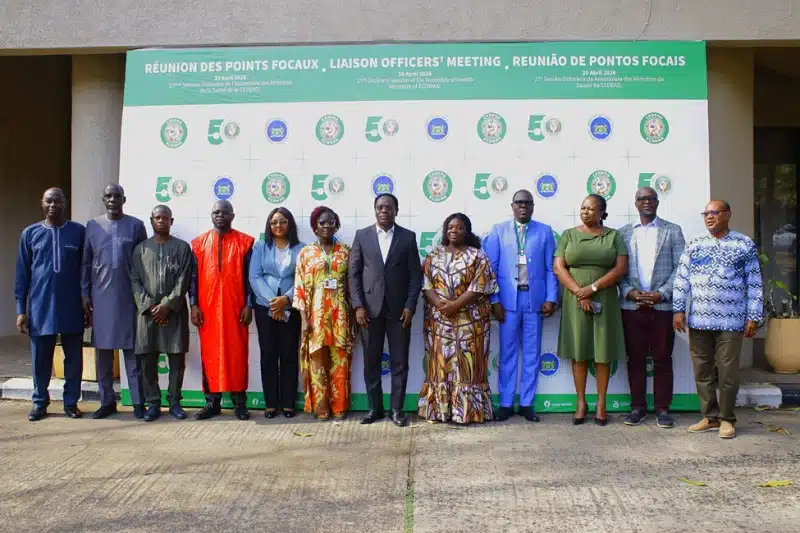

Health ministers from the 15-nation bloc are meeting in Freetown, where a sweeping framework to end malaria across the region has taken centre stage under the ECOWAS malaria elimination 2035 agenda, aligning with the global malaria elimination goals set by the World Health Organisation.
A Gathering With Uncommon Urgency
Freetown is hosting a meeting that its organisers describe as a turning point for public health in West Africa.
The 27th Ordinary Session of the ECOWAS Assembly of Health Ministers opened in Sierra Leone’s capital this week, convened by the West African Health Organisation, the body responsible for coordinating health policy across the Economic Community of West African States.
At the heart of the session is a push toward ECOWAS malaria elimination 2035, a regional target that ministers say is both ambitious and overdue.
What the 2035 Framework Actually Says
The centrepiece of the meeting is the Regional Strategic Framework for Malaria Elimination, designed to operationalise the ECOWAS malaria elimination 2035 target.
Under the framework, ECOWAS member states have committed to a 90 per cent reduction in malaria incidence and zero malaria-related deaths across the region by 2035.
That goal is built on seven strategic pillars, including local production of health tools, the use of artificial intelligence for data-driven decisions, and cross-border synchronisation of interventions.
The cross-border element is not incidental. Ministers at the session were explicit: because mosquitoes do not respect national boundaries, no single country can tackle the disease in isolation, making ECOWAS malaria elimination 2035 inherently a regional effort.
Cabo Verde as the Model
Regional leaders pointed to Cabo Verde as proof the goal is achievable.
The Atlantic island nation was recently certified malaria-free, making it the most cited example during the Freetown session of what coordinated effort can produce. Ministers said replicating that outcome across the broader region is the strategic ambition behind the ECOWAS malaria elimination 2035 framework.
The Freetown Charter
Beyond the malaria plan, the session is also considering what has been called the Freetown Charter.
The proposed regional agreement focuses on two areas: using digital tools to track maternal and infant mortality, and reducing dependence on international donors in favour of what the charter describes as locally financed, community-driven health systems.
The shift away from donor dependence has drawn particular attention from ministers who say West African health financing has long been too exposed to external funding conditions, an issue closely tied to the long-term success of ECOWAS malaria elimination 2035.
Six Months’ Maternity Leave on the Table
The session is also debating a proposal to align national labour laws across all ECOWAS member states to guarantee at least six months of paid maternity leave.
The aim is to support exclusive breastfeeding across the region, which public health evidence consistently links to lower rates of infant illness and death.
Climate Change Enters the Health Agenda
For the first time at this level, the assembly is formally discussing how to embed health systems within national climate change adaptation strategies.
The inclusion signals a recognition among West African health ministers that rising temperatures, shifting rainfall patterns and extreme weather events are already shaping the disease burden across the region—factors that could directly impact ECOWAS malaria elimination 2035 outcomes.
The Warning That Followed the Applause
As the session entered its closing stages on Monday, ministers offered a caution alongside their endorsement of the malaria framework.
Several delegates warned that the credibility of the Freetown session would ultimately be judged not by declarations but by implementation. Funding gaps and the growing resistance of mosquitoes to insecticides were identified as the two most immediate threats to the ECOWAS malaria elimination 2035 agenda.
The West African Health Organisation has not yet published a finalised implementation timeline, but the tone from the assembly floor suggested ministers intend to hold one another accountable beyond the closing ceremony.


