



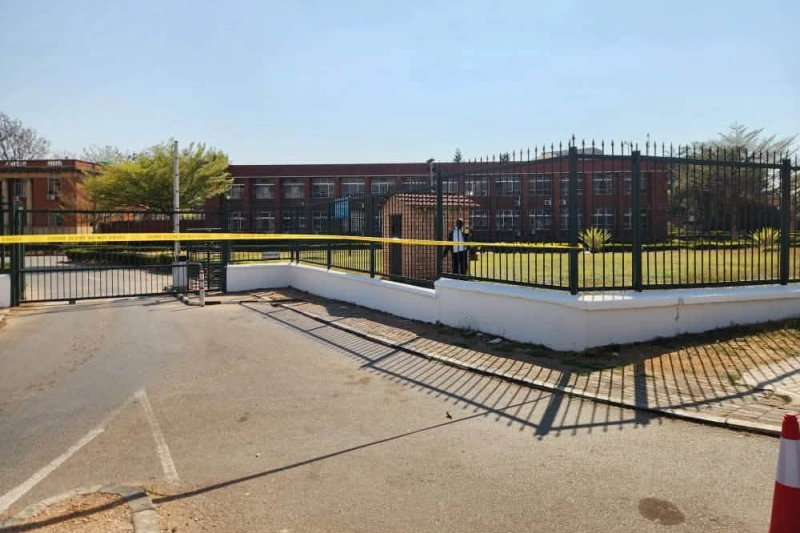

The Zambia court closure is a dangerous precedent for democracy because it restricted access to the very institutions responsible for resolving election disputes on the final day available to file a presidential petition.
A memorandum from the Judiciary’s chief administrator, Nalishiebo Imataa, told staff to stay away “for security reasons.” No further explanation followed. Reuters reported that police spokesperson Godfrey Chilabi confirmed security assessments were under way, though he declined to give details.
Mundubile placed second in the 13 August vote. He took 37.87 per cent against Hichilema’s 60.49 per cent, according to the Electoral Commission of Zambia. He rejected the outcome, alleging irregularities in vote counting and transmission, and accused soldiers of interfering at some tallying centres.
Under Article 103 of Zambia’s Constitution, a presidential election petition must be lodged within seven days of the declaration. That window closed early Tuesday. As of Sunday evening, none of Mundubile’s lawyers could confirm a petition had been filed. That timing made the Zambia court closure especially pointed.
The Zambia court closure raises an uncomfortable question. Why would a government confident in its election victory make it harder, not easier, for a rival to seek justice on the one day that mattered most?
Zambia positions itself as a democratic model on a continent often criticised for weak institutions. That reputation is now under strain.
The Law Association of Zambia said armed personnel taped off court premises with no formal explanation of the closure’s scope or duration. Its statement warned of immediate implications for access to justice, particularly for people needing urgent judicial help. It demanded the Zambia court closure be reversed without delay.
Transparency International Zambia raised similar concerns. Executive director Maurice Nyambe said an unsigned memorandum citing vague security reasons was troubling, given the tense post election atmosphere. He called for courts to reopen at once, or for alternative filing arrangements to be made public.
Police defended the measure. Inspector General Graphel Musamba said the closures formed part of intelligence led, preventive operations. They were meant to safeguard institutions including the Ministry of Justice and the Attorney General’s Chambers. He insisted no individual was being targeted.
The Zambia court closure follows a violent stretch since polling day. Former cabinet minister and opposition MP Mutotwe Kafwaya was shot dead during a security raid on Mundubile’s home.
Police said officers encountered gunfire while pursuing a suspected militia threat. Mundubile has since sought protection at a United Nations facility in Lusaka, citing threats to his safety.
An observation mission from the European Union monitored the 13 August election. It described the vote as largely peaceful, but flagged a heavy military presence at tallying centres as intimidating.
It said restrictions on the opposition before polling may have produced an uneven contest. It also called for greater transparency, after the electoral commission declined to publish separate polling station results.
That EU assessment stopped short of naming the Zambia court closure directly. Washington has yet to issue a public statement on the episode.
The muted response stands in contrast to swift Western criticism seen after disputed transitions elsewhere on the continent. Court interference or delayed elections in those cases have often drawn rapid statements from Brussels and Washington. No such statement has followed the Zambia court closure so far.
Whether that gap reflects Zambia’s standing as a relatively stable democracy, diplomatic caution, or simple timing is not yet clear.
Preparations for Hichilema’s inauguration, set for 1 September, are continuing regardless. The unresolved legal question over his re election has not slowed them down.
For now, the central fact of the Zambia court closure is simple. A sitting government shut the very institution meant to settle election disputes, on the one day that mattered most for a losing candidate trying to use it.


