



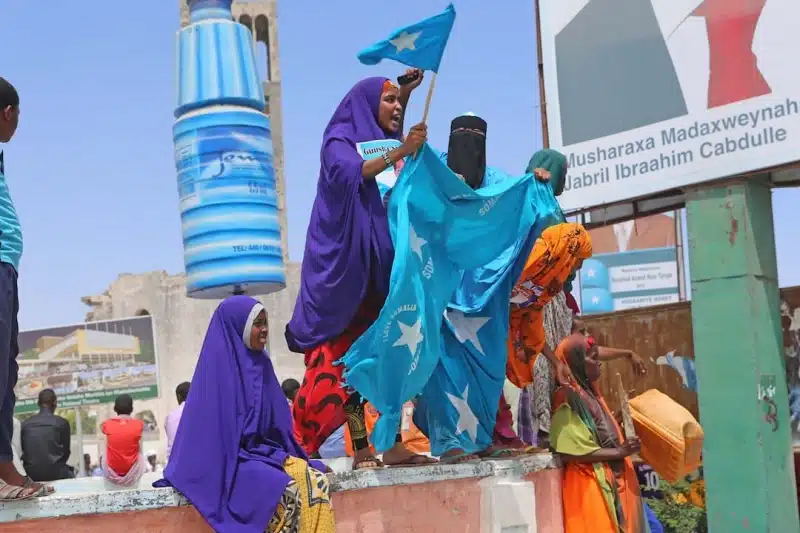

Somalia’s parliament heads into Monday’s Somalia Speaker election with only one name left on the ballot, and the country’s main opposition bloc is crying foul.
The contest to lead the House of the People formally opened on Sunday, when the parliamentary election committee issued candidacy certificates to two lawmakers at Villa Hargeisa, the headquarters of Parliament’s leadership, Axadle reported. The Somalia Speaker election was called to fill the vacancy left by Sheikh Adan Mohamed Nur “Madobe,” who resigned after winning the presidency of South West State, according to Hiiraan Online.
Within a day, the field had narrowed to one. Dalsan TV reported that rival candidate Saadaad Mohamed Nur Aliyow withdrew from the race, clearing the way for Abdulkadir Mohamed Nur, widely known as Jaamac, to take the Speakership unopposed.
Aliyow had resigned as State Minister for Interior, Federalism and Reconciliation earlier in August specifically to run, telling reporters he wanted an equal footing with rival candidates. WardheerNews reported that Villa Somalia had pushed him to abandon his bid in exchange for a full cabinet post, an offer he first turned down before campaigning on, only to withdraw days later regardless.
Jaamac, the Minister of Ports and Maritime Transport, is regarded as one of President Hassan Sheikh Mohamud’s closest political allies, and his unopposed run has been read across Mogadishu as the administration securing a loyalist in one of Somalia’s most powerful constitutional offices.
The Somali Salvation Forum has rejected the process outright, accusing Villa Somalia of engineering the outcome and pointing to the same pattern of executive interference it has fought since the coalition was formed in October 2025. The Forum has repeatedly dismissed government-run electoral exercises as neither free nor fair, most recently over December’s Banadir council elections, and has boycotted national dialogue sessions it says exist only to rubber-stamp decisions already made inside the presidency.
An uncontested Somalia Speaker election, won by a candidate this close to the president, fits that complaint precisely, and opposition figures argue it confirms their long-standing case that the bodies overseeing Somalia’s leadership contests answer to the executive rather than to Parliament.
Opposition leaders say the Somalia Speaker election has become a test of whether Parliament can operate independently of the executive branch. They argue that the withdrawal of a key challenger has undermined confidence in the process and deepened concerns about political influence over legislative institutions.
The vote lands at a fragile moment for Somalia’s institutions. Parliament’s mandate had already technically lapsed before the eighth session opened, and the country remains locked in an unresolved fight over whether the president due to be chosen in 2026 will emerge from direct popular vote or the traditional indirect system run by clan delegates. The Salvation Forum itself splintered last year after senior figures broke away to sign a separate deal with the president, a defection that weakened but did not end opposition resistance to what it calls a unilateral roadmap.
Analysts say the outcome of the Somalia Speaker election could shape the handling of critical debates on electoral reforms, constitutional amendments and relations between federal institutions ahead of the next presidential contest.
Whoever takes the Speaker’s chair inherits all of it: an unfinished constitutional review, a security crisis that shows no sign of easing, and an election year that opposition leaders say is already being decided behind closed doors rather than at the ballot box.
For Somalia’s opposition, Monday’s result will not close the argument over legitimacy. It becomes one more entry in a longer contest over who actually controls the machinery of the state as the country moves toward a presidential vote it still cannot agree on how to hold. As the Somalia Speaker election concludes, questions over transparency, political influence and the balance of power within Somalia’s institutions are likely to remain at the centre of national debate.


