



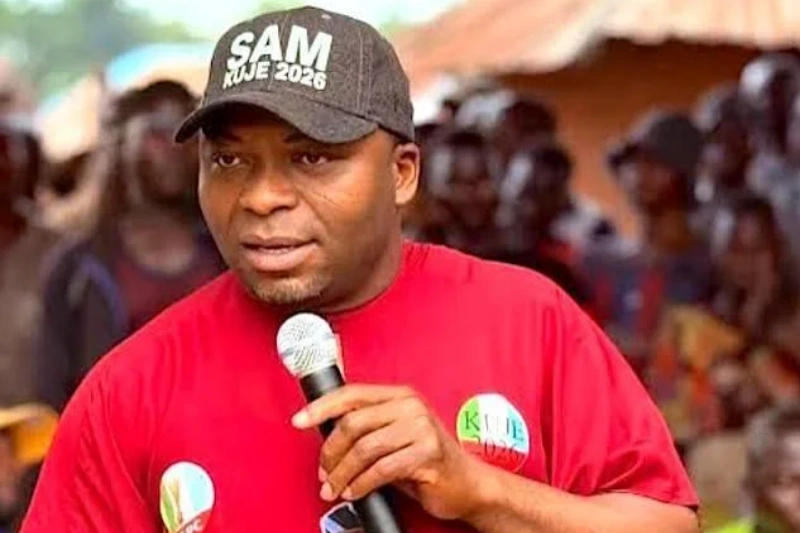

In the clip, filmed during a meeting with APC youths and loyalists, the Kuje council chairman said he would not tolerate opposition from residents who had benefited from development projects. He tied the warning to work being carried out by President Bola Tinubu and FCT Minister Nyesom Wike. Anyone unwilling to reciprocate with their vote, he argued, had no grounds to complain about his leadership.
The Kuje council chairman won his seat in February on the APC platform. He defeated the PDP’s Zakwoyi Danlami by fewer than 1,500 votes. That narrow margin may explain why his comments landed so badly in a council still politically divided.
The backlash was swift. The FCT Youth Network, a grassroots coalition spanning all six area councils in Abuja, condemned the remarks. The Peter Obi Grassroots Mobilisation group formally accused the Kuje council chairman of threatening residents who would not toe the party line. Amnesty International went further still, warning that such statements could incite unrest. The rights group reminded public officials that voting free of coercion is protected under Nigeria’s constitution and international law.
By Wednesday, the tone had shifted. Through his protocol officer, the Kuje council chairman insisted the remarks were taken out of context. He said they were meant as an appeal for political reciprocity, not a threat of eviction. He later issued his own statement, urging residents to work with his administration regardless of political, religious or ethnic differences. He admitted his office carries no power to deprive anyone of their rights as a resident.
Kuje is not an isolated case. Nigerian politics has a long, uncomfortable history of officials treating votes as tribute rather than choice. The instinct to frame dissent as disloyalty tends to resurface whenever elections draw near. Bayo Onanuga, now a presidential spokesperson, warned Igbo voters in 2023 to stay clear of Lagos politics or be dealt with. That comment drew a petition to the International Criminal Court and forced a senior PDP figure to apologise on his behalf.
Wike himself has leaned into similarly combative language since the APC’s defeat in last month’s Osun governorship election. He dismissed the loss as proof that Nigeria’s opposition is crippled and depleted. He insisted the 2027 presidential race will be an easy one for Tinubu. He has also openly described himself as an asset who intends to lead the president’s re-election campaign. None of that amounts to the direct coercion voiced by the Kuje council chairman. But it reflects the same underlying confidence, that development spending can be converted into political loyalty, with little patience for those who see it differently.
That confidence is precisely what the APC needs to manage carefully as 2027 approaches. A ruling party with control of federal resources, and most of Abuja’s area councils, has an obligation to win support through persuasion rather than pressure. It must make clear to officials at every level, from a Kuje council chairman to a state governor, that coercing voters will not be tolerated. It also carries a duty to protect every Nigerian’s right to vote as they choose, wherever they live, whichever party benefits.
Whether the climbdown reflects genuine regret or simple damage control will likely become clear only once campaigning intensifies. For now, residents of Kuje remain free to vote as they wish. Several told local reporters they had no plans to leave the council, or change their political preference, because of the warning.


