



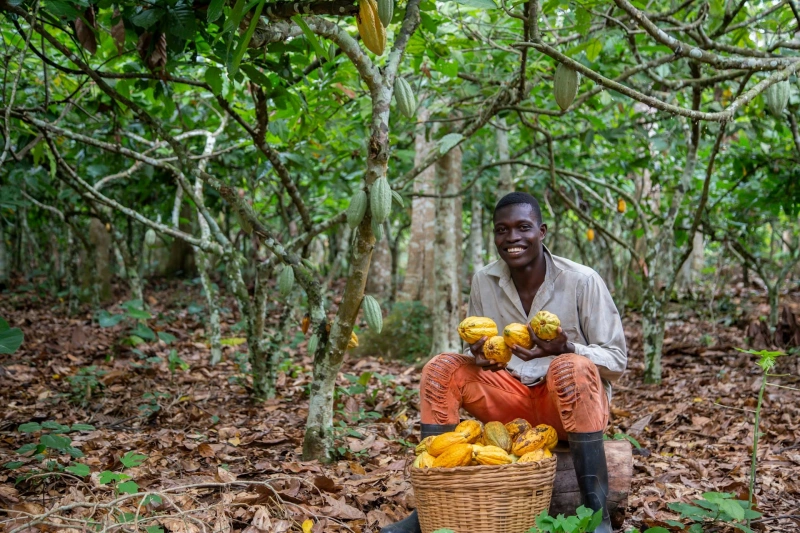

Ghana’s parliament has passed a new cocoa farm protection law. It could send farmers to prison for up to 20 years. The penalty applies to anyone who converts a cocoa farm to other uses without government approval.
Lawmakers passed the legislation last Thursday. Its contents were not made public until the following Sunday. That is according to a copy of the bill seen by the Associated Press. President John Mahama has not yet signed the cocoa farm protection law. It is formally titled the Ghana Cocoa Board Bill, 2026.
Under the new rules, every cocoa farm automatically becomes protected land. Repurposing that land now counts as a criminal offence. This applies unless a farmer gets written authorisation from the state. Officials say the cocoa farm protection law was written mainly to stop illegal miners destroying cocoa farms in search of gold.
Deputy Finance Minister Thomas Nyarko Ampem told parliament that galamsey made the measure necessary. Galamsey is Ghana’s term for illegal small-scale mining. He said naming every cocoa farm as protected land was the only way to shield plantations from encroachment.
The cocoa farm protection law also brings tougher penalties for smuggling. Cocoa beans have long been moved across the border into neighbouring countries. That practice has drained government revenue for years. The bill sets out incentives for more local chocolate processing too. The goal is for Ghana to export finished goods, not just raw beans.
Not every farmer is convinced the cocoa farm protection law strikes the right balance. Moses Djan Asiedu leads the Ghana Cooperative Cocoa Farmers and Marketing Association. He said the law as written punishes the people who built the industry.
“If the law stands as it is now, it’s not fair,” he said. Many farmers spend years clearing land and nursing young trees before they earn any income. Support from the state, he said, has been thin.
Opposition has come from inside parliament too. Osei Nyarko is the MP for Akim Swedru. He argued the land-use restrictions go too far. In his view, they undermine the rights of farmers and other landowners. Minority lawmakers raised similar concerns during debate. Some warned the bill hands COCOBOD too much centralised power.
The legislation replaces a framework dating back to 1984. It consolidates scattered cocoa laws into one modern statute. Lawmakers who backed the bill say it moves the Ghana Cocoa Board away from old military-era decrees. In its place comes a corporate governance model.
The law also guarantees farmers no less than 70 per cent of the free-on-board export price of their cocoa. Officials say that will lift household incomes across cocoa-growing regions.
The stakes behind the cocoa farm protection law are high for Ghana’s economy. The country is the world’s second-largest cocoa producer, behind only Ivory Coast. Cocoa contributes close to a tenth of national output. Production had slumped in recent seasons. The swollen shoot virus and galamsey encroachment were largely to blame. Output fell to around 425,000 tonnes in the 2023/24 season, the lowest level in two decades.
Production has since recovered. Ghana is targeting more than 650,000 tonnes for the 2025/26 season. A farmgate price increase helped drive that recovery. Farmers are now paid over $5,040 per tonne, up more than 62 per cent. That rate is higher than the one paid in Ivory Coast.
Supporters of the cocoa farm protection law say the new rules will sustain that recovery. Locking in protected status keeps land in cocoa production. It stops farmland being lost to mining pits instead.
The bill passed with broad bipartisan backing. It has now been sent to the President for assent.
Once signed, the cocoa farm protection law takes immediate legal effect. Prosecutors would gain the power to pursue farmers, buyers or land agents. Anyone who repurposes protected cocoa land without clearance could face charges.
Farmer groups say they will now press the government for amendments. They want changes made before implementation begins. Compensation for farmers who lose access to other uses of their land is top of that list.


