East Africa’s economic outlook remains the strongest on the continent, but a widening annual financing gap of $119 billion is forcing governments to rethink how growth gets paid for.
The African Development Bank Group set out this picture in East Africa’s economic outlook for 2026, launched on 28 July at the Bank’s East Africa Regional Office alongside a companion report focused on Kenya. Regional growth accelerated from 4.3 per cent in 2024 to an estimated 6.6 per cent in 2025, driven by resilient household spending, stronger agricultural output and a fast expanding services sector.
That momentum will ease slightly this year. East Africa’s economic outlook now points to growth of 5.9 per cent in 2026, a slowdown the Bank attributed to higher energy prices, geopolitical tensions and tighter global financial conditions. Even so, the region is expected to keep its title as Africa’s fastest growing, ahead of West Africa, North Africa and Central Africa, before rebounding to 6.4 per cent in 2027.
Behind those headline figures sits a harder problem. East Africa’s economic outlook found that the region needs $119 billion a year to close its development financing gap, money required to build infrastructure, drive industrialisation, strengthen climate resilience and create jobs over the next decade. Meeting that figure, the Bank argued, will demand stronger domestic resource mobilisation, deeper capital markets, tighter public financial management and a bigger role for private capital.
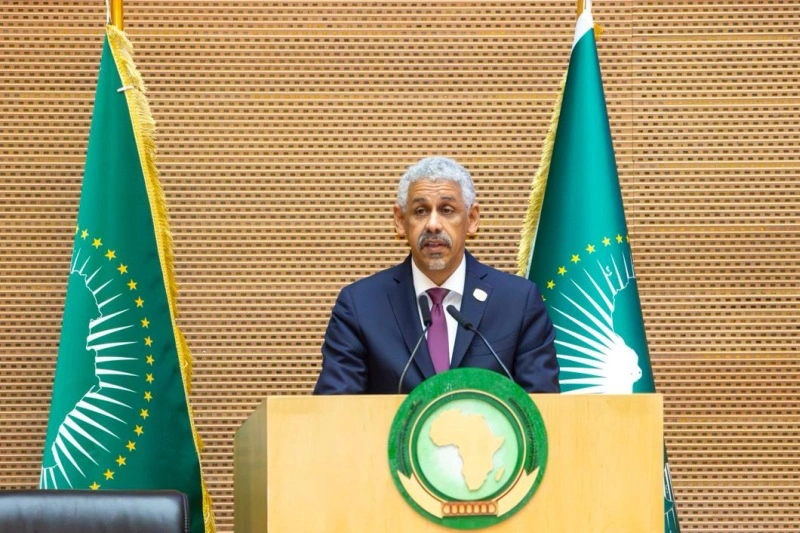
Eva Ruganzu, the Bank’s East Africa Regional Implementation Support Manager, delivered opening remarks on behalf of Director General Alex Mubiru and stressed that no country can close the gap alone. Resilience, she said, cannot be achieved through isolation, and East African states need to strengthen their own capabilities while deepening regional cooperation and pooling resources at greater scale.
East Africa’s economic outlook also charted country by country performance across the bloc. Ethiopia continues to benefit from strong investment and reform driven growth, while Rwanda remains among the region’s strongest performers on the back of sustained reforms.
Tanzania and Uganda both posted resilient expansion supported by infrastructure spending and domestic demand, and Djibouti continues to lean on its strategic logistics position. South Sudan is gaining from renewed oil production but stays exposed to instability, while Sudan is showing early signs of recovery through agriculture, services and localised reconstruction.
Panellists at the launch pointed to weak institutional frameworks as the main obstacle standing between East Africa and transformational growth. Betty Maina, East Africa Director for Genesis Analytics, argued that the region needs to grow a regional value chain mindset to realise its full potential, warning that competition between countries, rather than collaboration, keeps markets small and fragmented.
To close the gap, East Africa’s economic outlook recommends a phased reform agenda. In the short term, governments are urged to strengthen tax administration, improve public expenditure efficiency and curb illicit financial flows. Medium term priorities include expanding public private partnerships, mobilising pension and diaspora capital, and building stronger pipelines of bankable projects. Over the longer term, the Bank wants deeper financial integration, stronger local currency capital markets and more robust regional financial institutions to lower the cost of capital and cushion the region against external shocks.
Kenya’s own numbers, set alongside East Africa’s economic outlook, illustrate the scale of the challenge. A companion Country Focus Report put Kenya’s annual development financing need at roughly $14.2 billion, with an estimated financing gap of $12.5 billion by 2030. Raphael Otieno, Director General of the Public Debt Management Office at Kenya’s National Treasury, said the country faces substantial financing requirements, particularly for energy and digital infrastructure, at a time of constrained fiscal space, which is why Nairobi has turned to financing options that avoid piling further pressure on the deficit.
Otieno pointed to Kenya’s National Infrastructure Fund, a $38 billion state investment vehicle launched in March 2026 to channel proceeds from state asset sales and private capital into mega infrastructure projects, as a tool that should ease reliance on sovereign borrowing. He urged other East African governments to adopt similar sustainable financing alternatives rather than leaning on debt.
Taken together, the two reports frame East Africa’s economic outlook as one of resilience shadowed by a stubborn funding shortfall. Growth remains the envy of the continent, but East Africa’s economic outlook makes clear that sustaining it now depends less on demand and more on the region’s ability to mobilise capital, discipline public spending and build the institutions needed to attract private investment at scale.