



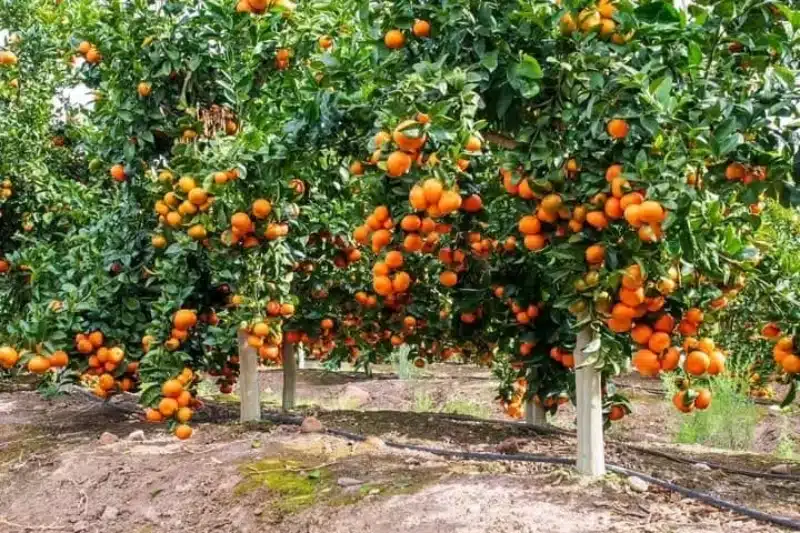

Botswana used to buy its oranges from South Africa. Now its president is in China on a five-day state visit, with Botswana citrus exports high on his agenda.
Duma Boko is in Beijing for a state visit from 12 to 17 October, with citrus among the products Botswana hopes to introduce to the Chinese market. For a country long associated with diamonds and beef, that is a telling choice.
Boko told newsmen before leaving that agreements on Botswana citrus exports to China would be concluded to allow the fruit to enter the market without tariffs. He called the benefit “massive” for the country.
The wording matters. The agreements are still to be concluded.
China introduced zero-tariff treatment for products from all 53 African countries with which it maintains diplomatic relations on 1 May. In May, Chinese ambassador to Botswana Fan Yong told local broadcasters that Beijing hoped to see Botswana’s beef and citrus enter its market soon.
But removing tariffs does not automatically open the door to fresh fruit. Exporters must also meet China’s plant-health and import requirements, while the necessary documentation must be in place.
That is where the work begins. In May, Botswana’s Trade Ministry said the Botswana Unified Revenue Service was adapting its systems to issue the rules-of-origin certificates required for qualifying shipments under the tariff arrangement.
For Botswana citrus exports, the bigger challenge is securing the approvals needed to ship fruit to China in the first place.
Selebi Phikwe Citrus, the country’s flagship commercial citrus farm, has spent recent years building production and pursuing overseas markets. Its chief executive, Pieter Scholtz, said last year that access to the United States, South Korea and India was at an advanced stage, while negotiations involving China were still under way.
The operation is central to Botswana’s ambitions. There is no other commercial citrus packhouse in the country, leaving the farm as the principal hub for packing and exporting locally grown fruit.
Scholtz has described the scale of the undertaking plainly:
“Botswana has never had a citrus export trade; we have created an industry.”
The expansion has been rapid. The farm planted its first trees in 2021, near Selebi-Phikwe, a town hit by the closure of its copper-nickel mine. Scholtz has said the closure cost the town more than 4,000 jobs.
Production rose from about 5,000 tonnes in 2024 to 22,000 tonnes in 2025, according to figures Trade Minister Tiroeaone Ntsima gave parliament. The increase has helped establish a new agricultural export business in a town seeking alternatives to mining.
Ntsima said most of the 2025 harvest went to the European Union, the Middle East, Canada and South Africa. China, despite the growing diplomatic attention, has yet to become an established destination for the farm’s fruit.
Daily Maverick reported in September that production had reached about 27,000 tonnes. Investors put another 200 million pula into the project in February, bringing committed investment to about 750 million pula. The United Arab Emirates, China and India were identified as markets with potential for stronger returns.
The scale of the competition is considerable. South Africa exported about 2.9 million tonnes of citrus in 2025, becoming the world’s largest citrus exporter by volume, according to figures reported by Daily Maverick and South African authorities. Its growers already have established export channels and experience supplying demanding overseas markets.
South Africa also has a head start in China. A revised cold-treatment protocol for its citrus took effect on 23 April, giving exporters a defined route for meeting the country’s import requirements.
For Botswana citrus exports to reach the Chinese market, growers must still secure the approvals required for their own fruit. The distinction matters: tariff relief can reduce the cost of entering a market, but it cannot replace the technical clearances needed to get produce across the border.
There is also a question about how long the opportunity will last. Boitshoko Ntshabele, head of the Citrus Growers’ Association of Southern Africa, warned members in May that China’s zero-tariff measure was unilateral rather than a negotiated trade agreement. He described it as a two-year measure and urged African countries to secure a more durable arrangement before it expired.
If that timetable holds, the window would run into 2028. That is also the year Selebi Phikwe Citrus says its orchards are expected to be fully planted. About 80 per cent of the planned 1,250 hectares is already in the ground.
The diplomatic relationship offers a favourable setting for the push. Trade between China and Botswana rose 58.6 per cent to $852 million in the first half of 2026, according to figures cited by Xinhua.
Minister for State President Moeti Mohwasa said the tariff initiative opened new opportunities for Botswana to expand its exports. The challenge is turning that opportunity into shipments that can be delivered reliably and profitably.
For the citrus industry, that means more than signing agreements. Growers need the necessary plant-health approvals, exporters need workable documentation, and the supply chain must be ready to handle the fruit.
Botswana has built the orchards and increased production. Boko’s visit gives the country an opportunity to advance the next stage of its export ambitions.
The trees are growing and the clock is running. What Botswana citrus exports need now is confirmed access to China, not just the promise of tariff-free trade.


