



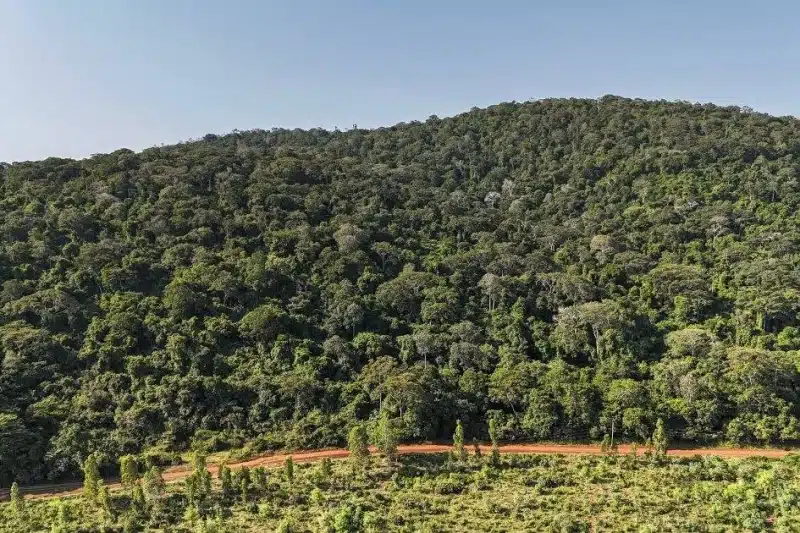

A forest above Kenya’s coast has become one of the most contested patches of ground in Africa’s mineral economy. Beneath Mrima Hill in Kwale County lie deposits of Kenya’s rare earth minerals that have drawn the attention of Washington and Beijing, both eager to secure supplies of materials used in everything from smartphones to fighter jets.
Mrima Hill is sacred to the Digo community. It also sits atop deposits that could reshape how the West sources critical minerals. Kenya’s rare earth minerals have pulled the United States and China into the same tender process. Neither side is hiding its interest.
The latest signal came on Wednesday in Nairobi. Frank Garcia, the United States assistant secretary of state for Africa, addressed a meeting of the American Chamber of Commerce. Washington is ready to help build a processing industry around Kenya’s rare earth minerals, he said, as Reuters reported from the event.
“Critical minerals are a top priority for President Trump and Secretary Rubio,” Garcia said. “We are ready to work with Kenya as it becomes a regional leader in this space.”
That single line carries a longer argument. China refines roughly 85 to 90 percent of the world’s rare earths and has tightened export controls in recent years. Washington’s answer has been to fund alternatives before they are mined, not after. Kenya’s rare earth minerals sit near the top of that list.
The scale of Kenya’s rare earth minerals explains the scramble. A government tender document from March put indicated resources at 48.7 million tonnes, grading 4.4 percent total rare earth oxides. A further 110.7 million tonnes sit as inferred resources, grading 5.61 percent.
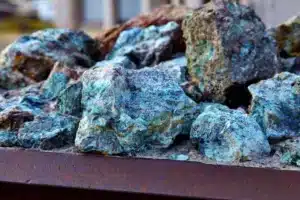
A 2013 study valued the site’s rare earths and niobium at 62.4 billion US dollars. Cortec Mining Kenya commissioned that study when it was a subsidiary of the UK and Canada-based Pacific Wildcat Resources. Niobium strengthens steel and features in aerospace parts. That adds strategic weight to Kenya’s rare earth minerals beyond the rare earths alone.
Kenya opened its tender for Mrima Hill on 27 March 2026. The gazette notice, issued by the Ministry of Mining, Blue Economy and Maritime Affairs, invited bids to mine niobium and rare earth elements. Firms had until 17 April to register interest.
Harry Kimtai, the ministry’s principal secretary, told Wednesday’s meeting that six companies remain in contention. Two are American, though the government has not published the list.
Progress has still been slow, and geology is not the only reason. Mrima Hill is double gazetted, meaning two overlapping legal protections apply to it. It also holds spiritual significance for the Digo people who live around it.
Villages near the site have split over whether mining brings jobs or destroys a shrine their ancestors kept.
President William Ruto has tried to sell the project as a national opportunity rather than a local sacrifice.
Kenya is “accelerating the responsible exploration and development of rare earth elements, titanium, graphite, lithium, niobium and other strategic resources,” he told the meeting.
Ruto framed Kenya’s rare earth minerals as a route to jobs, not just export revenue.
Ruto’s government has kept one condition non-negotiable. Minerals must be processed inside Kenya, not shipped abroad for refining. That single demand is what sets Kenya’s rare earth minerals apart from mineral deals struck elsewhere on the continent.
Garcia appeared to back the position without naming China outright.
“Some of our competitors are efficient at one thing,” he said. “Pulling minerals out of the ground, whisking them offshore and capturing all value addition far away from the lands from which the minerals originated.”
China has previously rejected such characterisations of its mineral trade, and it remains one of the parties still watching Kenya’s rare earth minerals closely.
Chris Kulukundis, the US acting deputy assistant secretary of state for southern Africa and critical minerals, framed the tender as proof that Washington and Nairobi already agree on method.
“The Mrima Hill tender process is moving forward in a transparent manner,” he told the meeting.
He added that the two American consortia in contention were positioned to develop the project “in the correct way” if chosen.
Ruto told Reuters in June that a broader critical minerals agreement with Washington was close to completion. Neither government gave an update on that agreement this week. No developer has yet been named for Mrima Hill itself.
Even if a winner emerges from the tender process, turning the deposit into a functioning mine will require substantial investment and processing infrastructure that remains scarce across much of Africa.
Behind the diplomacy sits a harder financial reality. Private capital has largely avoided rare earth projects across the continent. Processing infrastructure is expensive and returns are slow.
That gap is why the US International Development Finance Corporation has stepped in. It is backing a pipeline of ventures across Africa rather than leaving the field to private money alone.
Global demand has grown fast enough to justify the risk. Demand for rare earths rose from around 132,000 tonnes in 2017 to close to 390,000 tonnes in recent years. That pace has turned once marginal deposits into geopolitical assets.
It is part of why Kenya’s rare earth minerals now draw attention from Washington, Beijing and Canberra all at once.
What happens next at Mrima Hill will say something larger. It will show who controls the next stage of the energy transition.
It will also show whether an African government can hold firm on local processing when two superpowers want the same rock.
Kenya has the leverage of scarcity. It still has to decide what to do with it.


