




By Sunday, the Binnari attack had produced three different death tolls and one awkward question. Who was counting?
On Saturday, police confirmed 10 deaths. By Sunday, the command was reporting 58, as more bodies were recovered. The rising toll made the Binnari attack as much a question of accounting as of security.
The gunmen rode into Binnari, in Karim-Lamido Local Government Area of Taraba State, on motorcycles shortly after Friday prayers on 23 October. It was market day.
Police put the time at about 3pm. A trader who gave his name as Adamu said the raiders stayed for more than four hours, killing people and wrecking goods in the market. They looted shops and food stores, and set houses, stalls and motorcycles on fire.
On Saturday, the Taraba State Police Command issued its first statement. It confirmed 10 “bodies bearing gunshot wounds” and said they had been handed to families for burial under Islamic rites.
Then came the river. Many of those who ran for the water drowned, and the Binnari attack did not end where the shooting stopped.
Jibri Dabo, a boat operator in Binnari, led a team of local divers into the water. “There was total confusion in the town,” he told Daily Trust. His team recovered 41 bodies, he said.
Dabo’s account of the river recovery differed sharply from the police account. Police spokesman Victor Mshelizah said 15 people drowned when an overloaded canoe capsized as they tried to escape. He added that some victims remained missing. The two accounts have not been reconciled, and it is not clear whether they cover the same victims or recovery period.
Dabo offered one reason the numbers are so hard to pin down. Most of the drowned were not locals, he said. Many had come to the market from Gombe, Bauchi and Plateau states and could not swim.
Others were farm labourers from Jigawa and Yobe working on rice fields. The Binnari attack therefore left investigators facing a difficult task: identifying victims who had travelled from several states to trade or work.
That changes how a toll gets counted. A village can list its own people by name. Visitors are harder to trace, and the Binnari attack has complicated efforts to identify victims who came from at least five states.
The Binnari attack produced competing estimates as searches continued. Amnesty International initially reported at least 40 deaths before raising its figure to 52 on Sunday. Residents who spoke to AFP put the toll at 50. One of them, Bashir Mamuda Musa, said seven bodies were found on Friday and “we discovered another 43 bodies in the river” the next day.
These are not four independent counts that can simply be added together. Amnesty’s figures were successive estimates, while the residents’ and police accounts came from different sources and stages of the recovery. The discrepancies underline how difficult it has been to establish a definitive toll.
Amnesty’s Nigeria director, Isa Sanusi, told AFP the gunmen came in large numbers and chased people towards the river. The rights group accused the authorities of leaving rural communities at the mercy of gunmen and called for an impartial investigation.
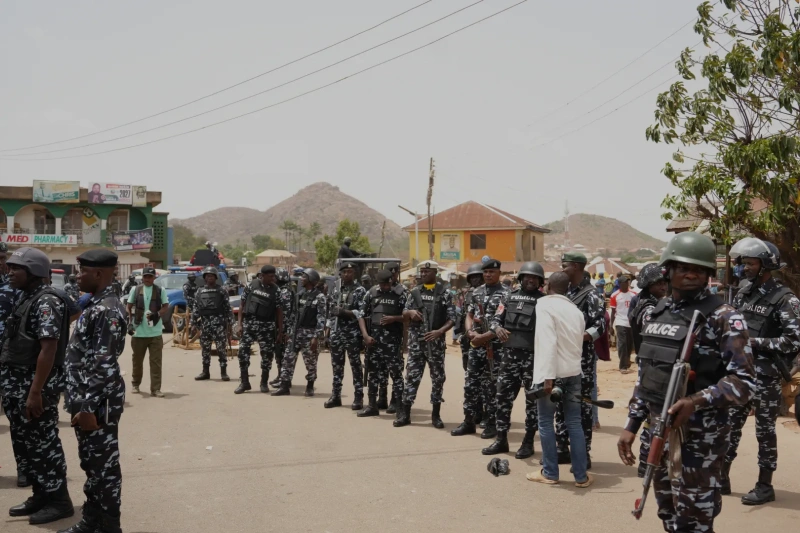
The response to the Binnari attack has so far centred on condemnation, relief and reinforcement. Governor Agbu Kefas condemned the killings and urged security agencies to restore calm and bring those responsible to justice. Relief materials began reaching affected families on Sunday. Police said extra officers were on red alert, with tactical units, mobile police and the army deployed to the area.
At the time of writing, no arrests had been reported.
Residents say the community has suffered previous attacks. They say armed groups have hit Binnari three times. Karim-Lamido was no stranger to violence before Friday either. The EU Agency for Asylum has recorded recurrent clashes and village attacks there, with attacks intensifying in May 2025.
A government statement noted that Kefas had recently approved ₦1 billion for the state’s peace bureau to deal with the fallout of earlier crises in Karim-Lamido. That is the same local government area where Binnari sits. The approval, however, does not establish how much funding has been released, what has reached affected communities or what security improvements have followed.
Villagers say the gunmen crossed in from Plateau State. Pastor Ephraim Kwachi, an aide to the local government chairperson, said the attackers operated in guerrilla style before pulling back towards settlements in Plateau and Bauchi. State assembly member Anas Shuaibu called the raid “one attack too many”.
Geography is part of the problem, residents add. Community stakeholder Tanko Bobbo Andemin said poor roads make it hard for security forces to reach Karim-Lamido. A local hunter, Yimita Sunday, said the remote location and weak phone coverage had made it difficult to establish how many people had died.
Police describe their response differently. They say officers were mobilised immediately after a report from Binnari’s officer in charge. Residents, however, say the raiders operated for hours. The two accounts raise a question the available evidence does not yet answer: how quickly did reinforcements reach the community, and could an earlier response have limited the killings?
Within two days of the Binnari attack, the toll had moved from 10 to 58. Police themselves say some bodies are still missing. That makes 58 a pause in the count, not the end of it.


