



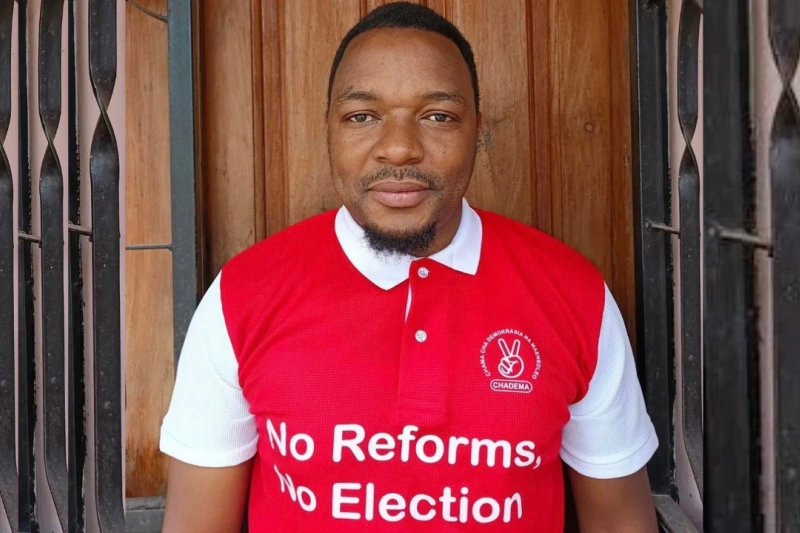

A taxi, three vehicles and a driver ordered to step out. That is the thin outline of how Tanzanian opposition activist Twaha Mwaipaya reportedly disappeared on the eastern outskirts of Nairobi on Sunday.
Amnesty International Kenya says people travelling in three vehicles, including a Toyota Land Cruiser hardtop, intercepted the taxi at about 2pm on 25 October. Mwaipaya, who had been sheltering in Kenya, was travelling to visit friends in Kamulu, Machakos County.
Sikula Oniala, an Amnesty researcher, told Reuters that the men ordered the driver out before driving away with the activist still inside. Kamulu lies about 35 kilometres east of the capital.
Reuters could not independently verify that account. It said it was unclear who took him, whether he remained in Kenya or whether he had been harmed.
The silence is part of the story. By Monday morning, The Chanzo had found no public notice about Mwaipaya on the official channels of Kenya’s police and Directorate of Criminal Investigations, or Tanzania’s police, foreign ministry and High Commission in Nairobi. Police spokespeople in both countries had also not responded to Reuters.
Twaha Mwaipaya is no stranger to police custody. The Chanzo reports that police have held him several times. One arrest, in Morogoro on 30 June 2022, forced Chadema to ask a court to make police produce him.
He was a leading youth organiser for Chadema, Tanzania’s main opposition party. He now speaks to nearly 600,000 followers on Instagram.
Fellow activist Maria Sarungi Tsehai alleges he fled to Kenya after Tanzanian police abducted and severely tortured him. AfricanQuarters could not independently verify that claim.
Sarungi knows the risk from experience. Reuters notes she was briefly detained in Nairobi in January 2025. “If Twaha is crossed to Tanzania they will kill him!” she warned, urging Kenyan authorities to close the Namanga border and set up checkpoints.
Kenya has faced a similar test before, and in February it produced a different outcome.
The African Commission on Human and Peoples’ Rights says Kenyan police and other security personnel rescued Tanzanian rights defender Mshabaha Mshabaha Hamza on 22 February 2026, after intercepting a vehicle used in an attempted abduction. Three suspects were arrested. Hamza had reportedly been drugged and injured.
Amnesty International Kenya said the suspects had allegedly been promised payment to deliver Hamza to the Kenya-Tanzania border. It described the attack as a premeditated attempt to force him back to Tanzania.
This time, nobody has announced a rescue.
Add Twaha Mwaipaya and the list of regional critics reportedly seized in Kenya grows. Reuters points to the abduction of Ugandan opposition leader Kizza Besigye in Nairobi in November 2024. He later appeared before a military court in Uganda and has since been charged with treason.
Hamza was recovered on Kenyan soil. Besigye resurfaced in a Ugandan court. Which outcome awaits Twaha Mwaipaya is the question his friends and party are now asking.
Chadema vice-chairman John Heche says
“Nairobi cannot remain an abduction hub for dictators”.
He has also appealed for Mwaipaya to be found alive.
The party is under pressure on several fronts. Chairman Tundu Lissu awaits a treason verdict on 6 November. Thursday, 29 October, marks one year since Tanzania’s 2025 election, after which opposition figures accused security forces of killing thousands of protesters.
The disappearance of Twaha Mwaipaya lands in the middle of that week.
Kenya’s Linda Mwananchi Movement wants an independent inquiry, public disclosure of his whereabouts and protection from any forced removal. It warns that Kenya risks becoming a “hunting ground” for those who want to silence dissent beyond their borders.
No evidence has been published tying any government to the incident, and the identities of those involved remain unknown.
In February, Kenya showed it could find an abducted activist and arrest the men holding him. The African Commission praised it for that. Twaha Mwaipaya is the test of whether that was policy or luck.


