



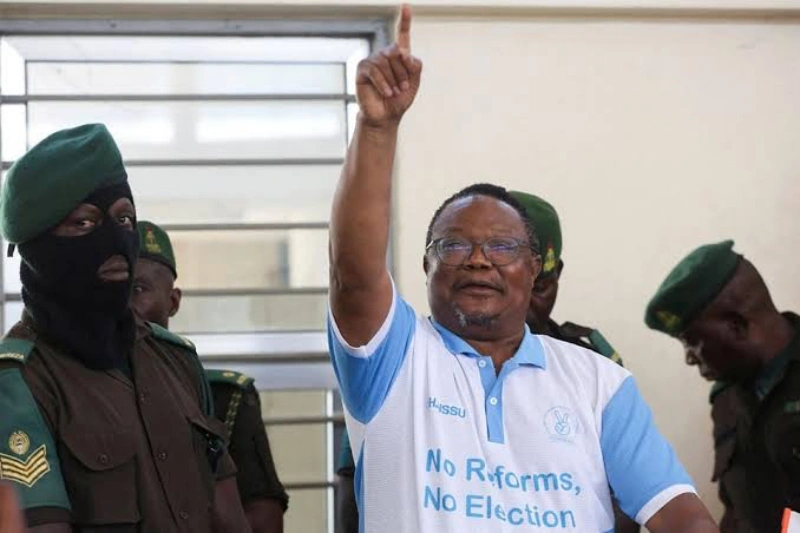

Tundu Lissu refused tea, breakfast and lunch on Tuesday. Then he ate again.
That was the entire Tundu Lissu hunger strike, if his lawyer’s account holds. It lasted a few hours. The questions it raised will last far longer.
Lissu leads Chadema, Tanzania’s main opposition party. He has been in detention since April 2025 and faces a treason charge that carries a possible death sentence. The hunger protest came nine days before a verdict due on 6 November.
His party says that the Tundu Lissu hunger strike began on Monday 26 October. Reuters reported that Chadema spokesperson Brenda Rupia wrote on X that Lissu had started refusing food after his lawyers were turned away at Ukonga Prison.
His lead lawyer tells it differently. Rugemeleza Nshala told the Associated Press that Lissu held off on Monday after prison authorities promised him private access. When the meetings did not happen, he began refusing food on Tuesday morning.
“Lissu did not take his tea, breakfast or lunch,” Nshala said. The protest ended after lunch, once Lissu had met his younger brother in private.
Tanzania’s Prisons Service saw things differently. It said there was no Tundu Lissu hunger strike at all. In a statement carried by Reuters, spokesperson Elizabeth Mbezi said Lissu was safe. She added that his lawyers were still being allowed in “after being satisfied that they are his advocates and nothing else”.
What is not in dispute is the court order that led to Tundu Lissu hunger strike. On 16 October, the High Court found that prison officers had been able to overhear Lissu’s talks with his lawyers. The lawyers said four uniformed officers sat about a metre away.
The judges drew a line. Guards may watch the meetings for security, but they must not listen. The court also told the Commissioner General of Prisons to issue nationwide directives within 60 days.
Nshala says nothing changed. His team returned on 17 and 18 October and found officers within earshot. On 23 October, he says, he waited for hours before learning that no meeting would go ahead on terms that protected confidentiality. Those claims have not been tested in court.
Chadema secretary general John Mnyika framed it as a question of safety. He said the prison administration “openly defies judicial orders”, and that Lissu doubts food supplied by officials who break the law can be trusted.
Lissu has reason to be wary. He survived being shot 16 times in 2017 and spent years in exile before returning in 2023. In May 2025, a month after his arrest, he went on hunger strike to demand a place in the courtroom instead of a video link. A magistrate ordered him produced in person.
This time, the protest secured a private visit from his brother. Whether his lawyers have since been given the same privacy is not clear from the reports so far.
Nshala also raised concern about Lissu’s health, because he relies on medication. There is no independent confirmation that his condition has changed.
The dispute also unfolds in a tense week for Tanzania’s opposition. Chadema begins seven days of mourning on Thursday, marking a year since the 29 October 2025 election. The party was barred from that vote, which President Samia Suluhu Hassan won with 98 per cent of the vote, according to official results.
A government-appointed inquiry says at least 518 people died in the violence that followed. Chadema puts the toll at about 2,000, a figure the United Nations said it could not verify. On 21 October, another senior Chadema figure, John Pambalu, was charged with treason.
The government rejects accusations of widespread abuses and says it is committed to respecting human rights.
The length of Tundu Lissu’s hunger strike matters less than what it exposed. A court told guards to watch but not listen. Lissu and his lawyers say that has not happened. The prison service says nothing is wrong.
Lissu is eating again. The question that made him refuse food is not settled: who, exactly, is listening when he speaks to his lawyers?


