




Egypt has issued a fresh round of warnings as concerns over Egypt’s water security intensify following reports that Ethiopia is preparing to build three additional dams on the Blue Nile.
The warnings came in quick succession through August. They mark one of the sharpest points in a dispute that has simmered for more than a decade, pushing Egypt’s water security back to the top of the region’s news agenda.
Ethiopia’s Ministry of Water and Energy revived the plans in March. The projects are named Karadobi, Mandaya and Beko Abo, and each new report about them has stirred fresh debate over Egypt’s water security.
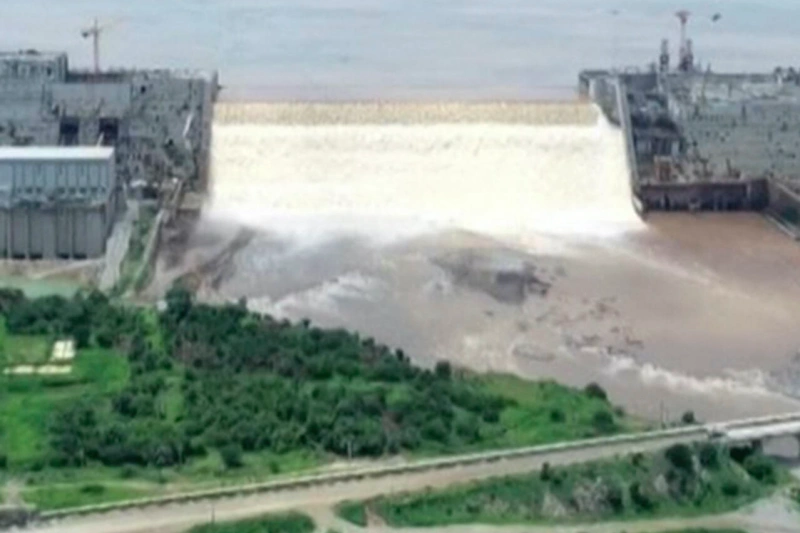
Combined, the three dams are expected to generate close to 5,700 megawatts. That is slightly more than the Grand Ethiopian Renaissance Dam’s installed capacity.
Irrigation Minister Hani Sewilam opened the latest round of objections on 4 August. He stated plainly that Egypt would not allow the new dams to proceed.
His comments set the tone for a fortnight in which Cairo’s language grew steadily firmer. Each new statement added weight to concerns about Egypt’s water security.
An Egyptian government source, cited by the state news agency MENA on 16 August, said Cairo would not accept or allow any party to control the flow of water to Egypt and Sudan.
The remarks were a direct response to Ethiopian Water and Energy Minister Habtamu Itefa. He had spoken of his country’s right to build further dams and manage flows downstream.
The source added that the Egyptian state had “multiple and wide ranging tools” available to defend its position.
Four days later, Foreign Minister Badr Abdelatty went further still. Speaking to the broadcaster Al Arabiya, he said Egypt would not allow additional dams to be built on the Nile.
Cairo, he added, had a legitimate right to defend its water security. It was, by most counts, the third public warning inside two weeks, and it left little doubt that Egypt’s water security had become the government’s central talking point.
The tone on Egyptian television and social media has been sharper than the official line. Presenters loyal to President Abdel Fattah El Sisi have suggested military options should not be ruled out.
Talk show host Ahmed Musa told viewers Egypt would not allow the construction “under any circumstances”. Accounts sympathetic to the government circulated images of warplanes, naval vessels and special forces, framing the standoff as a fight for Egypt’s water security.
Not everyone reads the moment the same way. Walid Kazziha, a political scientist at the American University in Cairo, described the government’s actual posture as measured and focused on legal argument rather than military threat.
He pointed to the absence of direct military tones in the official Egyptian reaction. This is despite online rhetoric hardening around the question of Egypt’s water security.
Cairo University water resources professor Abbas Sharaky takes a starker view of the practical stakes. He has warned that the three new dams would mark a serious shift in how the Blue Nile is managed.
That shift, he says, would deepen water scarcity in Egypt and weaken the High Dam’s ability to generate electricity.
The dispute sits on decades of contested history. Egypt draws roughly 80 per cent of its annual water supply from the Blue Nile.
Cairo leans on the 1959 Nile Waters Agreement to argue that its historic share is fixed and non negotiable. Ethiopia has never accepted that agreement, and it inaugurated the Grand Ethiopian Renaissance Dam in September last year despite objections from both Egypt and Sudan.
Cairo took its complaint to the United Nations Security Council after that inauguration. It argued the dam had been switched on without any binding deal on how it would be filled or operated.
Whether the same path lies ahead for the three newly announced dams remains an open question. The pattern of unilateral moves followed by Egyptian protest, and by fresh warnings about Egypt’s water security, looks set to repeat.
For a population above 110 million people, the concerns are not abstract. Egyptians rely on the Nile almost entirely for drinking water, farming and industry.
Every fresh dam announcement out of Addis Ababa lands as pressure on that dependence. Every Egyptian statement in response reads as an attempt to protect Egypt’s water security before construction ever begins.


