




Madagascar’s central bank is setting up four gold collection points in the country’s leading mining districts, in a move meant to bring small scale miners into the formal economy and grow the nation’s gold reserves.
Banky Foiben’i Madagasikara, the central bank known as BFM, will install the gold collection points in Ambilobe, Maevatanana, Mananjary and Miandrivazo. These four districts hold some of Madagascar’s richest gold deposits.
The plan forms part of a strategy the bank has pursued since 2023 to fold more monetary gold into the country’s foreign exchange reserves. BFM currently holds about one tonne of gold in its vaults and wants that figure to climb, matching a pattern seen at central banks worldwide as they turn to gold to diversify their reserves.
For Madagascar, the goal reaches beyond the vault. Officials want the gold collection points to steady the ariary, the national currency, which has swung sharply against foreign currencies in recent years.
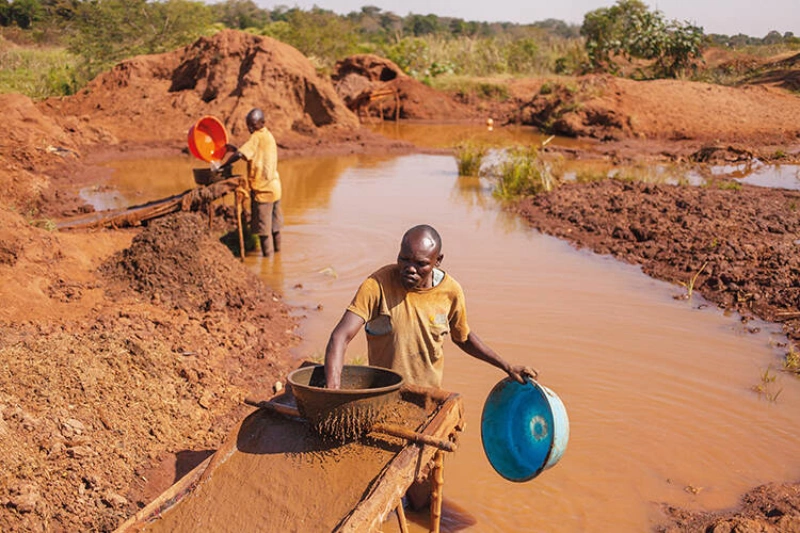
Small scale and artisanal gold mining sustains around 600,000 people across Madagascar, according to the central bank. Most of that activity sits outside any formal structure, with gold often changing hands through informal buyers before slipping into smuggling routes bound for neighbouring countries and beyond.
The new gold collection points are designed to close that gap. By placing formal buying stations directly in mining zones, BFM hopes miners will sell through official channels rather than informal traders. Each site will also carry equipment to check the quality and purity of the metal, so gold entering the reserve meets recognised standards.
There is a social side to the plan too. BFM says it wants to help artisanal miners open bank accounts, access credit and secure financing for cleaner extraction equipment. Mercury remains common in artisanal gold panning across Madagascar, and it carries serious risks for miners and the rivers and soil around mining camps.
In April, BFM signed a partnership with the Ministry of Mines and the United Nations Industrial Development Organisation aimed at phasing out mercury use in artisanal mining. That agreement lines up with commitments made under the planetGOLD Madagascar programme, which backs cleaner, more traceable artisanal gold supply chains globally.
If it works as planned, the economic gains could run from the top of the economy to the bottom. A larger gold reserve gives Madagascar more room to defend the ariary during periods of currency pressure, while formal gold sales through licensed comptoirs add tax revenue and export earnings the state currently misses out on through informal channels.
Miners stand to gain too, but only if the price on offer at the gold collection points genuinely matches the value of what they produce. Artisanal miners in Madagascar have long sold gold cheaply to informal buyers who profit from the price gap on resale. A fair, transparent buying price at official points would let miners keep more of what their labour is worth, and give them a real reason to leave informal channels behind.
Banking access matters just as much. Many artisanal miners have never held a formal account, which locks them out of loans, savings products and insurance. Linking the gold collection points to financial services could change that for hundreds of thousands of households in mining regions.
The plan is not without risk. Madagascar’s gold sector has a difficult history with graft. Reports from Madagascar-Tribune note that between 2022 and 2024, at least 6.5 tonnes of gold left the country through networks tied to figures in the former administration, allegedly with little resistance from state institutions at the time. That history is a reminder that formal structures only work if they are run honestly and monitored closely.
The Centrale de l’Or de Madagascar, the state body overseeing the sector, already licenses collectors and comptoirs and issues the karabolamena, the gold card required for legal panning. The new gold collection points will sit alongside that system, feeding gold collected in the field up through licensed comptoirs and into BFM’s reserve, or out through formal export channels.
Government ministers have set a target of building a four tonne gold reserve, with small smelters and purity testing laboratories planned for the same four districts that will host the gold collection points. Officials say the timeline for opening the sites will become clearer in the coming months.
For now, the gold collection points represent a bet that formal structures can outcompete informal ones, if the state offers artisanal miners a price and a process worth trusting.


