




Chad-Sudan border tensions have escalated fast. Within a week, distant accusations turned into direct claims of cross-border strikes. A country that insists it is neutral now finds itself pulled deeper into Sudan’s civil war.
Behind the headline lies a messier picture. It is built on competing military statements, unverified convoy movements and a humanitarian crisis. Both governments would rather blame the other.
Chad’s military says Sudanese aircraft and drones struck a vehicle convoy on 20 August. The strike hit more than 100 kilometres inside its territory, in the Ennedi-Est region. General Alchanane Issakha Acheikh, who directs military information for the Chadian army, said available evidence pointed to aircraft belonging to Sudan’s armed forces or allied groups.
Chad’s General Staff placed its units on high alert afterwards. It said it reserved the right to defend its sovereignty.
Sudan’s government tells a different story. Its foreign ministry, responding on 27 August, rejected the idea that its army should be named responsible before an independent inquiry took place. Khartoum instead pointed to what it called overlooked drone attacks launched from Ethiopian territory. One such drone was reportedly shot down over Blue Nile State days earlier. Sudan’s army has still not formally claimed or denied the Ennedi-Est strike.
This is not the first time Chad-Sudan border tensions have centred on who is arming whom. For more than a year, Khartoum has accused N’Djamena of allowing the Rapid Support Forces to move weapons and fighters through Chadian territory.
The main routes named are the airports at Amdjarass and N’Djamena itself. Sudanese military sources say shipments largely originating from the United Arab Emirates include drones and jamming equipment destined for RSF units in Darfur.
Some independent reporting lends weight to Khartoum’s side of the Chad-Sudan border tensions. Analysts tracking the war have documented Emirati supply flights transiting Chad. Chadian security figures have reportedly criticised President Mahamat Idriss Déby’s government over the arrangement.
Chad has scaled back overt support for RSF supply routes since 2025, according to regional monitors, even as Khartoum insists some transit continues. Chad itself denies facilitating arms transfers and maintains it is not a party to the conflict.
The convoy struck on 20 August adds a complicating layer to the Chad-Sudan border tensions. Sudanese military sources cited in regional reporting say it had assembled over several weeks at camps in southeastern Libya. It was reportedly attempting to reach Darfur through a new route via North Darfur’s Wadi Howar corridor, passing close to Chadian territory. If that account holds up, the convoy hit in the strike may itself have carried RSF-linked supplies. That would complicate Chad’s version of an unprovoked attack on its sovereignty.
Neither side has published conclusive evidence. Sudan has not detailed the aircraft it says it did not send. Chad has not disclosed what the convoy carried, or confirmed who owned the vehicles. Both governments agree the strike happened, and that it landed far deeper inside Chadian territory than earlier border skirmishes.
Those earlier skirmishes go back further than this month. In January, an RSF unit reportedly attacked a Chadian army camp near Tine, killing soldiers and destroying vehicles. It was part of a wider RSF push to seize the last army strongholds in Darfur.
By February, Chad had shut several crossings, including the vital Adre point, citing repeated incursions linked to Chad-Sudan border tensions from armed groups in Sudan.
The current flare-up is best read as the sharpest point yet in an established pattern, not an isolated incident.
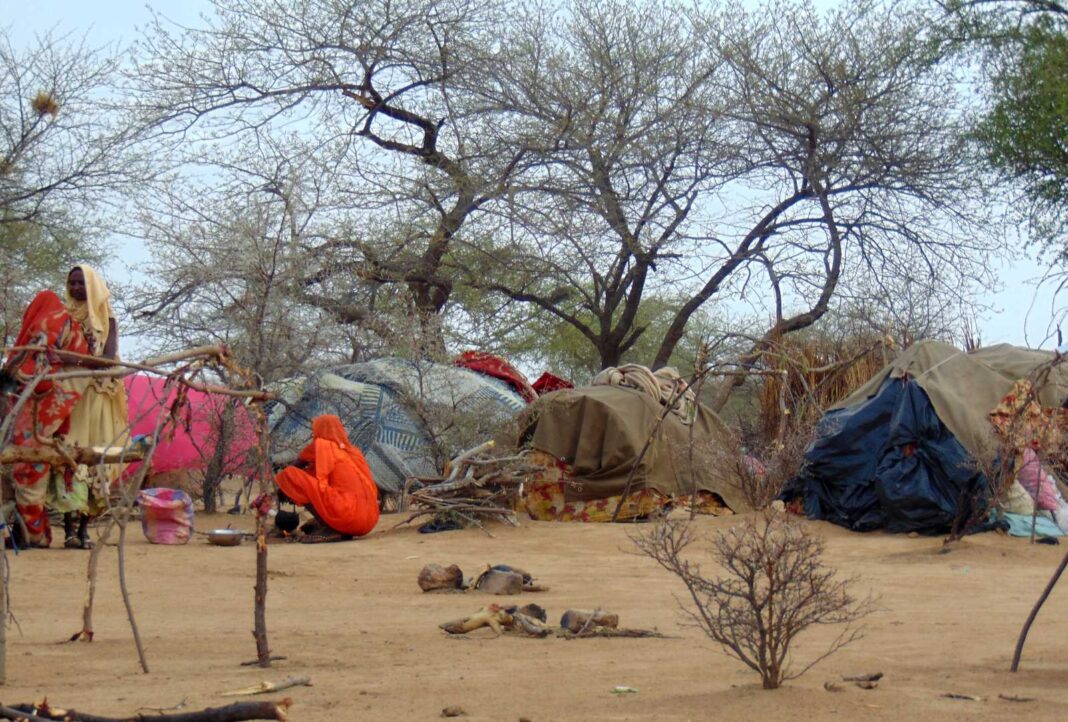
The human cost tied to the Chad-Sudan border tensions is already immense. Close to one million Sudanese refugees are now sheltering in eastern Chad.
Most are in Ouaddaï, Wadi Fira and Ennedi Est, the same provinces now drawn into military escalation. Camps such as Adre and Tine are already stretched thin by years of arrivals. They sit uncomfortably close to the fighting.
Aid workers have repeatedly flagged security risks for women and children collecting firewood or water near camp perimeters.
The wider reaction to the Chad-Sudan border tensions suggests genuine alarm, not routine diplomatic noise. Massad Boulos, the United States’ senior adviser on African affairs, said he held deep concern about the war in Sudan spilling across its borders. The African Union has urged all parties to exercise restraint. Washington has separately floated a nationwide arms embargo on Sudan at the UN Security Council, expanding the existing Darfur-focused regime to cover drones and related technology.
For Chad, the calculation around these Chad-Sudan border tensions is delicate. It hosts the refugees. It shares ethnic and historical ties with communities on both sides of the war through the Zaghawa community. It also depends on Gulf and regional relationships it is reluctant to jeopardise. Chadian officials have grown visibly uneasy with the UAE’s use of Chadian airspace and airports, yet cannot easily afford to sever ties with a key economic partner.
Sudan, for its part, is fighting a war on several fronts at once. It is fighting militarily in Darfur and Kordofan, and diplomatically over Ethiopia and Chad. Framing Chad as a conduit for RSF weapons gives Khartoum a way to internationalise the Chad-Sudan border tensions on its own terms. It also builds pressure for a wider embargo, at a moment when Washington already appears receptive to that argument.
Beyond the headline claims, what is really driving the Chad-Sudan border tensions looks less like a sudden rupture. It looks more like a slow, uneven bleed of Sudan’s war across a border that was never fully sealed. Both governments have clear incentives to shape the narrative in their own favour. Chad wants to defend its claimed neutrality. Sudan wants to justify pressure on a neighbour it accuses of complicity.
The civilians packed into eastern Chad’s camps have no say in either version of the Chad-Sudan border tensions. They have little protection from whichever one turns out closer to the truth.


