




The Darfur humanitarian crisis has deepened this week. A rural hospital in South Darfur is edging towards closure. Food prices are spiralling in Omdurman and North Darfur. Hundreds of thousands of people are now short of medicine, water and grain.
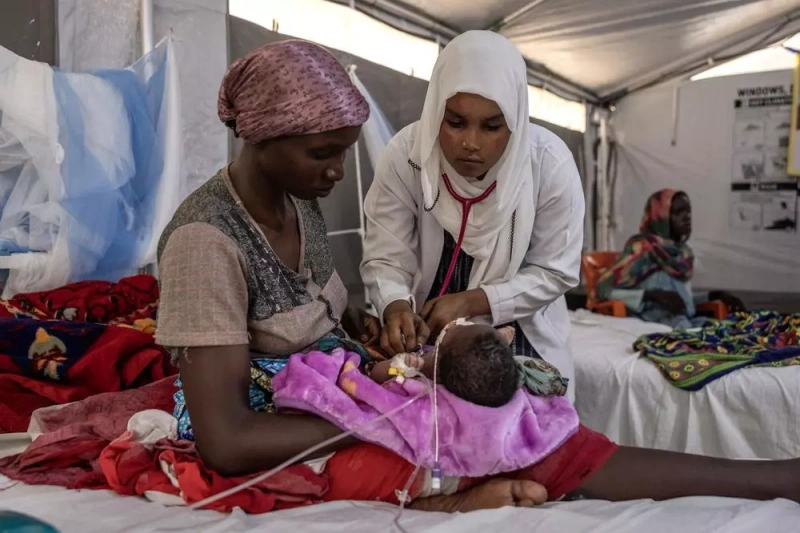
Rehed El Bardi Hospital is the only health facility serving Rehed El Bardi locality. It also serves neighbouring areas including Kubum, Wad El-Fursan and Um Dafoug. The hospital is now without a doctor. Its sole remaining physician has left the area to pursue postgraduate studies, according to Radio Dabanga and allAfrica. Many patients already struggle to reach Nyala for treatment. The loss leaves thousands with no nearby option for care, a fresh blow within the wider Darfur humanitarian crisis.
The hospital has been short of medicine, equipment and trained staff since war broke out in Sudan in 2023, one of the earliest strains that fed into the wider Darfur humanitarian crisis. It has received no regular support from the state government. Humanitarian organisations working in health have also stayed away. Rather than wait for outside help, residents have moved to save the facility themselves.
Local authorities, civil administration figures, community leaders, neighbourhood heads and activists held an expanded meeting. They agreed to set up a fund to keep services running. An 11-member committee will oversee the money, the Executive Director of the Rehed El Bardi administrative unit told Radio Dabanga. The initiative echoes how the hospital was first built in the early 1990s, when residents donated sugar rations to raise funds for it.
Elsewhere in Sudan, the Darfur humanitarian crisis is visible in market stalls as much as in clinics. Consumer prices across Omdurman have jumped by 20 to 25 per cent over the past month. Some essentials are up by more than 40 per cent, Radio Dabanga reported.
A resident of El Thawra neighbourhood said a kilogram of sugar has climbed from between SDG4,500 and SDG4,800 to roughly SDG5,000. A litre of cooking oil now costs about SDG12,000. A kilogram of flour sells for around SDG4,000. Pasta has reached SDG3,500 a packet. Dakwa, a peanut paste widely used in local cooking, now costs about SDG14,000 a kilogram.
Dairy prices show a similar pattern within the Darfur humanitarian crisis. Powdered milk, which sold for between SDG26,000 and SDG28,000 last month, now costs SDG31,000 to SDG32,000. Some traders charge as much as SDG38,000, residents told Radio Dabanga. A 2.5 kilogram pack sells for around SDG67,000. A kilogram of cheese has risen from SDG18,000 to SDG22,000.
The picture is starker further west, where the Darfur humanitarian crisis is pushing communities closer to famine. The El Malha Emergency Room in North Darfur warned that disrupted supply routes and soaring prices could tip the area over the edge. The rainy season is closing in, Radio Dabanga reported.
The Ed Debba-Mellit road, a key link between Northern State and North Darfur, has been shut. Residents said lentils now sell for SDG16,000 a kilogram. Rice costs SDG14,000, and flour sells for around SDG10,000. Corn and millet have grown scarce. Vegetables are limited mostly to oranges and lemons at about SDG2,000 each. Falling pasture and rising feed costs have also squeezed livestock keepers, who depend on animals as a main source of income.
Separate reporting by Darfur24 found the Darfur humanitarian crisis extending to Malha. More than 270,000 residents and displaced people are at risk of hunger and water shortages there, following the near total suspension of commercial trade from Libya and Northern State. A sack of millet in Malha has reportedly reached SDG450,000. Several wells have stopped working because of fuel shortages.
The suspension follows the closure of the Sudan-Libya-Egypt border triangle crossing. Northern State authorities have also ordered a halt to goods reaching areas under Rapid Support Forces control. Nearby in Al-Sayyah, another flashpoint in the Darfur humanitarian crisis, an air strike on the local market in June destroyed stocks of millet and sorghum, a trader told Darfur24. That loss compounded shortages already caused by the halted supply routes.
Aid groups have urged donors to act before heavier rains cut off roads and worsen an already fragile situation across the region. For now, the Darfur humanitarian crisis is being managed largely by residents themselves. Some are raising hospital funds locality by locality. Others are simply stretching shrinking incomes across markets where prices change by the week.


