



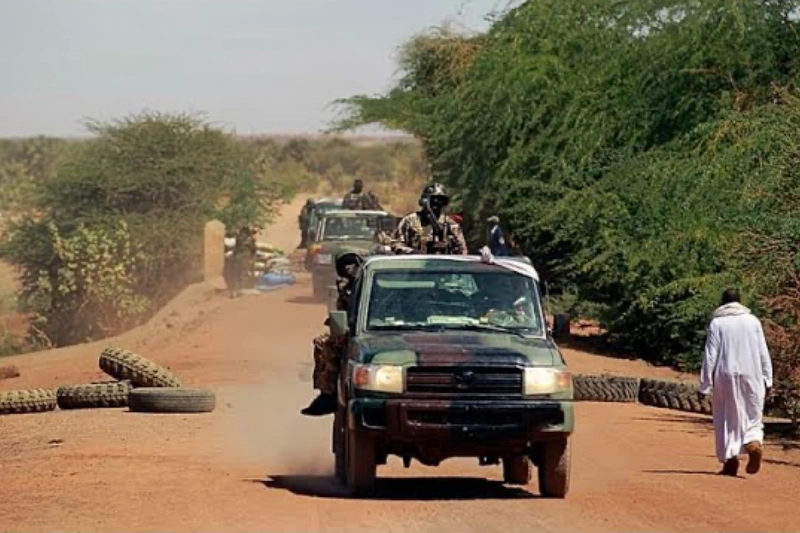

Malian soldiers drove into the strategic northern town on Tuesday after rebels leave Kidal, abandoning the town they had held for the past six months without a ground battle.
The rebels tell it differently. The Azawad Liberation Front (FLA), a coalition formed in 2024, says it chose to leave. Its statement on Tuesday described the move as temporary and said it happened “without any direct combat”.
The FLA also blames the sky. It says Malian aircraft and Russia’s Africa Corps struck the area repeatedly and forced its hand. A source close to the FLA leadership told Reuters that the air operations began three days earlier.
So the idea of fighters fleeing under fire requires some caution. The fire came from above. On the ground, both sides say there was no battle.
That is the real significance of why rebels leave Kidal. The town changed hands without the street-to-street fighting that often accompanies major territorial gains in northern Mali.
Most civilians had already gone. One man who left with six relatives on Monday told AFP that fewer than 100 people had remained in the city for some time.
The speed with which rebels leave Kidal appears to have surprised many residents who had expected at least some form of resistance before government troops returned.
The emptiness makes more sense when viewed against the events of April. On 25 April, the FLA and the al-Qaeda-linked Jama’at Nusrat al-Islam wal-Muslimin (JNIM) launched a coordinated offensive across northern Mali. Chatham House analyst Paul Melly wrote that Defence Minister Sadio Camara died when a suicide vehicle bomb struck his residence in Kati, near Bamako.
In Kidal, the Russian Africa Corps did not stand and fight. About 400 of its fighters negotiated their way out, an exit Melly described as a “humiliating withdrawal”.
Africa Corps is the Kremlin-backed military force that replaced the Wagner Group in several African countries after Wagner’s collapse. The force has become a key security partner for Mali’s military government and operates alongside Malian troops against separatist and jihadist groups.
The following day, an FLA spokesman declared: “Kidal is declared free.”
Now the roles have reversed. In April, government forces and their Russian allies withdrew from Kidal under an agreement. On Tuesday, rebels leave Kidal and described the move as a strategic repositioning.
So what has Bamako actually won?
Beverly Ochieng of Control Risks told Reuters that the return of government forces would lift military morale after recent setbacks in the north and centre of the country. She added that it remains far from decisive in the wider conflict and offers Africa Corps an opportunity to rebuild its standing as the government’s principal security guarantor.
The return to Kidal also gives Bamako an important symbolic victory in a region long regarded as the heartland of Tuareg separatism. Whether the government can hold the town and maintain secure supply routes across northern Mali may prove more important than the speed of its return.
For now, the fact that rebels leave Kidal may carry greater political significance than military significance.
Mali’s military said in a statement that its operations are aimed at pursuing armed groups, dismantling their supply networks and restoring lasting security and freedom of movement. The government describes the FLA and JNIM as a terrorist alliance.
There is irony in the route taken by government troops. AFP reports that rebels briefly seized Anefis in early July. Yet the advance into Kidal began from that very town.
Two questions now hang over the situation after rebels leave Kidal.
The first concerns JNIM. The jihadist group also claimed a role in the April offensive, and it remains unclear where its fighters have repositioned.
The second concerns the FLA. The coalition insists its withdrawal is temporary and continues to pursue independence for Azawad, the name separatists use for northern Mali. FLA leaders say rebels leave Kidal only as part of a tactical adjustment and insist the wider separatist campaign remains unchanged.
Civilians are likely to judge events by conduct rather than flags. Human Rights Watch has accused both the rebels and the Malian military, alongside its Russian allies, of committing serious abuses against civilians since April.
Mali has now entered Kidal twice since November 2023. The first time, alongside Wagner fighters, it held the town for nearly three years.
For the government, the immediate headline is that rebels leave Kidal and the army has returned. Whether Bamako can keep control of the town may determine whether this moment becomes a turning point or merely another chapter in Mali’s long northern conflict.


