



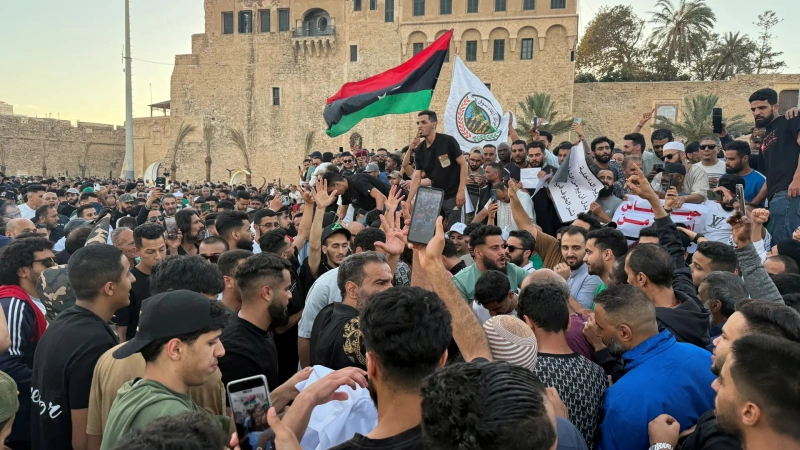

The Libya power outage protests took a dramatic turn after demonstrators stormed the Mellitah Oil and Gas complex and shut gas pipelines supplying power stations, prompting authorities to deploy security forces to restore operations.
The Libya power outage protests have become a major challenge for the Government of National Unity, as public anger grows over long-running electricity cuts in the middle of a harsh summer.
The state-run General Electricity Company of Libya (GECOL) warned that the disruption to gas supplies could severely affect power generation in western Libya, where several plants depend on gas delivered through the network.
The protesters entered the Mellitah facility, located west of Tripoli, during overnight demonstrations and halted gas flows used by domestic power stations. The complex is one of Libya’s most important energy sites and is jointly operated by Libya’s National Oil Corporation and Italy’s energy company Eni.
The facility also plays a key role in Libya’s gas exports to Europe through the Greenstream pipeline, which connects Libya with Italy.
Demonstrators said they were demanding that Libya’s gas resources be used first to address domestic electricity shortages rather than supporting exports while citizens continue to experience lengthy power cuts.
The government responded by ordering military forces to remove protesters from the site and ensure that energy operations resumed. Officials warned that continued disruption could push the electricity network towards a wider collapse.
The Libya power outage protests began after residents across Tripoli and surrounding areas experienced repeated electricity cuts, with some communities reporting outages lasting several hours each day.
Anger has spread across parts of the capital, including areas such as Janzour, Tajoura and Souq al-Jumaa, where protesters have blocked roads and called on authorities to address the worsening public services crisis.
Many demonstrators have blamed political leaders for failing to solve problems that have affected Libyans for years despite the country’s huge oil and gas wealth.
Some protesters have called for Prime Minister Abdul Hamid Dbeibah to resign, accusing his government of failing to deliver reliable electricity and improve living conditions.
The Libya power outage protests have also highlighted deeper weaknesses in a country still struggling with years of political division, armed conflict and an ageing infrastructure system. Although the country has some of Africa’s largest oil reserves, its electricity system has suffered from ageing equipment, maintenance problems, fuel shortages and repeated disruptions at energy facilities.
The latest Libya power outage protests highlight a growing frustration among citizens who believe the country’s natural resources have not translated into better public services.
Energy authorities have repeatedly announced plans to expand generation capacity and repair infrastructure, but the Libya power outage protests show how quickly public frustration can return when promised improvements fail to reach households.
The shutdown at Mellitah has also raised concerns about the vulnerability of Libya’s energy sector, where protests and political disputes can quickly affect both domestic electricity supplies and international energy markets.
For many Libyans, the latest Libya power outage protests are about more than electricity. It reflects deeper concerns about governance, accountability and whether the country’s wealth can finally improve everyday life for its citizens.


