




Britain paid Rwanda about £290 million for a migrant plan. Four people moved, and all four went willingly. No asylum seeker was forcibly transferred under the scheme. Five European governments now want to try again.
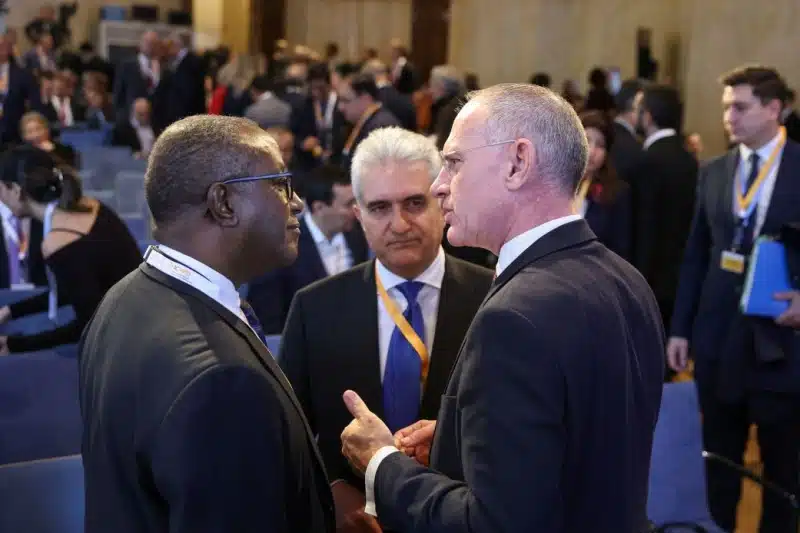
On Monday, ministers from Austria, Denmark, Germany, Greece and the Netherlands stood beside Rwanda’s interior minister in Vienna. They unveiled plans for a Rwanda return hub, a facility outside the EU for people ordered to leave Europe.
The target is first transfers in 2027. That is the announcement. The real story sits in what is still missing.
Some early reports described the deal as signed. It is not. The Associated Press reports that no agreement has been signed yet. Denmark’s Morten Bødskov says a fully negotiated text should follow within the next few months.
So what is actually on the table?
Officials say the Rwanda return hub would take only people who have lost their asylum cases and face an enforceable order to leave. Rwandan officials add that refugees, current asylum seekers and unaccompanied minors are not covered. The proposed Rwanda return hub is intended to provide an alternative destination for people whom European governments cannot return to their countries of origin.
Once in Rwanda, people could settle there, go home voluntarily, or travel to another country that will legally take them. The five governments would pay for reception, housing and integration.
Interior Minister Vincent Biruta says Rwanda is not asking for payment. He calls the offer a “second chance” for people with no right to remain in Europe.
Rwandan officials also say Europe came to Kigali, not the other way round. They say the five countries approached Rwanda individually after studying how it runs the Emergency Transit Mechanism for African migrants evacuated from Libya.
Rwanda has played this role before. Between 2013 and 2018, Israel deported thousands of Eritrean and Sudanese migrants there, according to Al Jazeera. In 2019, Rwanda opened the Libya transit route with the African Union and UNHCR. In 2022, Britain signed its own deal. In August 2025, the first seven deportees from the United States arrived.
Each arrangement was different. The British plan sent new arrivals to Rwanda before their asylum claims were heard. The European plan applies only after a claim has failed. Germany’s Alexander Dobrindt calls the two “incomparable”. The distinction matters because the Rwanda return hub is being presented as a different model from the British arrangement.
Courts may decide whether that gap holds. In 2023, the UK Supreme Court ruled the British scheme unlawful because transferred people faced a real risk of being sent on to places where they could be harmed. London scrapped the plan in 2024.
UNHCR, which challenged that plan in court, is now making its good offices available to advise Rwanda and the five governments on compliance with international refugee and human rights law. Its involvement does not amount to an endorsement of the proposal. The UN migration agency IOM says it takes no part in state-to-state removal arrangements, though it is giving technical input.
The legal door opened this year. In June, the European Parliament and Council negotiators reached a provisional agreement on rules that would allow member states to establish return hubs outside the bloc. Parliament approved the rules later that month, and the Council gave final approval in October. In September, the five governments settled on a model. Monday was the public launch of the Rwanda return hub.
The pressure behind it is easy to see. European Commission figures show about 669,400 first-time asylum applications across the EU in 2025, and roughly 45 per cent were approved. EU migration commissioner Magnus Brunner says the share of rejected applicants actually returned rose from 19 per cent in 2023 to 38 per cent in the first half of this year. On that measure, most people told to leave are still in Europe.
Critics are not waiting. A coalition of 47 aid, union and rights groups has urged the five governments to drop the Rwanda return hub. Human Rights Watch’s Judith Sunderland said: “History has shown that third-country transfers violate rights and cause suffering.” Spain’s prime minister, Pedro Sánchez, said the plan has no “future or humanity.
Rwanda’s own record is part of the argument. Amnesty International’s 2025 report said civic space in Rwanda remained severely restricted and opposition members faced unfair prosecution. Human Rights Watch notes that four of the five countries raised concerns about Rwanda’s rights record at the UN as recently as January. Biruta dismissed that image as a cliché.
There is another awkward fact. In March 2025, the EU sanctioned Rwandan military officers over the conflict in eastern Congo. UN investigators say Kigali armed the M23 rebels and sent troops to help them. Rwanda denies backing the group. Now EU governments want Kigali as a partner.
Much is still unclear. The governments have not said how many people they plan to send. Nor is it clear what Rwanda gets in return. The joint statement calls the arrangement an “equal and mutually beneficial partnership” that covers more than migration. Denmark is expected to sign a separate cooperation agreement with Kigali next week, according to reports.
Money is the quiet question. Britain’s deal left a payment dispute behind. In March, Rwanda told an arbitration panel that London still owed it £100 million. The claim was dismissed. That history is why the cost terms of the Rwanda return hub matter this time.
The future of the Rwanda return hub will depend on the legal safeguards, financial arrangements and practical commitments eventually agreed by both sides.
Europe has the problem and the cheque book. Rwanda has the space and, by its own account, the experience. What nobody has yet is a signed text, a headcount or a court ruling.
Britain learned that announcements are cheap. The first transfer list is where this plan gets tested.


