



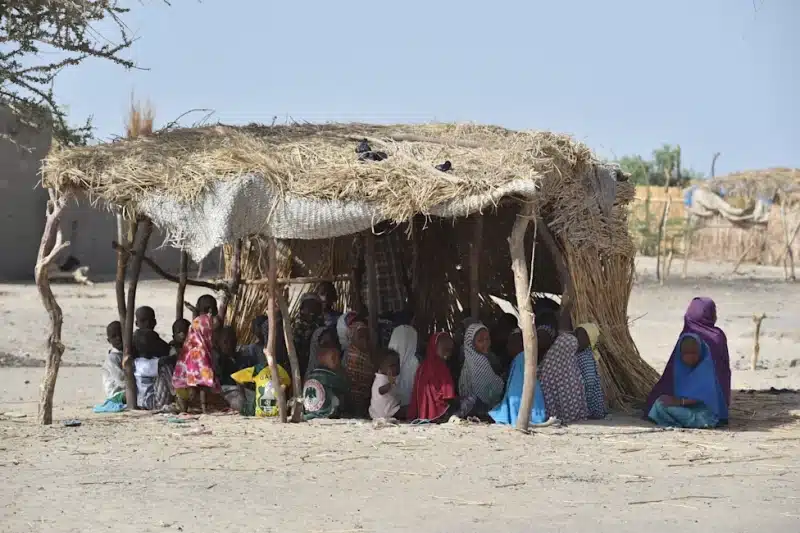

Thousands of Mahamid Arabs in south-eastern Niger have until 31 December to leave the country. That is six weeks. Some have lived there for about half a century.
So who are the Mahamid Arabs?
They are pastoralists with roots in eastern Chad. The first families crossed into Niger in the early 1970s, running from a severe drought around Abéché. More followed as wars in Chad and Sudan pushed people out.
Most settled in the Diffa region, close to Nigeria and Lake Chad. Many keep camels, and those herds have long competed with local communities for water and grazing land. Some of those disputes have turned deadly.
Some of those disputes have turned deadly. The presence of Mahamid Arabs in the region has therefore long been a source of tension with settled communities
Niger’s military government says this is about security. Back in April, the interior ministry told the governors of Diffa and Zinder that the irregular settlement of the Mahamid had serious security consequences. Officials accuse some Mahamid Arabs of supplying weapons and logistics to Boko Haram and its rival, the Islamic State West Africa Province.
The Diffa governor, General Mahamadou Ibrahim Bagadoma, said in August that arms seizures and intelligence gathered between 2023 and 2026 pointed to some involvement. Those claims have not been independently verified.
The security problem in Diffa is real. UNHCR said on 10 November that more than 70 per cent of Niger’s reported security incidents this year happened there.
But look at the order of events. The deadline is the last step, not the first.
In October, authorities ordered state-built schools and water wells closed, saying only Mahamid communities used them. A municipal official says the schools have shut and the pumps have been taken out. RFI also reported that a document attributed to the interior ministry points to the withdrawal of Nigerien civil status papers.
There is a contradiction too. In August, Governor Bagadoma himself warned against blaming a whole community for the acts of a few. On 8 November, a municipal official who attended told AFP, he delivered the ultimatum to community representatives.
The African Commission on Human and Peoples’ Rights has stepped in. On 6 November it sent an urgent appeal to President Abdourahamane Tchiani over reported limits on the community’s access to water, education, healthcare and identity papers. The appeal is not a formal finding of violations.
Civil society is blunter. RFI quoted Mamane Kaka Touda of Alternative Espaces Citoyens arguing that the faults of a few individuals can never justify expelling a whole community.
Niger has done this before. In October 2006, under President Mamadou Tandja, the government ordered the Mahamid Arabs out. Estimates of the number affected ranged from 15,000 to 150,000, according to the US Committee for Refugees and Immigrants. The plan was suspended within days after protests and negotiations.
The episode remains an important precedent for the current dispute involving the Mahamid Arabs, particularly given how quickly the earlier expulsion plan was abandoned.
This time, the order comes from a military government that took power in July 2023. No formal decree has appeared in the reporting so far.
Then there is the question of where people would go. “Home” is a hard word for families who have been in Niger for generations. Officials also accuse some Mahamid Arabs of obtaining Nigerien papers fraudulently, so nationality is part of the fight.
No agreement with Chad on receiving them has been announced. The two neighbours are also in a bitter row. Niamey says a drone strike in the Agadez region on 24 October killed two civilians and blames N’Djamena. Chad denies it and wants an international inquiry.
Across the border, Chadian officials are already dealing with arrivals. Nomadic herders from Niger had been in Daboua, in Lac province, for about eight days when the government’s delegate visited on 11 November. A minister followed on 16 November. Their chief said more were on the way. The Chadian reports do not say whether they are Mahamid.
Niger has set the date. What it has not said is where thousands of Mahamid Arabs are meant to be on 1 January.


