




A fresh outbreak of South Africa xenophobia violence has pushed bilateral tensions with Ghana to a breaking point, forcing Accra to summon Pretoria’s ambassador in one of the sharpest diplomatic rebukes between two African nations in recent memory.
The decision to summon an envoy is widely regarded among diplomats as a formal signal that quiet, backroom diplomacy has collapsed. Ghana’s move placed South Africa on notice: protect our citizens, or face a deeper confrontation.
What Triggered Ghana’s Response
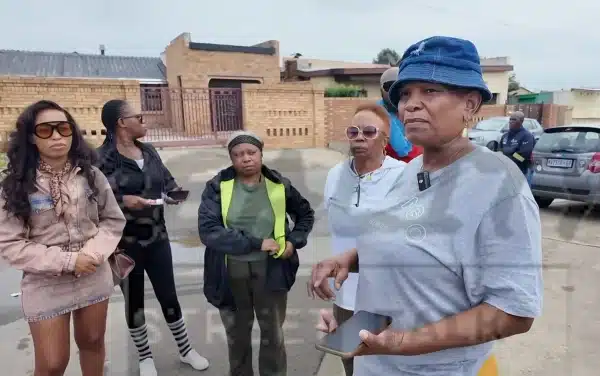
Reports of Ghanaian nationals being harassed on South African streets, with some told to “go fix your own country,” reached the Ghanaian government and ignited immediate outrage in Accra.
The incidents were not isolated. They arrived against the backdrop of a pattern of South Africa xenophobia attacks that has periodically convulsed the country since 2008, with major flare-ups recorded in 2015 and again in 2019.
For Ghana, the attacks carried a particular sting. Accra has long positioned itself as a champion of Pan-African unity and was among the countries that stood with South Africa during the apartheid era. To its government and many of its citizens, the harassment of Ghanaians on South African soil is not merely a bilateral grievance. It is a betrayal of the continent’s foundational bonds.
Lamola Condemns the Violence
South Africa’s Foreign Minister Ronald Lamola moved quickly to condemn the attacks, describing them as an act of lawlessness that threatened the country’s constitutional order. Pretoria pledged to identify perpetrators, make arrests and pursue prosecutions.
The language was firm. But for Ghana, and for a watching continent, it sounded familiar.
The same sequence has played out before. Violence erupts. Government officials condemn. Suspects are arrested. Convictions rarely follow at a scale that deters future attacks. The credibility problem for South Africa is not in its statements. It is in the persistent gap between what is promised and what courtrooms deliver.
The Economic Drivers Behind South Africa Xenophobia
To understand why South Africa xenophobia incidents keep recurring, analysts say it is necessary to look beyond individual prejudice and into the structural conditions that feed it.
South Africa carries an unemployment rate that has consistently exceeded 30 per cent in recent years, according to Statistics South Africa. In communities where basic services, including housing and water, remain inadequate, competition for limited resources can curdle into resentment.
Foreign nationals, many of whom are visibly running small businesses or filling entry-level jobs, become convenient targets for that frustration. This dynamic reflects broader global migration pressures, where economic stress often fuels anti-migrant sentiment (see global migration trends).
Political messaging has compounded the problem. Anti-migrant rhetoric, deployed by populist voices seeking to redirect public anger away from governance failures, has helped normalise the idea that outsiders are responsible for local hardship.
Operation Dudula and the Political Calculation
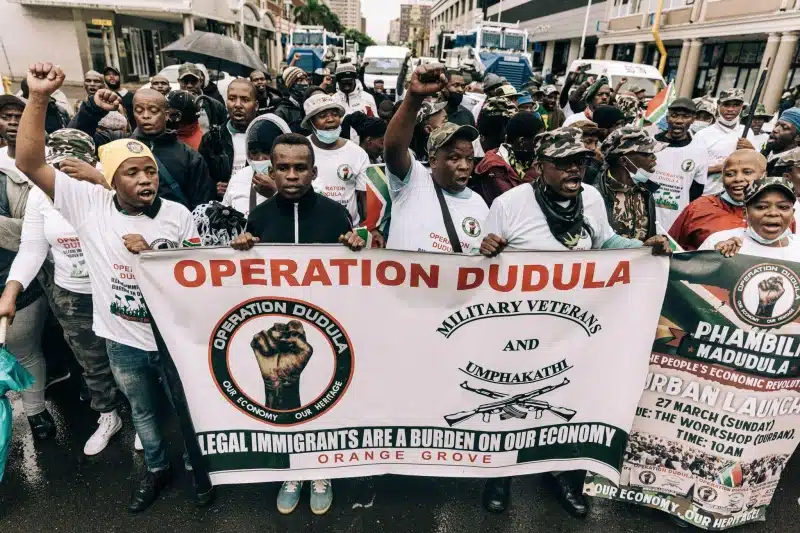
One of the most significant pressure points in the current moment shaping South Africa xenophobia dynamics is Operation Dudula, a South African movement that has organised around explicit anti-foreigner activism. The group has been most active in townships and informal settlements where economic anxiety runs deepest.
For the African National Congress, which has governed South Africa since the end of apartheid, Operation Dudula presents an awkward calculation. Cracking down firmly on the movement risks alienating voters in communities where its messaging has found sympathy. Doing too little allows xenophobic organising to harden.
That political tension sits at the heart of why South Africa’s responses to recurring xenophobia have tended to be reactive rather than preventive.
What Ghana and Africa Are Actually Watching
Ghana’s summons of the South African envoy did something significant beyond registering formal protest. It reframed South Africa xenophobia as a continental issue rather than a domestic one.
The timing matters. The African Continental Free Trade Area, which is headquartered in Accra and represents the most ambitious economic integration project in African history, rests on the premise that African nations are building a shared future. South Africa is one of the continent’s largest economies and a central pillar of that vision.
The contradiction that Ghana’s action highlighted is uncomfortable: a continent cannot credibly promise the free movement of goods and capital while its largest economies remain unsafe for the free movement of people.
If South Africa xenophobia persists without serious consequences, the economic fallout could extend beyond diplomatic protest. South African brands and companies operating across the continent, including firms like MTN and Shoprite that have built significant regional footprints, could face consumer-led pressure and organised boycotts. Skilled African professionals considering South Africa as a destination for work or investment would have fresh reasons to think twice.
The Apartheid Debt
Ghana’s response also carried a pointed historical message. South Africa received substantial solidarity from across Africa during the long struggle against apartheid, including from countries like Ghana that championed the cause internationally despite having no direct obligation to do so.
That history of continental support, Ghanaian officials and commentators have argued, creates a reciprocal moral obligation. South Africa cannot draw on the solidarity of African nations when it suits Pretoria and then fail to protect those same nations’ citizens within its borders.
By making this argument publicly, Ghana transformed the framing of the crisis from “South Africa’s internal problem” into “Africa failing its own people.”
Whether This Time Is Different
The immediate question is whether South Africa’s pledge to arrest and prosecute will produce results that differ from previous cycles.
Prosecuting perpetrators of xenophobic attacks is not straightforward. Attacks frequently occur in the chaos of crowd violence or within dense informal settlements where identifying individuals is genuinely difficult. Case-building has historically been weak. And even where arrests are made, the path to meaningful sentencing has been inconsistent.
Ghana, and the broader African Union membership watching this episode, have made clear they are not counting arrests. They are counting convictions.
South Africa’s long-term challenge runs deeper than any single prosecution. Until the structural drivers of South Africa xenophobia, including mass unemployment, failing service delivery, and the political incentives that reward anti-migrant rhetoric, are confronted directly, South Africa xenophobia will remain a recurring feature of the country’s social landscape.
A Test That Goes Beyond Bilateral Relations
This dispute is not a routine quarrel between two governments. It is a test of whether the language of Pan-Africanism translates into protection for actual African citizens when it costs something to provide that protection.
The African Union, the African Continental Free Trade Area’s secretariat, and the wider continental membership are now waiting to see whether Pretoria’s promises hold. South Africa has the weight of its own history, its own constitution, and its own continental ambitions pressing on it to deliver an answer different from the ones it has given before.


