



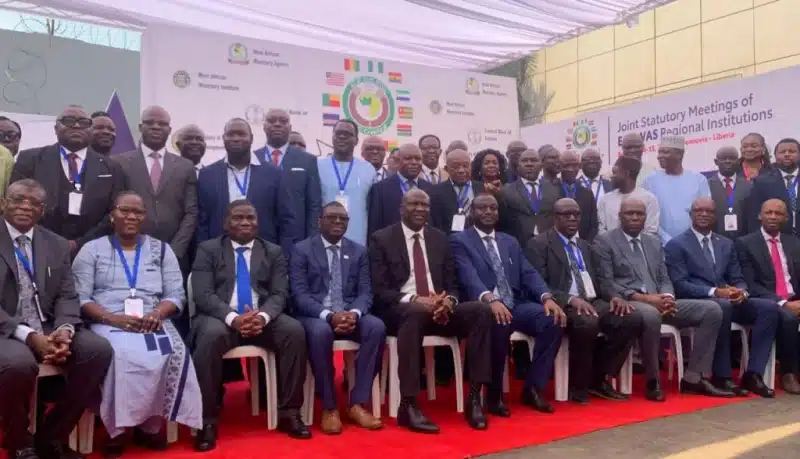

The humid air of Monrovia usually carries the scent of the Atlantic. But in February, it carried the weight of history: the ECOWAS Eco currency.
Central bank governors from across the Economic Community of West African States (ECOWAS) emerged from a regional meeting in Liberia with a striking update: 10 out of 12 assessed member states had met the primary convergence criteria for the long-promised “Eco” currency.
For a project that has been postponed repeatedly over the past two decades, the announcement from the Monrovia breakthrough signalled unusual momentum. With a tentative launch timeline tied to the ECOWAS Eco currency 2027 plan, the vision of a borderless West African monetary system suddenly appears less distant.
Yet as the optimism from the Monrovia discussions settles, a fundamental question remains: can a single currency succeed when the region’s two largest economies, Nigeria and Ghana, are still navigating economic turbulence?
The Road to 2027: A Multi-Speed Monetary Union?
The Monrovia discussions point toward what officials increasingly describe as a “pragmatic” or phased approach to launching the Eco.
Rather than waiting for all 15 ECOWAS members to fully align, policymakers are exploring the possibility of allowing a first group of countries to adopt the currency earlier, with others joining once they meet the required benchmarks.
This phased approach is increasingly being discussed as a pathway toward achieving the ECOWAS Eco currency 2027 target.
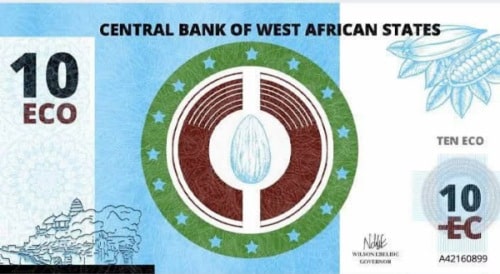
Among the countries often mentioned in discussions of an initial group are Liberia, Guinea, Sierra Leone, The Gambia, Nigeria and Ghana, though final decisions have yet to be made.
To qualify for participation, ECOWAS countries are expected to meet four core macroeconomic criteria:
-
Budget deficit of no more than 3% of GDP
-
Average annual inflation below 10%
-
Central bank financing of deficits capped at 10% of the previous year’s tax revenue
-
External reserves covering at least three months of imports
While recent reports suggest many countries have made progress toward these targets, economists caution that meeting them temporarily does not guarantee long-term stability.
The “Giant” Problem: Nigeria and Ghana’s Economic Turbulence
The Eco project faces a central paradox: the economies most essential to its success are also among the most volatile.
Nigeria accounts for more than half of ECOWAS’ total GDP, making it the gravitational centre of any future currency union.
But the country’s macroeconomic environment remains fragile. The naira has undergone major adjustments, inflation has remained elevated despite signs of gradual easing, and debt servicing continues to absorb a large share of government revenue.
These pressures raise questions about whether Nigeria can maintain the monetary discipline required under a shared currency system if the ECOWAS Eco currency 2027 timeline moves forward as planned.
Ghana
Ghana’s situation tells a similar story of recovery after turbulence.
Once regarded as one of West Africa’s more stable reform-oriented economies, the country is still emerging from a serious fiscal crisis that led to debt restructuring and sharp currency depreciation between 2022 and 2023.
Economic growth is gradually returning, with projections for 2026 hovering around five percent or slightly higher. Still, the experience of the recent crisis has made policymakers cautious about entering a new monetary arrangement that could limit policy flexibility.
The central question for the Eco project is therefore unavoidable: can a single interest rate serve both an oil-dependent Nigeria and a recovering Ghana at the same time?
Integration or Illusion?
Supporters of the Eco argue that the currency could significantly reshape West Africa’s economic landscape.
A single currency would remove many of the exchange-rate barriers that currently complicate trade between neighbouring countries. At present, trade within ECOWAS accounts for only about 15 percent of the bloc’s total commerce, a relatively low figure compared with more integrated economic regions.
Advocates also see the project as a way to strengthen regional economic coordination ahead of the ECOWAS Eco currency 2027 rollout.
They also frame the Eco as a step toward greater regional monetary independence, particularly for countries seeking alternatives to older currency arrangements such as the CFA franc.
However, sceptics caution that political enthusiasm for a 2027 launch may be moving faster than economic readiness.
Unlike more established monetary unions, ECOWAS does not yet have a strong fiscal transfer mechanism capable of supporting countries during economic downturns. Without such safeguards, weaker economies could face significant pressure during crises. This challenge was evident in the Eurozone during its early years.
The Verdict: A Bold Regional Gamble
What the Monrovia discussions make clear is that West Africa is no longer willing to indefinitely postpone the Eco project.
Momentum behind the ECOWAS Eco currency 2027 initiative suggests that regional leaders are determined to translate years of policy discussions into concrete action.
One idea gaining traction is to begin with a limited or transitional framework, possibly including digital settlement systems or accounting mechanisms, before introducing full physical currency circulation.
Such a phased approach could allow institutions, payment systems and regulatory structures to mature before a full launch.
So is West Africa ready for a single currency?
Technically, the region may be closer than at any point in the past two decades. Economically, however, the risks remain significant.
For policymakers, the Eco represents not just a monetary reform but also a test of whether West Africa can sustain the discipline, coordination and trust required for true regional integration.
As Liberia’s Finance Minister Augustine Ngafuan reportedly told participants during the discussions:
“WE NO LONGER HAVE THE LUXURY OF DRIFTING.”
The Eco may still face obstacles. But after years of delay, the region appears determined to move forward toward the ECOWAS Eco currency 2027 goal.


