



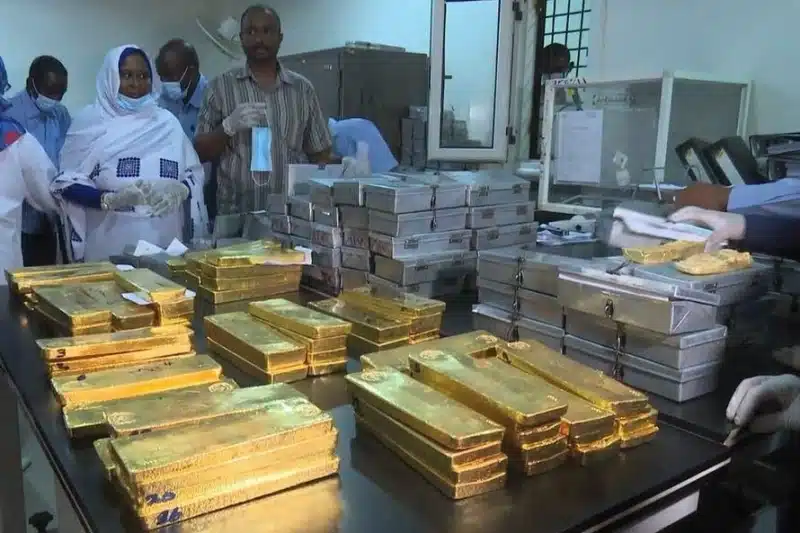

Brussels has moved against one of Africa’s most valuable conflict economies. The Sudanese gold ban, approved by EU foreign ministers on Monday, 13 July, blocks the purchase, import and transfer of any gold originating in Sudan. It marks the bloc’s most direct attempt yet to choke the money fuelling a civil war now in its fourth year.
The Council of the European Union confirmed the decision in Brussels, describing gold as a key source of revenue sustaining the fighting between the Sudanese Armed Forces and the Rapid Support Forces. Officials said the aim is to reduce the resources available to those responsible for prolonging the violence.
What the sanctions cover
The Sudanese gold ban is broader than a simple trade restriction. Alongside the import prohibition, the EU has banned the sale, supply, transfer or export of mercury and cyanide to Sudan. Both chemicals are widely used in gold extraction, particularly by artisanal miners who rely on mercury amalgamation to separate gold from ore.
The measures, based on a joint Dutch-French initiative according to Bloomberg, also restrict related services. Technical assistance, brokering and financial support linked to Sudanese gold are now off limits for EU individuals and firms. The package further targets indirect routes, aiming to stop Sudanese gold entering the bloc after passing through third countries.
Humanitarian exemptions remain in place. Mercury and cyanide needed for public health emergencies or disaster response are not covered by the export ban, the Council said. In practice, the Sudanese gold ban leaves room for aid work to continue even as commercial trade is cut off.
A country split by war
Sudan’s civil war erupted in April 2023 and has since split the country in two. The Sudanese Armed Forces, commanded by Abdel Fattah al-Burhan, controls the capital Khartoum and the north-eastern port city of Port Sudan. The Rapid Support Forces, led by Mohamed Hamdan Dagalo, holds Darfur and most of the west, and declared a parallel administration last year.
Gold sits at the centre of that divide. The RSF controls most goldfields in Darfur and Kordofan, while the army oversees production in the north and east. Both sides have turned mining income into a war chest, according to rights groups tracking the conflict. That dependence on mining revenue is precisely why the Sudanese gold ban targets both territories rather than a single faction.
Where the gold actually goes
Enforcing the Sudanese gold ban will be difficult, given how the trade already moves. Sudanese gold is commonly trafficked through Egypt, Chad and Libya before reaching Dubai, a major global hub for refining and trade. Analysts and UN experts estimate that more than half, and by some counts as much as 70 percent, of Sudan’s gold leaves the country through informal channels each year.
Sudan’s Minerals Resources Company recorded official gold exports worth roughly 1.59 billion dollars in 2024. The gap between that figure and actual production points to extensive smuggling networks running largely through the United Arab Emirates.
Criticism over what was left out
The Sudanese gold ban has drawn criticism for what it does not do. Despite accusations from rights groups that Gulf backing has helped sustain the RSF, the EU stopped short of sanctioning any UAE-linked entities in this package.
The gap is notable given events in Brussels the previous week. On 9 July, the European Parliament passed a resolution by 476 votes to 28 urging the bloc to designate the RSF a terrorist organisation, and specifically condemned the UAE for its role as the group’s main sponsor. A United Nations expert group report earlier this year said atrocities committed by the RSF during its siege of El Fasher in Darfur bore the hallmarks of genocide, a term Sudanese army officials have since repeated to press for tougher international measures.
Analysts quoted by CryptoBriefing warned that if Sudanese gold simply reroutes through Dubai for refining and re-enters global markets under a different origin label, the practical impact on conflict financing could remain limited.
Humanitarian stakes remain high
The civil war has forced more than 14 million people from their homes, and aid agencies estimate more than 28 million people across Sudan now face acute hunger. The EU remains the largest single humanitarian donor to the crisis, having allocated close to 600 million euros directly to Sudan since 2023, rising to nearly a billion euros once aid to neighbouring Chad, South Sudan and Egypt is included.
Following the third International Conference on Sudan in Berlin in April, marking three years since the war began, the bloc pledged a further 812 million euros toward the humanitarian response. That pledge came alongside repeated warnings that external actors must stop fuelling the war, warnings that ultimately fed into the Sudanese gold ban.
Part of a wider sanctions build-up
The Sudanese gold ban builds on a sanctions framework the EU first put in place in October 2023. That regime has since been expanded through several rounds of listings and now covers 18 individuals and 8 entities accused of fuelling the conflict or undermining Sudan’s political transition. The measures have been extended to October 2026.
Whether the Sudanese gold ban meaningfully dents the war economy will likely depend on cooperation from outside the bloc. Experts continue to warn that unilateral EU action has limited reach unless major gold-trading hubs, particularly in the Gulf, tighten enforcement of their own.


