



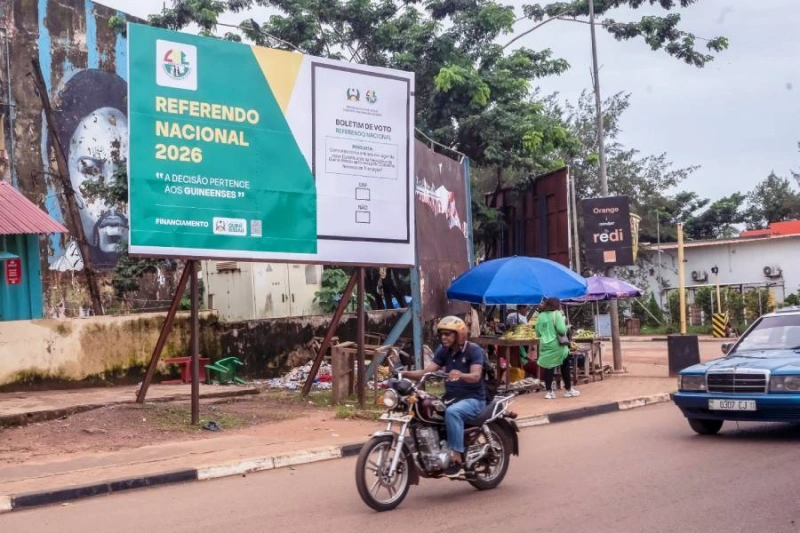

Voters in Guinea-Bissau went to the polls on Sunday. They were asked to settle a constitutional referendum that could hand sweeping new powers to the presidency. The vote comes nine months after soldiers overthrew the elected government.
The Guinea-Bissau constitutional referendum puts one question to nearly 915,000 registered voters. Do they agree with bringing into force a new constitution drawn up by the military-appointed National Transitional Council? A “yes” answer would end decades of parliamentary rule.
Under the proposed charter, the president would gain the power to appoint and dismiss the prime minister and cabinet. The head of state could create or scrap ministries and chair the Council of Ministers directly. In a “grave political crisis”, the president could even dissolve parliament altogether.
The Guinea-Bissau constitutional referendum would also reshape parliament itself, which is set to shrink sharply. Seats would fall from 102 to 65, while electoral constituencies would be cut from 29 to 12. Anyone hoping to run for president would first need five straight years of permanent residence in the country. Opposition figures say that residency rule is designed to sideline exiled or diaspora-based rivals.
The Guinea-Bissau constitutional referendum sits against a tense political backdrop. The military seized power on 26 November 2025, a day before results were due from a disputed presidential contest. Both then-incumbent Umaro Sissoco Embalo and challenger Fernando Dias had claimed victory. General Horta N’Tam was installed as transitional president soon after, under a charter that bars him from contesting December’s planned elections.
The African Party for the Independence of Guinea and Cape Verde, known locally as PAIGC, is the country’s main opposition force. It has urged supporters to boycott the referendum entirely. Spokesperson Muniro Conté, in remarks carried by the Associated Press, said the new constitution weakens the prime minister and the government. He added that it subordinates the National People’s Assembly and political parties, risking deeper social division.
According to Al Jazeera, PAIGC leader Domingos Simões Pereira went further, calling Sunday’s vote a continuation of last November’s coup rather than a genuine return to democratic rule. Transitional authorities frame the Guinea-Bissau constitutional referendum very differently. Nelson Moreira, the National Transitional Council’s second vice-president, said the outgoing constitution had long been blamed for the country’s instability, and defended the legitimacy of the process now under way.
Ahead of the Guinea-Bissau constitutional referendum, ordinary voters seem divided over the changes. Many admit they know little about the text they are being asked to endorse. Bacar Camará, a schoolteacher in the capital, Bissau, said he would not cast a ballot at all. He cited the tense political mood and argued the transitional government should focus on reconciliation instead.
Another Bissau resident, Carolina Djeme, plans to vote “no”. She said she does not know the new constitution well enough to approve it, though she still intends to take part.
The Guinea-Bissau constitutional referendum sits at the centre of the country’s fragile roadmap back to elected rule. Presidential and legislative elections are pencilled in for 6 December. Whatever framework voters approve, or reject, on Sunday will shape the powers of whoever eventually takes office.
Guinea-Bissau has lived through five coups and numerous attempted takeovers since independence from Portugal in 1974. It remains among the world’s poorest nations. Both factors continue to feed scepticism towards military promises and anxiety about prolonged instability.
A provisional result from the constitutional referendum is expected within days, though the National Electoral Commission has not confirmed an official timeline for turnout figures or results.
For live updates click here


