The announcement came late on 8 March 2026 through a decree issued by the Ministry of Territorial Administration on behalf of the ruling National Committee of Reconciliation and Development (CNRD). The body has governed Guinea since the military seized power in September 2021, according to reports from Africanews.
While officials insist the decision is purely administrative, the scale of the move has quickly fuelled debate in Conakry and beyond about whether the Guinea political crackdown signals a tightening of control ahead of a long-promised transition back to civilian rule.
Why the Parties Were Dissolved
According to the government, the parties affected by the decree failed to meet the legal requirements necessary to remain registered as political organisations.
Authorities said some of the parties no longer maintained functioning offices, while others reportedly failed to submit administrative documentation required by Guinea’s electoral and political regulations.
In a brief statement, officials said the review of political parties was meant to “clean up and regularise the political landscape.”
Critics say the timing raises questions. For many observers, the decision looks less like routine administration and more like part of a broader Guinea political crackdown on opposition activity.
A Country Still Under Military Rule
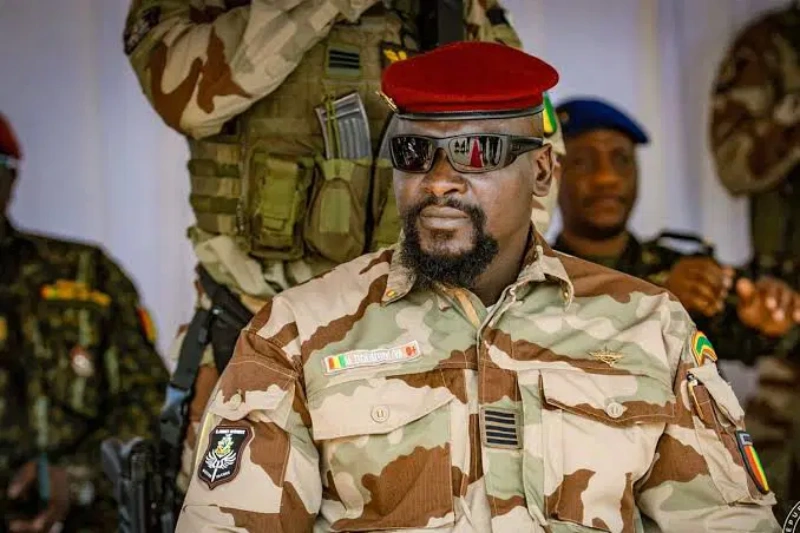
Guinea has been governed by the military since September 2021 when Colonel Mamadi Doumbouya led the coup that removed former president Alpha Condé from power.
At the time, the junta promised reforms and a return to democratic rule. A transition plan was later discussed with regional bodies including the Economic Community of West African States (ECOWAS), which pushed for a timetable for elections.
However, nearly five years after the coup, the path back to civilian government remains unclear. Political parties and civil society groups have repeatedly asked the authorities to provide a clearer roadmap.
Against that backdrop, the latest decision has reinforced concerns that the Guinea political crackdown could narrow the country’s already restricted political space.
Concerns Over Political Competition
Political analysts say the removal of 40 parties from the register could significantly reshape Guinea’s political environment.
While some of the affected organisations were relatively small or inactive, others had played roles in local political mobilisation or alliances within the opposition.
Reducing the number of registered parties could make it easier for authorities to manage the political landscape as the transition process unfolds.
For critics of the government, the Guinea political crackdown risks weakening political pluralism at a time when broader participation might be needed to stabilise the country.
Risk of Public Tension
Guinea has experienced several waves of protests since the 2021 coup, particularly over the pace of the transition to civilian rule.
Demonstrations organised by civil society groups and opposition coalitions have at times led to clashes with security forces.
Although the streets of Conakry remained largely calm in the hours following the announcement, some observers say the Guinea political crackdown could trigger fresh tensions if political actors feel increasingly sidelined.
Much will depend on how the dissolved parties respond and whether the authorities provide any mechanism for appeal or re-registration.
Regional and International Attention
The decision is also likely to attract scrutiny from regional organisations that have been closely following Guinea’s political transition.
Both ECOWAS and the African Union have repeatedly emphasised the need for a credible path back to constitutional governance in the country.
Diplomatic observers say the Guinea political crackdown could feature prominently in upcoming discussions between Guinea and regional partners, especially if concerns grow about restrictions on political activity.
What Happens Next
For now, Guinea’s political landscape remains uncertain. The dissolution of dozens of parties has altered the balance of political actors, but it is still unclear how remaining parties and civil society organisations will respond.
Some analysts believe the government may eventually allow certain parties to regularise their status and return to the register. Others see the move as part of a longer-term consolidation of power.
What is clear is that the Guinea political crackdown has reopened debate about the direction of Guinea’s transition and the future of political pluralism in the country.
For many Guineans watching developments unfold, the key question remains whether the country is moving closer to democratic elections or further away from them.