



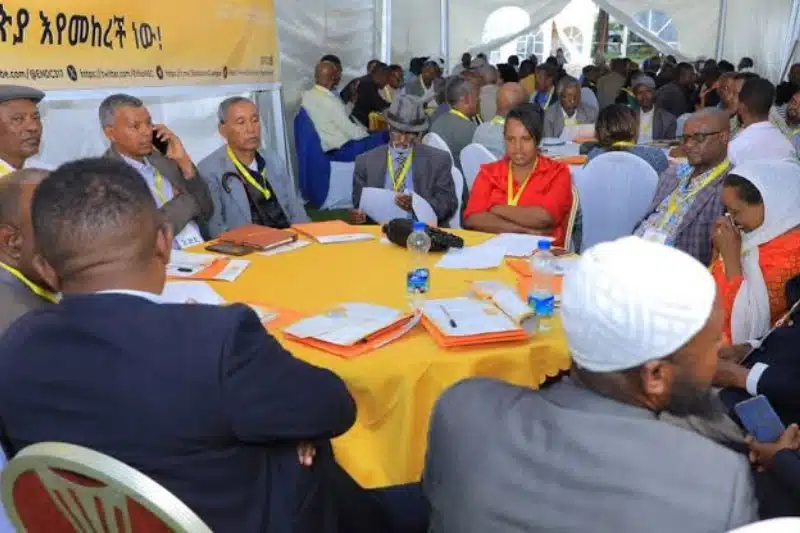

About 4,000 delegates are expected to gather at the Addis International Convention Center for the opening of the Ethiopian National Dialogue Conference. The gathering brings together traditional and religious leaders, youth advocates, women’s associations, civil society groups and diaspora representatives from across the country.
The Ethiopian National Dialogue Commission, which parliament established in 2021 to help heal divisions left by years of political turbulence and ethnic conflict, confirmed the conference will run for roughly three to four weeks. Commission coordinator Reta Gera told reporters in Addis Ababa that diaspora delegates from the United Arab Emirates, the United States, the United Kingdom and Sweden had already arrived ahead of the opening, while participants from South Africa landed in the capital on 12 July.
Chief Commissioner Professor Mesfin Araya said the Ethiopian National Dialogue Conference will be conducted in three phases and described the process as an important milestone in the country’s nation-building journey. He told delegates during pre-conference briefings that they had been entrusted with identifying solutions to Ethiopia’s fundamental national challenges through structured dialogue rather than confrontation.
Eight thematic pillars will guide discussions once the Ethiopian National Dialogue Conference gets under way. These include nation-building and identity, the structure of government, federalism and power-sharing, the rule of law, peacebuilding and the contested status of federal cities including Addis Ababa. The Commission said the agenda items were drawn directly from more than 1,200 administrative districts through years of grassroots consultations rather than decided by political elites behind closed doors.
Organisers arranged for delegates to visit historical sites in the capital, including the Adwa Victory Memorial Museum and the Red Terror Martyrs’ Memorial Museum, on 9 and 10 July before the main sessions begin. Participants are being housed at the Ethiopian Civil Service University and the Federal Technical and Vocational Education and Training Institute, with the Commission arranging healthcare, meals, childcare and other support services for the duration of the talks.
Professor Mesfin used the pre-conference period to renew an invitation to political and civil groups that have previously stayed away from the process. He said the Commission’s door remains open to compatriots who, for various reasons, have not yet taken part, and called for their participation as the Ethiopian National Dialogue Conference enters its decisive phase.
The government’s role has been limited by design to logistics, financing and security, with the Commission insisting the process itself remains independent. Briefing sessions led by outside experts and researchers were introduced to give delegates empirical data on Ethiopia’s socio-economic and structural challenges, a measure the Commission says is meant to keep emotion out of the debates without steering the outcome.
Whether the Ethiopian National Dialogue Conference can deliver lasting consensus will depend less on the opening ceremony than on what follows. Officials and analysts have said the real test lies in whether agreements reached at the conference translate into government policy and institutional reform once the delegates return home.


