



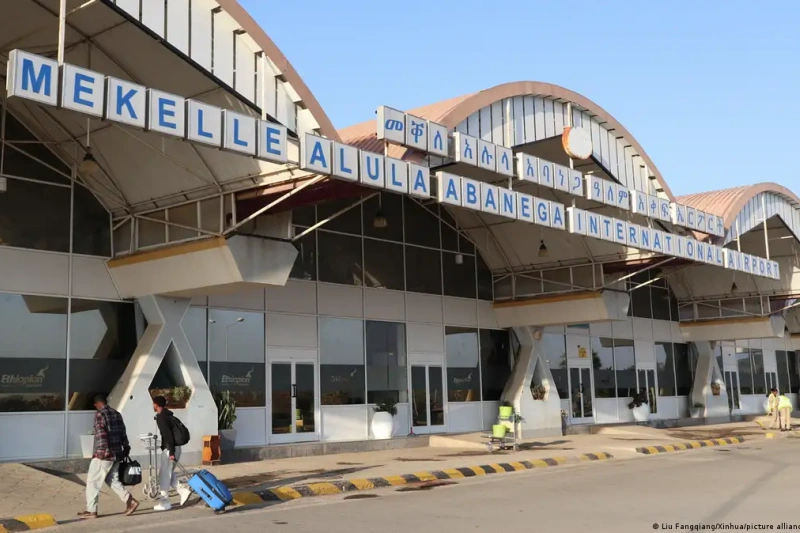

Ten days ago, Tigrayan rebels seized the main airport in their regional capital, and flights to Tigray were suspended.
Now a rival militia says it has retaken Mekelle airport.
The Tigray Peace Forces, a pro-government Tigrayan militia, wrote on X late on Friday that it had “taken full control of Mekelle Alula Aba Nega Airport” and was now clearing the city.
Nobody including major media outlets has confirmed the Mekelle airport claim. The Prime Minister’s Office had not responded to a request for comment, and the Tigray People’s Liberation Front (TPLF) could not be reached.
Independent checking is close to impossible. AFP says journalists are prevented from travelling to the affected areas, and communications are badly disrupted.
Mekelle airport sits roughly 10 kilometres outside the regional capital, AFP says, so holding it is not the same as holding Mekelle.
The militia says the city is next. That is the part that would change the war. Reuters said the fall of Mekelle would be a major setback for the opposition alliance led by the TPLF. A diplomatic source told the agency that some senior TPLF leaders had already left the city.
With flights to Tigray cancelled during the fighting, Mekelle airport matters now as a logistical and symbolic prize rather than a transport hub.
There is a second story inside this one. The militia claiming Mekelle airport is Tigrayan too. Analysts at Chatham House say the TPLF’s grip on Tigrayan society has weakened, citing protests, defections and reports of senior officials being arrested or switching sides to Addis Ababa.
The conflict is increasingly exposing divisions within Tigray itself.
The claim is attracting attention because of how quickly the military situation has shifted over the past ten days. Crisis Group’s CrisisWatch bulletin records that on 20 September the TPLF and six other armed groups announced an alliance aimed at removing Prime Minister Abiy Ahmed.
Three days later, TPLF forces took Mekelle airport, along with the airports at Axum and Shire. They also pushed into the neighbouring Afar region and captured the district capitals of Abala and Erebti.
Then the tide turned. Government forces took Alamata in southern Tigray on 28 September, and ACLED says pro-government troops have since regained Abala, Erebti and Megale.
The Critical Threats Project, a US think tank, says the Ethiopian army has largely repelled the offensive and is advancing towards Mekelle on three routes.
Reuters reports that TPLF chairman Debretsion Gebremichael conceded on Thursday that federal forces had occupied parts of Tigray, though he vowed to counter-attack.
On Friday the militia said it had captured Milazat, about 20 kilometres south-east of Mekelle. Then came the Mekelle airport post.
The fighting is no longer only a Tigray story. On Thursday, Ethiopia and Eritrea broke diplomatic ties. Addis Ababa expelled 10 Eritrean diplomats and closed its embassy in Asmara, accusing Eritrea of backing the TPLF. Eritrea, which Chatham House says has repeatedly denied such support, answered that it would sever all diplomatic ties.
Debretsion has given the war a regional frame. In a video that AFP says was published late on Thursday, he called it “a war to control the Red Sea.
In Addis Ababa, an explosion at the Defence Ministry overnight on Wednesday has not been independently confirmed. A diplomatic source told AFP that drones were the most likely cause. The government has declined to comment.
A humanitarian source in Afar, speaking anonymously, told AFP that retreating fighters raided and destroyed as they left, and that people in the north have no access to food.
Chatham House analysts Ahmed Soliman and Abel Abate Demissie write that, unlike in 2020 to 2022, the federal government has been “more cautious and calculated” in its actions and public messaging.
The city has changed hands before. Federal forces captured Mekelle on 28 November 2020 after two days of battle for the city. Seven months later, the TPLF took it back.
Chatham House expects this conflict to run on for a while. The diplomatic source told Reuters the fighting could continue even if federal forces capture Mekelle.
So the Mekelle airport post proves little on its own. It is one side’s claim, in a war where almost nothing can be checked from the ground.
Taking Mekelle has never been the hard part. Holding it has.


