



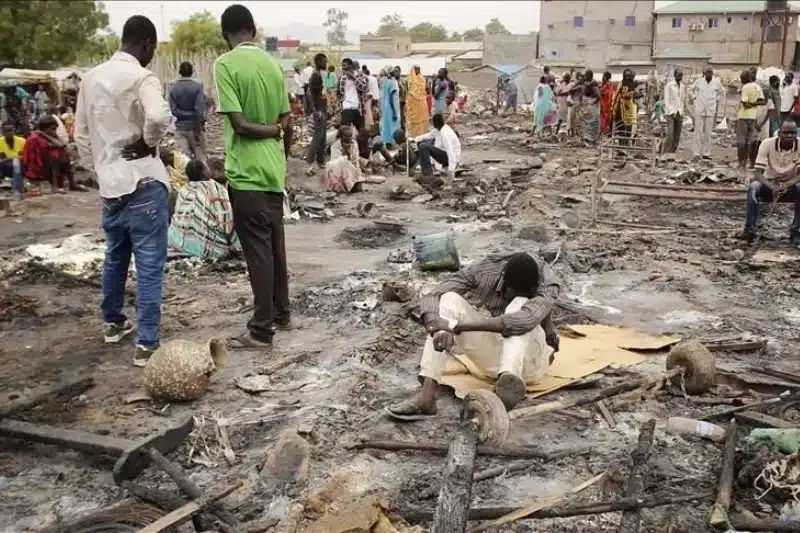

The International Criminal Court’s Darfur war crimes investigation has produced what Deputy Prosecutor Nazhat Shameem Khan calls a breakthrough. Khan told the BBC that investigators now hold “concrete evidence” linking commanders of the Rapid Support Forces to the killings of civilians in el-Fasher and el-Geneina.
Khan reached that conclusion after visiting refugee camps in eastern Chad, where survivors of the RSF’s storming of el-Fasher last October gave detailed accounts to her team. More than 6,000 people were killed as the paramilitary group seized the city, United Nations figures show.
The Darfur war crimes investigation has also traced a similar pattern of killings back to el-Geneina, the West Darfur capital where thousands died in 2023. The RSF, for its part, denies its fighters targeted people along ethnic lines and insists the death toll has been exaggerated, though it accepts some violations occurred.
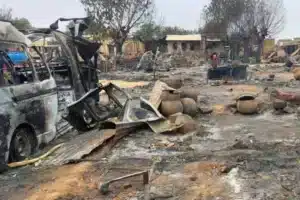
Weight was added to the Darfur war crimes investigation this week when a separate UN Fact-Finding Mission for Sudan concluded that mass killings, gang rapes, abductions of women and girls, and forced starvation carried out by the RSF in el-Fasher amounted to genocide. Mission chair Mohamed Chande Othman, in presenting the findings, described the patterns documented in the city as a “stark warning” to the wider region.
Investigators established that the siege of el-Fasher lasted eighteen months and was designed to weaken residents through hunger and fear before the final assault came. Several survivors, in testimony gathered by the mission, said they were assaulted in rooms where the bodies of relatives still lay on the ground.
Attention connected to the same Darfur war crimes investigation has now shifted to El Obeid, the North Kordofan capital that aid workers fear could become the next flashpoint. Save the Children reports that more than 5,500 children have been displaced from the city in just two weeks, out of roughly 11,000 people forced to flee in total.
Displacement strips children of far more than shelter, according to the charity’s deputy country director in Sudan, Francesco Lanino, who described it as a loss of “school, healthcare, clean water” and the networks that keep them safe. The United Nations, in a separate warning issued in Geneva, put the number of civilians trapped around El Obeid at up to 500,000, with drone strikes destroying fuel stations, water tankers and power infrastructure.
Away from Darfur, the Sudanese army registered a rare gain this week that observers are watching alongside the Darfur war crimes investigation for signs of how the wider conflict may shift. The Sudanese Armed Forces recaptured the border town of Kurmuk in Blue Nile State on Wednesday, ending months of control by an alliance of the RSF and a faction of the Sudan People’s Liberation Movement-North led by Abdel Aziz al-Hilu. Army commander Abadi al-Tahir, announcing the operation in a video statement, said surviving fighters had fled after suffering heavy losses.
On the political track, a figure once opposed to Khartoum has stepped forward with a peace framework of his own. Malik Agar Ayyir, deputy chairman of Sudan’s transitional Sovereignty Council and a former rebel leader, is proposing the dissolution of non-state armed groups and a restoration of the state’s monopoly on weapons, a proposal being watched closely by observers of the Darfur war crimes investigation.
Agar’s plan treats any eventual negotiation between the army and the RSF as a separate track from his own dialogue, which he wants built among factions already aligned with the internationally recognised government. Earlier efforts, including a three-month truce proposal backed by the United States, the UAE, Saudi Arabia and Egypt, have failed to gain traction with the RSF leadership.
The Central Bank of Sudan, meanwhile, has struck a more confident tone on the economy. Through foreign currency injections into commercial lenders, tighter import controls and reforms to the gold trade, the bank has managed to slow the pound’s sharp slide against the dollar in recent weeks, according to figures the bank has released alongside its policy announcements.
Judicial accountability tied to the Darfur war crimes investigation is still likely years away, given that senior Sudanese suspects long sought by the ICC, including former president Omar al-Bashir, remain outside the court’s custody. Khan, pressed on the timeline during her BBC interview, was candid about the wait ahead: “it may take time for justice to develop.”
For now, Darfur’s survivors, the residents of El Obeid and Sudan’s wider population of nearly 14 million displaced people remain caught between a war entering its fourth year and a justice process still gathering pace. The outcome of the Darfur war crimes investigation may ultimately determine whether those responsible for atrocities face international accountability.


