



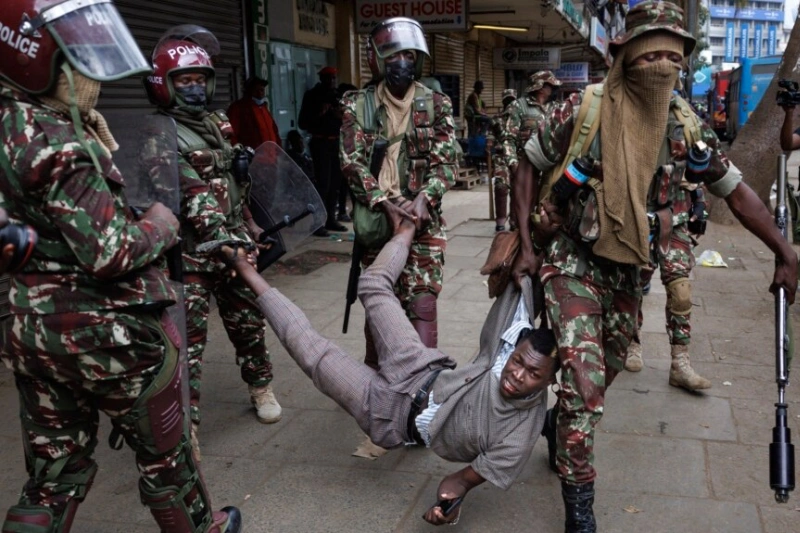

Civic space across East and Central Africa is closing fast. The list of countries involved keeps growing. From Uganda to Kenya, Tanzania to Burundi, the Congos to Ethiopia, Rwanda and Eritrea, governments are turning courts, security forces and regulators against critics, lecturers, journalists and ordinary citizens who dare to gather in public.
The pattern repeats itself with unsettling consistency. A dissenting voice speaks, writes, teaches or simply marches on an anniversary the state would rather forget. Forces inside or outside the law move quickly to silence it. The international response rarely goes beyond a statement of concern.
In Uganda, pressure on civic space has been especially visible in recent weeks. Four time presidential candidate Kizza Besigye collapsed inside a Kampala courtroom on 29 July while protesting the conduct of his treason trial, Monitor reported. He was rushed to Mulago National Referral Hospital and placed in intensive care. His wife, Winnie Byanyima, who leads UNAIDS, said on social media that he was unconscious and unresponsive even to pain. She added that his sister, a physician, was initially barred from treating him in court.
Besigye, 70, has been in detention since November 2024. He was seized in Nairobi and returned to Uganda to face charges his lawyers describe as politically motivated, Reuters reported. His treatment has become a symbol of how far civic space has narrowed for Museveni’s opponents.
His case sits alongside that of Muwanga Kivumbi, a deputy president of the opposition National Unity Platform. Kivumbi’s ordeal shows how thin the protection of civic space has become, even after a court grants bail. Human Rights Watch reported that Kivumbi was released on bail on 9 July over election related charges. Armed soldiers dragged him from his car at a roadblock outside Kampala the very next day. He was held for nineteen days and beaten until he bled from the head, the rights group said. He was later presented in court with fresh charges of inciting violence.
UN human rights chief Volker Turk said Ugandan authorities were increasingly targeting any form of dissent, Africanews reported. He described a climate of fear spreading through the country. Beyond such statements, little concrete pressure has followed. Trials, detentions and disappearances have continued largely unchecked.
Kenya’s civic space has come under its own strain this year, though the pressure there has taken a different shape. Rather than a single high profile trial, the government has relied on overwhelming shows of force around protest anniversaries. Police sealed off much of Nairobi on 25 June to mark two years since the deadly 2024 anti-Finance Bill demonstrations, the Daily Nation reported.
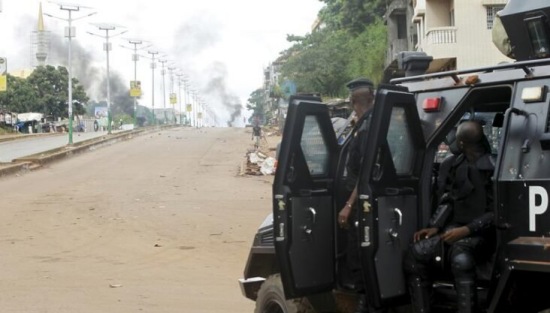
Officers erected roadblocks, ringed Parliament with razor wire and blocked public transport from entering the city centre. At least 127 people have been killed across two years of related protests, according to a police watchdog cited by AFP. Security forces have been accused of shooting demonstrators with near total impunity.
The same restrictions returned less than two weeks later. Police banned a planned march on 7 July, Saba Saba Day. The day commemorates Kenya’s 1990 uprising for multi-party democracy and has since merged with broader anger at the government of President William Ruto. Organisers from the Economic Justice Movement said they wanted to highlight extrajudicial killings and enforced disappearances. Police denied receiving any notice of the march and warned that any procession would be treated as illegal.
The Katiba Institute, a coalition of Kenyan rights groups, said the blanket restrictions around the June anniversary denied millions of Kenyans access to work and essential services. Rights campaigners say the pattern points to a steady narrowing of civic space around any date that recalls state violence against protesters.
Tanzania offers a striking parallel to Kenya’s Saba Saba story. Its own Saba Saba protests in July triggered one of the harshest crackdowns on civic space seen in the region this year. Melkisedek Kaijage, a political science lecturer at the University of Dodoma, was arrested on 8 July, The Chanzo reported. He was initially held on sedition allegations linked to the banned demonstrations.
Prosecutors changed the charge to terrorism a day after a court ordered his release. Colleagues quoted by People Daily described him as a respected teacher. His only offence, they said, appeared to be a classroom discussion on governance that an informer is believed to have recorded.
The Africa Coalition for Academic Freedom has written to President Samia Suluhu Hassan urging the release of Kaijage and two other detained lecturers, Pan African Visions reported. It warned that prosecuting academics for classroom debate threatens both higher education and public confidence in the justice system. Kaijage’s case is one thread in a much larger crackdown on civic space.
Reuters and the Associated Press reported that at least 76 people, and by some counts as many as 145, were charged with treason over protests that followed Tanzania’s disputed October election. Rights groups allege that security forces killed more than a thousand demonstrators, a figure the government disputes.
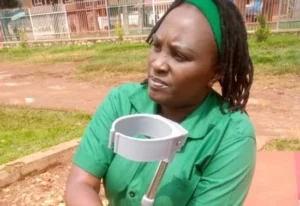
Burundi’s civic space has been squeezed for years, and 2026 has brought little relief. Journalist Sandra Muhoza worked for the online outlet La Nova Burundi. She spent nearly two years in detention over messages she shared in a WhatsApp group, before an appeal court in Ngozi finally freed her in April, Reporters Without Borders reported.
Human Rights Watch has separately noted that the National Congress for Freedom, an opposition party, was suspended in 2023. Its members have since faced intimidation, arbitrary arrests and enforced disappearances, the group said. Amnesty International’s regional director, Tigere Chagutah, said repression of civic space has continued largely unabated under President Evariste Ndayishimiye.
Across the two Congos, civic space is being squeezed from more than one direction at once. In the Democratic Republic of Congo, authorities detained journalists, activists and opposition figures with growing frequency between January and May, Human Rights Watch reported.
The crackdown coincided with political tensions over a possible constitutional amendment that could extend President Felix Tshisekedi’s time in office. Police fired tear gas at protesters demonstrating against the proposed changes in Kinshasa in March, the rights group said.
In the east, the Rwandan backed M23 armed group has added a second layer of danger. The Committee to Protect Journalists reported that M23 fighters have detained and assaulted journalists at checkpoints in Bukavu and Goma, effectively closing off civic space to anyone reporting on the conflict from either side.
Neighbouring Republic of Congo, also known as Congo-Brazzaville, held a presidential election in March. It returned Denis Sassou Nguesso for a fifth consecutive term with almost 95 percent of the vote. The contest followed a now familiar pattern, analysts told The Conversation Africa, one of a fragmented opposition and a shrinking civic space. The interior ministry had suspended fifteen opposition parties the previous year, a further sign of narrowing civic space ahead of the vote. Sassou Nguesso has held power for most of the period since 1979. Human rights groups say there remains no meaningful dialogue between his government, the opposition and civil society.
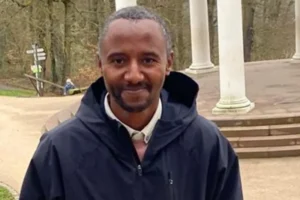
In Ethiopia, the target has increasingly been the press rather than politicians. The effect on civic space is the same. The Committee to Protect Journalists reported that Yonas Kedir, editor in chief of the independent outlet Addis Standard, was seized by security personnel on 1 August. He was assaulted and interrogated for roughly 24 hours.
The following day, armed officers raided the newsroom in Addis Ababa. They seized cameras and production equipment and destroyed studio lighting, according to a statement from the outlet’s publisher, JAKENN Publishing. Days later the landlord, acting under police pressure, ordered the outlet to vacate premises it had occupied for sixteen years.
The assault follows the abduction in April of former managing editor Million Beyene, who was held incommunicado for nearly two weeks, Amnesty International and CPJ both documented. It also follows a February decision by the Ethiopian Media Authority to revoke the outlet’s licence.
Rwanda rarely produces the dramatic images of courtroom collapses or newsroom raids seen elsewhere. Yet civic space there is arguably the most tightly bounded of all these countries. ARTICLE 19 Eastern Africa told the African Commission on Human and Peoples’ Rights in May that Rwandan authorities continue to weaponise national security and cyber surveillance laws.
The laws are used against online commentators and opposition figures, forcing independent journalists into exile or silence. Freedom House similarly noted that dissent is suppressed through pervasive surveillance and arbitrary detention. Exiled critics, it added, have faced alleged renditions.
If Rwanda represents the outer edge of what a functioning state can do to civic space, Eritrea shows what happens when there is none left at all. Often called the North Korea of Africa, Eritrea has had no privately owned media since 2001. The government shut down every independent outlet that September and jailed its editors without charge or trial, Reporters Without Borders reported.
The watchdog has repeatedly ranked the country at the bottom of its press freedom index. Journalist Dawit Isaak, a dual Eritrean Swedish citizen, remains among those detained from that original roundup. His whereabouts have been unconfirmed for over two decades. Eritrea’s government has consistently denied holding political prisoners, even as its closed civic space remains the most extreme example on the continent.
What unites all nine countries, from a hospital bed in Kampala to a sealed newsroom in Addis Ababa and a secret cell in Asmara, is the near total absence of consequences. Statements of concern from the UN, Amnesty International, Human Rights Watch and press freedom bodies have become almost routine. None has been matched by sanctions, suspended aid or diplomatic isolation.
Regional bodies such as the African Union and the East African Community have stayed largely silent on the closing of civic space, even though their own charters commit members to protecting it. This is despite the fact that AU election observers themselves concluded that Tanzania’s October vote failed to meet democratic standards.
For the lecturers, journalists, opposition figures and ordinary protesters caught in these crackdowns, that silence carries a real cost. It is measured in years behind bars, in beatings inside unmarked cells, and in newsrooms stripped of the equipment they need to keep working. Civic space in East and Central Africa is not closing quietly. It is closing in full view of a world that, for now, appears content to watch.


