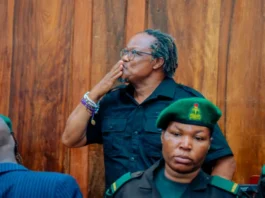
It took Joseph Kabila less than four weeks to turn a press conference into a battlefield.
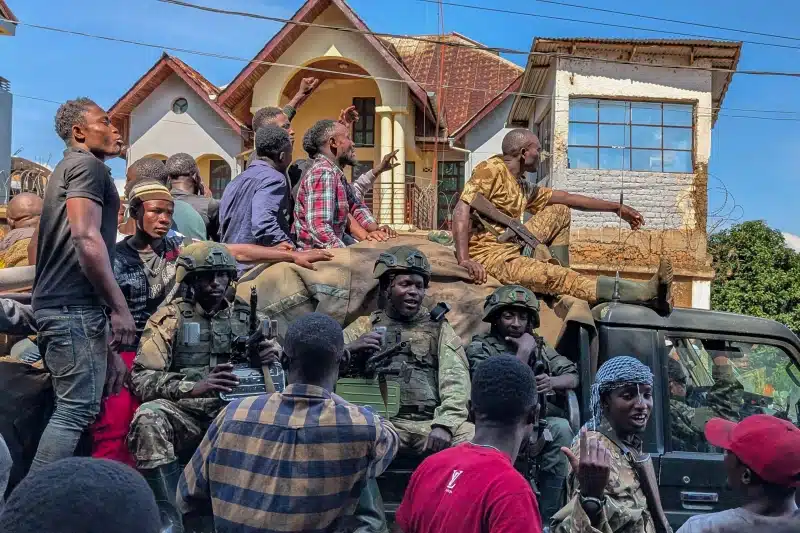
The FRN offensive began in the dark, on the night of Friday 6 November. By Monday, fighters of the Front for the Refoundation of the Nation (FRN) had pushed about 50 kilometres along the RN3 highway. They were heading for Walikale, AFP reported, citing local and security sources.
They had not reached the town. They did not need to. On the way, they took Bunyakiri, in Kalehe territory. The army and its allies had kept a forward command post and a supply point there, according to Congolese military sources.
Bitale and Bulambika, a major centre in the area, fell over the weekend. Kambali followed.
Major Dieudonné Kasereka, the army spokesman for the zone, told AFP that Kambali was “already under enemy occupation”. He said the army was counter-attacking on Monday. The following day, the army said it had halted the FRN offensive at Bulambika and was preparing a counter-offensive to recover the lost positions. Kasereka said government forces had contained the fighters there, although several settlements in Bunyakiri remained under rebel control.
What unsettles Kinshasa is not only the ground lost. It is how quickly the FRN offensive moved. AFP noted that the front lines had held steady for months under a peace accord.
The man at the top is hard to miss. Kabila ruled Congo from 2001 to 2019. A Congolese court sentenced him to death in absentia last year for treason, accusing him of colluding with the M23.
Since 12 October, he has led the FRN as its president, with three vice-presidents drawn from the former AFC-M23 alliance. They are Corneille Nangaa, the former coordinator of the Congo River Alliance (AFC); Bertrand Bisimwa, president of the M23; and Major General Sultani Makenga, the M23 military commander who also heads the general staff of the Congolese Revolutionary Army (ARC).
At its launch, the movement vowed to end “tyranny by any means, including force”. The FRN offensive is the first major test of that promise.
Then the questions started. Willy Mishiki, a National Assembly member and Wazalendo leader, told Africanews he could not understand how the fighters slipped round the army’s positions. “There were clearly acts of complicity,” he said. He wants military justice to look for betrayal in the ranks, and he urged residents not to panic.
Military justice is already busy. Around the same time, a court sitting in Walikale sentenced 66 soldiers to death for cowardice, mutiny and disobeying orders. AFP reported that 71 soldiers stood trial.
So one camp is hunting traitors. Another is sentencing deserters. Neither answers why a forward command post fell so fast. The latest battlefield reversals have reopened that argument in the hardest way.
The cost is human. Thomas Bakenga, the administrator of Kalehe territory, says the FRN offensive has displaced more than 160,000 people. Some fled to Hombo, on the line between South and North Kivu. Others hid in the forest.
Estimates of the advance differ. Civil society in Kalehe puts it at about 60 kilometres.
The tone had been different days earlier. On 4 November, FRN spokesperson Lawrence Kanyuka said the movement had “neither the intention nor any interest” in advancing on Uvira. He said it remained committed to the Doha peace process.
Two days later, the FRN offensive came from another direction. The movement says it is answering attacks by the army and its allies.
Outside pressure has not changed the pace. Washington sanctioned Kabila in April, according to Human Rights Watch. On 28 October, it sanctioned Rwanda’s defence ministry over its alleged backing of the M23. Kinshasa calls Kabila a Rwandan proxy. Kigali denies supporting the rebels.
Neither round of sanctions has stopped the FRN offensive.
Kabila once commanded the army that is now giving ground to him. Kambali, and the road beyond it, will show whether it can still hold a line.