




Kenya, Norway and the United States have secured fresh commitments worth $900 million to accelerate clean cooking access in Africa, the International Energy Agency confirmed this week.
The pledges emerged from a high-level virtual session held on 9 July and co-chaired by President William Ruto of Kenya, Norwegian Prime Minister Jonas Gahr Støre, US Secretary of Energy Chris Wright and IEA Executive Director Fatih Birol, according to the IEA.
The African Union and the African Development Bank served as co-organisers of the meeting, which was originally billed as the second Africa Clean Cooking Summit before being rescheduled to a virtual format ahead of the full Nairobi gathering on clean cooking access in Africa.
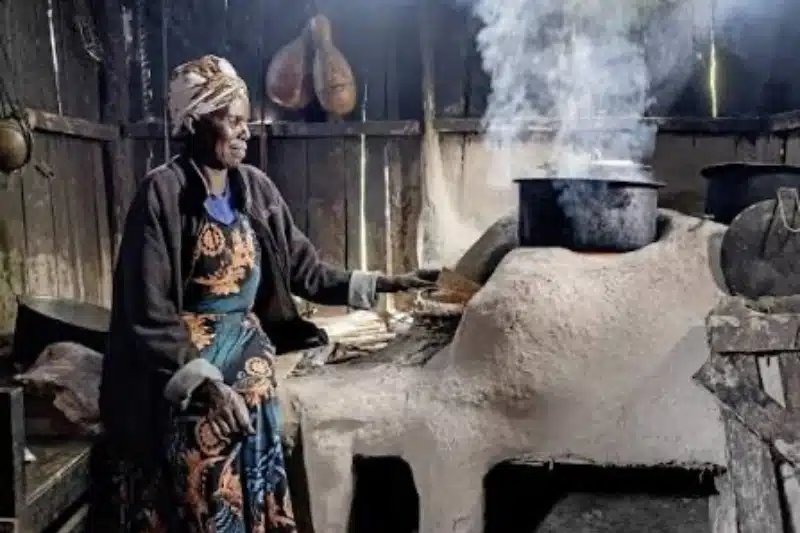
Nearly a billion people across the continent still cook with charcoal, firewood and other polluting fuels, a reliance the IEA links to roughly 850,000 premature deaths every year. Improving clean cooking access in Africa has therefore become a central plank of the continent’s health and climate agenda, with Ruto telling the session that ambition alone would not close the gap.
“Ambition alone is not enough. It must be backed by investment,” Ruto said, according to the IEA, adding that Kenya alone needs close to $435 million to reach universal household coverage and a further $590 million to convert public institutions to cleaner fuels. Kenya’s own financing gap shows how far clean cooking access in Africa still has to travel, even in a country positioned at the centre of the campaign.
The new $900 million builds on the $2.2 billion mobilised at the inaugural Paris summit in 2024. Birol told the session that $740 million of that earlier figure has already reached 22 African countries, roughly a third of the original pledge. He described the fresh funding as evidence of growing momentum ahead of the rescheduled Nairobi summit.
Policy movement has matched the financial commitments. The IEA reported that governments have introduced 121 new clean cooking policies across more than 30 African countries since 2024, territories that together account for roughly 80 percent of Africans still lacking access.
The agency said it is now working directly with the African Union to strengthen national strategies under a continent-wide action plan, a sign that clean cooking access in Africa is shifting from pledges towards implementation.
A significant part of the announcement addressed supply security rather than household adoption alone. Birol used the session to launch a new public-private Clean Cooking Security Programme aimed at protecting fuel supply chains, particularly liquefied petroleum gas.
The initiative was framed as a direct response to shipping disruptions through the Strait of Hormuz earlier this year, which the IEA said affected about 30 percent of globally traded LPG. More than 3.4 billion people worldwide depend on LPG as their primary cooking fuel, and the programme is designed partly to shield clean cooking access in Africa from external shocks of this kind.
African Union Commissioner for Energy and Infrastructure Lerato Mataboge said clean cooking access in Africa carries economic weight beyond household health, describing it as a frontier capable of reshaping livelihoods and markets across the continent. She noted that women and children in four out of five affected households remain locked out of opportunities tied to the African Union’s Agenda 2063 development blueprint.
African Development Bank President Sidi Ould Tah told the session that the bank has increased its own clean cooking financing roughly tenfold since 2024, calling the sector one of the most consequential fronts in Africa’s wider energy transition.
Participants at the session pointed to the United Nations General Assembly, the G20 and COP as venues where further pledges could be secured before the delayed Nairobi summit reconvenes. For now, the $900 million adds fresh weight to a financing push that leaders admit remains far short of what universal clean cooking access in Africa will ultimately require.


