



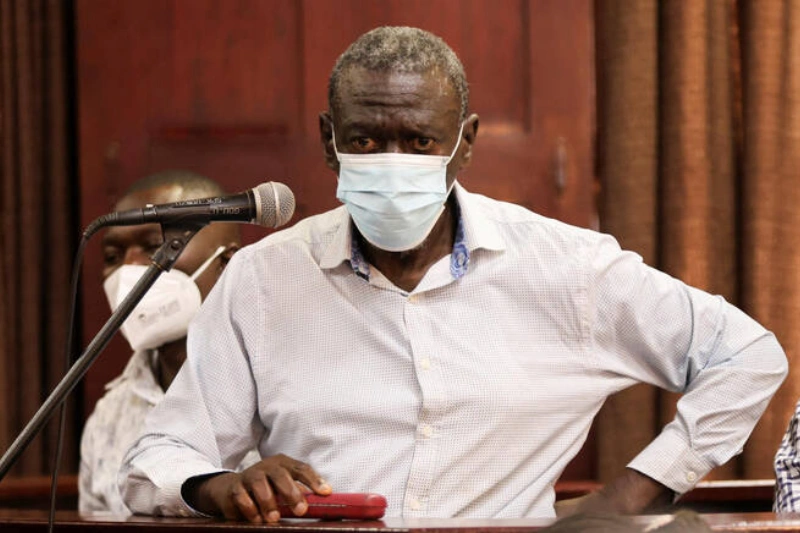

Ugandan opposition leader Kizza Besigye has refused to pick a lawyer from a state-issued list of 786 advocates, escalating tension in the Besigye treason trial now before Uganda’s High Court in Kampala.
The veteran politician told Justice Emmanuel Baguma on Wednesday that he had received the list only the evening before and could not properly assess the competence of the names on it. He insisted he remained committed to his own legal team.
“The legal team we had is one in whose competence we placed full confidence,” Besigye told the court, according to ChimpReports, adding that the team remained available once security concerns around its members were resolved.
The Besigye treason trial has been thrown into disarray after his two lead lawyers became unavailable within weeks of each other. Former Kampala mayor Erias Lukwago, who led the defence, was seized by the army from his home on 15 June and later charged with misprision of treason. Kenyan lawyer Martha Karua was declared persona non grata and deported after flying into Entebbe to represent him.
Besigye, 70, has been held at Luzira Prison since late 2024, when he says he was abducted in Kenya and smuggled back into Uganda. He and co-accused Hajji Obeid Lutale deny treason charges alleging they conspired between 2003 and November 2024 to overthrow the government, including through meetings in Kampala, Nairobi, Athens and Geneva to secure military and financial backing.
Justice Baguma has ruled that the Besigye treason trial must proceed regardless of whether the accused have lawyers of their choosing. Under Article 28(3)(e) of the Constitution, the court can appoint counsel on their behalf if they decline to select from the state panel. The case was adjourned to 29 July.
Human rights lawyer Eron Kiiza, who has represented Besigye, has criticised the court’s approach. He argued in a statement that the right to a lawyer of one’s own choosing is a non-derogable guarantee under Articles 28(3)(d) and 44 of the 1995 Constitution, not something the state can withdraw at will.
Besigye also told the court it would be unjust for taxpayers to fund his defence when he and Lutale could afford their own counsel, especially, he said, at a time when many Ugandans are struggling with hunger.
The case was initially filed before a military court martial before Uganda’s Supreme Court ruled it unconstitutional to try civilians in military courts, forcing a transfer to the civilian High Court. The trial was meant to open in September 2025 but was repeatedly delayed after prosecutors only submitted evidence in June 2026.
The Besigye treason trial unfolds against a backdrop of tightening political control in Uganda. President Yoweri Museveni, 81, has taken a lower public profile since winning a seventh term in January, with his son, army chief General Muhoozi Kainerugaba, seen wielding growing influence. Rights groups have documented a rise in arrests of opposition figures and lawyers, alongside the closure of a major media outlet.
Besigye, a four-time presidential challenger and former personal doctor to Museveni during their years as guerrilla fighters in the 1980s, has faced repeated state pressure since the two men fell out politically.
With the Besigye treason trial set to return to court later this month, the question of who will represent him remains unresolved, and rights advocates say the outcome could shape perceptions of judicial independence in Uganda well beyond this case.


