




Almost two in three young Cape Verdeans say they plan to leave. That is the backdrop to the Cape Verde presidential election on Sunday, and no president can fix it alone.
Work is the main reason young people want to leave. The survey found that 68.7% cited the search for employment as their motivation for emigrating. Separately, 54.7% considered job opportunities on the islands limited or very limited.
Yet youth unemployment stood at 10.7%. That figure does not tell the whole story. Having a job is not necessarily the same as having a decent income or a realistic path to professional advancement. Almost 40% identified wages as one of the country’s main problems.
The president has noticed. Lusa reported that José Maria Neves, speaking at Mosteiros on the island of Fogo, said growth should rest on innovation and productivity, ‘not on low wages’. It was International Youth Day.
He was speaking on the island where the urge to leave runs highest. The INE survey found 82.3% of young people on Fogo intend to emigrate, the top figure of any island.
Neves added that emigration should not be seen only as a problem, because doctors, academics and entrepreneurs abroad can still help the country grow.
However, political landscape changed quickly ahead of Sunday’s Cape Verde presidential election. In May, voters ended ten years rule of the Movement for Democracy (MpD). They returned Neves’s own party, the African Party for the Independence of Cabo Verde (PAICV), to government.
Political scientist José Santana Pereira of the University of Lisbon links that result to anger over inter-island transport, living conditions and public security.
In June, Joana Rosa declared. She is 61 and served five years as justice minister under that same MpD government. She is the first woman to run for president in Cape Verde. The MpD formally backed her in August.
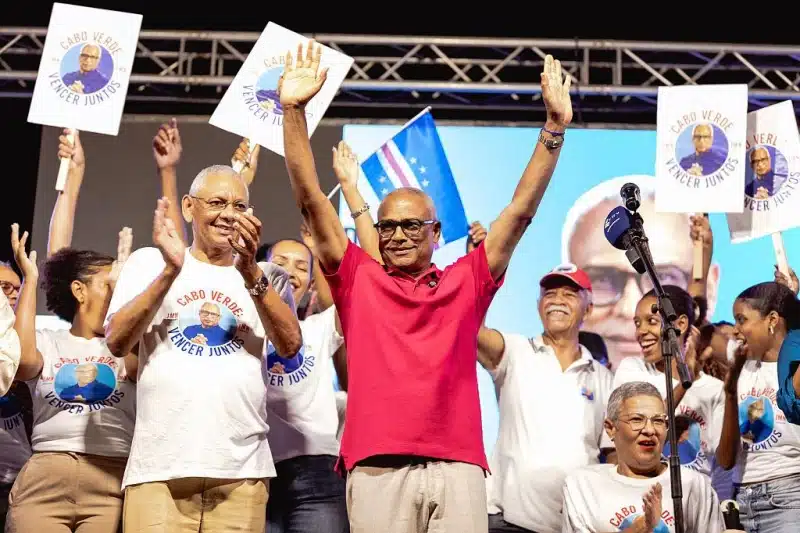
On 14 September, Neves, 66 and prime minister from 2001 to 2016, entered the race for a second term.
So the Cape Verde presidential election pits two main camps against one question: what to offer a generation that is looking abroad. Rosa told reporters at her launch on 1 October that she wants to be ‘a president of proximity’. She also proposed a forum on youth problems.
Here is the catch. The presidency does not directly control the machinery of job creation. The president can veto laws, refer legislation for constitutional review and, under specified conditions, dissolve parliament. But economic policy and the day-to-day business of government rest primarily with the prime minister and cabinet.
That government now belongs to Neves’s party. If he wins the Cape Verde presidential election, president and cabinet will come from the same camp. Pereira wrote that the central test is whether institutions can keep ‘the important distinction between the presidency and the government’. Shared loyalties could ease cooperation. They could also blur who answers for youth jobs.
A Rosa victory would reverse the arrangement Neves lived with from November 2021 to June, when he shared power with an MpD government. Pereira describes those relations as generally cooperative, not confrontational.
Still, AFP reports that Neves is a strong favourite, and history backs him. Pereira points out that every president who sought a second term since 1991 has won it. A runoff comes only if no candidate clears 50% of valid votes. Pereira thinks the four other candidates, a judge, a jurist, a doctor and a teacher, are unlikely to challenge the two main contenders.
The Cape Verde presidential election will name a president on Sunday. It will not, on its own, persuade a 19-year-old on Fogo to stay.


